Banking scandal causes Paraguay president's resignation
Paraguay president resigns after crisis at Ueno Bank, which blocked accounts of nearly 3 million customers and sparked protests

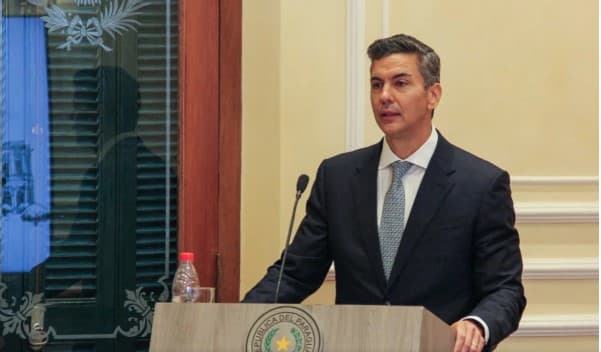
Paraguayan President Santiago Peña announced his resignation on Thursday amid a severe political and financial crisis caused by the collapse of Ueno Bank. The decision came as the Chamber of Deputies discussed the opening of an impeachment process against the president, who had also lost the support of members of the party itself.
The crisis gained national proportions after the intervention of the Paraguayan Banco Central (BCP) in the financial institution, responsible for serving approximately 2.9 million customers. The blocking of access to accounts has provoked protests, affected retirees and merchants, and put in doubt the security of public resources deposited in the bank.
In a statement released on social networks, Peña said he decided to leave the presidency to preserve the political stability and democratic institutions of the country.
Vice-President Pedro Alliana is expected to assume command of the Paraguayan government, following the procedures provided for in the Constitution.
Banking crisis hits millions of Paraguayans
The episode began on Tuesday, when the Banco Central determined the intervention and started the process of resolution of Ueno Bank, after identifying serious financial problems and capital insufficiency.
The institution had experienced an accelerated expansion in recent years, becoming one of the main digital banking platforms in Paraguay.
With the measure, millions of customers were temporarily unable to move their resources, a situation that caused concern among workers, retirees and entrepreneurs.
In addition to private accounts, the bank concentrated approximately $850 million in deposits from public bodies, including resources related to Social Security.
The scale of the crisis has led thousands of people to take to the streets to demand the return of values and accountability of those involved.
The president's ties to the bank have increased political pressure
The situation of Santiago Peña worsened after questions about his previous ties with the business group linked to Ueno Bank.
The president had held a stake in the financial institution’s parent company until 2025. The opposition began to ask for explanations about possible conflicts of interest and about the allocation of public resources to the bank.
Another point of controversy was the appointment of Carlos Carvallo to the presidency of the Paraguayan Banco Central. Carvallo had previously held a management position at the financial institution and left the command of the monetary authority after the onset of the crisis.
The political pressure increased when members of the Colorado Party, Peña’s legend, began to support the opening of an impeachment process.
Former president Horacio Cartes, one of the main leaders of the party, also positioned himself favorably to the accountability of those involved.
With political wear and tear and the possibility of impeachment, Peña decided to resign.
Investigation progresses and leaders are arrested
The collapse of Ueno Bank also triggered an investigation into the management of the financial institution.
Paraguayan authorities have ordered the arrest of eight leaders linked to the bank, while the investigations have reached others involved in possible irregularities.
Among the points investigated are financial operations considered inadequate, problems in the documentation of loans and inconsistencies in the accounting of assets.
The investigations seek to clarify the responsibilities for the crisis and possible losses to customers and public coffers.
Economic impacts worry trade
The consequences of the crisis go beyond the banking system and threaten Paraguayan economic activity.
Ueno Bank was widely used in digital payments and commercial transactions. With the suspension of services, companies began to face difficulties in receiving payments and maintaining their operations.
The situation also puts the confidence of foreign investors at risk, at a time when Paraguay was seeking to strengthen its image as an investment destination in South America.
In order to reduce losses, financial authorities work on the transfer of accounts and the application of depositor protection mechanisms.
The priority is to restore access to money and prevent the crisis from further undermining the functioning of the economy.
Paraguay will have a new president
Santiago Peña had assumed the presidency in August 2023, with a term scheduled for August 2028.
His departure represents an important change in the Paraguayan political scene and opens a new stage for the government, which will have to face the banking crisis and regain the confidence of the population.
Vice President Pedro Alliana, also a member of the Colorado Party, is the constitutional successor and is expected to complete the presidential term.
In addition to the political reorganization, the new government will have as main challenges to ensure the compensation of depositors, protect public resources and ensure the continuity of investigations. (Information is from Agência Brasil)
State authorizes partnership for work of prisoners in Castro