Esmagadora Campos Gerais turns soy into development and strengthens cooperativism in Paraná
Discover Esmagadora Campos Gerais, a Ponta Grossa industry that unites seven cooperatives and turns soy into economic development

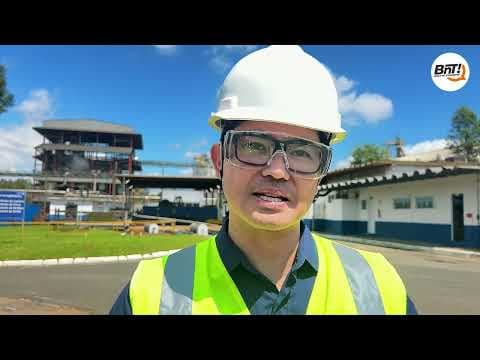
The Campos Gerais Crusher, located at Ponta Grossa, represents a new chapter for the Paraná agribusiness. Managed by seven cooperatives, the industrial enterprise transforms soybeans into higher value-added products and strengthens the economy of the Campos Gerais. The Portal BnT Online – Boca no Trombone was inside the unit to get a close understanding of the workings of the industry and understand how cooperativeism is driving new businesses in the region.
The initiative brings together the cooperatives Frisia, Agraria, Capal, Castrolanda, Bom Jesus, Coasul and Integrada. Together, they took over the operation of the industrial complex, formerly owned by the multinational Louis Dreyfus Company (LDC), consolidating one of the largest inter-cooperation projects in the history of the Paraná.
With a capacity to process 3,400 tons of soybeans per day, the industry has a forecast turnover of R$ 3 billion annually, in addition to having approximately 200 employees. The total planned investment, considering acquisition, modernization and structural improvements, reaches R$ 1.7 billion.
Union of cooperatives strengthens regional economy
More than the acquisition of an industry, the Campos Gerais Crusher represents a change in the way cooperativism participates in the agribusiness production chain.
During an interview with BnT Online, the executive manager of the enterprise stressed that the union between the seven cooperatives allows to broaden the participation of producers in the results of soybean industrialization.
According to him, the verticalization strategy means that cooperatives are not limited to the production and marketing of grains, but also participate in industrial stages and the generation of new products.
"We end up adding greater value, both to cooperatives and cooperatives, when we verticalize and incorporate that margin within our process," he explained.
Another pointed differential is the permanence of economic results in the Paraná itself. As all participating cooperatives are Paranaenses, the expectation is that a greater portion of the wealth generated by industry will return to cooperatives and can be reinvested in the State.
"Everything we foster here, all the added value here, returns to the cooperatives, to their cooperatives. In this way, the economy revolves within our state," the manager said.
The change also represents a new perspective for rural producers, who are now integrating a broader industrial chain, with possibilities for growth and new investments.
How does the Campos Gerais Crusher work inside?
During the visit to BnT Online, the team learned about the different stages that transform the soybeans received from producers into oil, bran, lecithin and other products intended for industry.
According to the executive manager, the unit works with a volume of more than one million tons of soybeans per year.
The process begins with the receipt of the grains, which go through standardization procedures to ensure proper storage and processing conditions.
After this stage, the soybean goes to industrial preparation, when it goes through different physical and thermal procedures.
“In preparation, we do all the work with this grain to make the extraction efficient,” explained the manager.
At this stage, the soybean is broken, has the bark removed and goes through cooking, rolling, expansion and cooling. Each procedure is necessary to prepare the grain and ensure greater efficiency in the removal of the oil.
Then the extraction takes place, which results in two of the main products of the industry: raw soybean oil and bran.
The bran undergoes adaptations to the quality standards required by customers before being stored and intended for marketing. The product is widely used in the manufacture of animal feed.
The crude oil goes to another industrial stage, called degumming, which allows the obtaining of degummed oil and soy lecithin.
The unit also has a structure to refine the oil, transforming it into a product with characteristics suitable for commercialization for consumption.
In addition, lecithin can be stored and marketed for different industrial applications, especially in the food industry.
Cooperativeism opens up new opportunities for producers
The union of the seven cooperatives also demonstrates the importance of collective action in the search for new markets and development opportunities.
For the executive manager, the cooperative philosophy is directly related to the growth of the enterprise and the possibility of extending the benefits to the associated producers.
“None of us is as good as all of us together,” he said, noting that investment represents the joining of forces around a common goal.
He stressed that intercooperation allows large investments to be made, which would be more challenging if each organization acted individually.
The message was also addressed to producers who are not yet part of a cooperative, encouraging them to better know the model and the opportunities it offers.
For the current cooperatives, the crusher represents another possibility to add value to agricultural production and expand participation in agribusiness results.
"This is another step towards the future development of all cooperatives and that opens new possibilities for all", he stressed.
Billionaire industry moves Ponta Grossa and Campos Gerais
The installation of this new cooperative management structure in Ponta Grossa reinforces the strategic importance of the municipality for the industrialization of agricultural production in Paraná.
In addition to generating direct jobs, the Campos Gerais Crusher operates a chain of activities related to transportation, storage, logistics, industrial maintenance and marketing of soy products.
The operation also strengthens Paraná’s position in the agribusiness market, by allowing part of agricultural production to be transformed into higher value-added products before reaching consumers and industries.
For regional cooperativism, the enterprise represents an example of how the union of different organizations can increase competitiveness and create new economic opportunities.
The visit of BnT Online showed that, behind the industrial structure and the billionaire numbers, there is a strategy aimed at strengthening producers and maintaining a greater share of economic results in Paraná.
Read also: https://bntonline.com.br/obra-de-r-115-millions-transform-access-to-the-high-amparo-in-tibagi/
See this post on Instagram
A post shared by 📢 Boca no Trombone Ponta Grossa (@boca.trombone.pontagrossa)