Fiscal adjustment of Lula targets amendments and super-salaries
The minister Alexandre Padilha stated that the second part of the fiscal adjustment of Lula's government will focus on parliamentary amendments, tax spending and super-salaries. The statement was made in an interview with Folha de S. Paulo. The government has already approved the first part of the package, which expanded cuts to tax benefits.

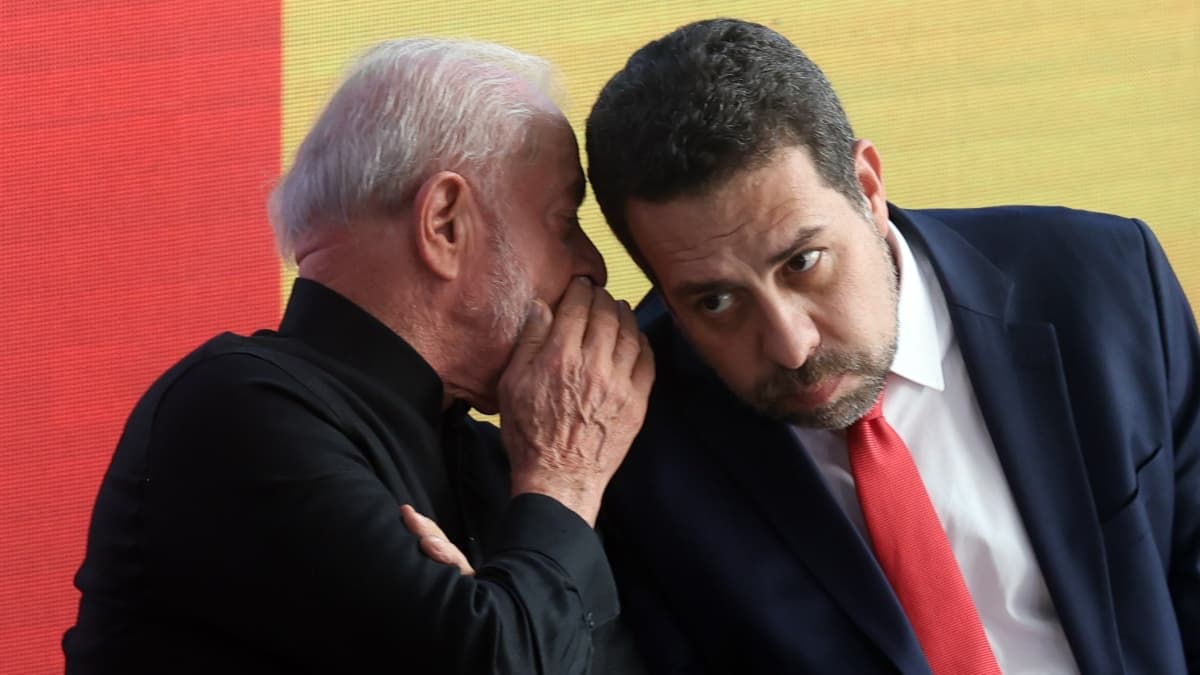
The second part of the fiscal adjustment of the government of President Luiz Inacio Lula da Silva will target parliamentary amendments, unjustified tax expenditures and privileges, such as super-wages. The information was released by the minister of Relações Institucionais, Alexandre Padilha, in an interview with Folha de S. Paul published this Wednesday (25).
"Any measure in relation to the accounts will be to confront parliamentary amendments, unjustified tax expenditures and privileges, such as super-wages," Boulos said, as recorded in the interview. The statement signals the continuation of the government’s effort to balance public accounts, which began with the sanction of the first fiscal adjustment package.
Focus on privileges and mandatory expenses
According to the minister, President Lula remains committed to preserving social investments and rights provided for in the Constitution. The government has already adopted measures to control social spending in the first fiscal adjustment package, which makes room for the new round of cuts to focus on other fronts.
“What had to be contained in social spending has already been done in the PLP, which was sanctioned,” he said. The acronym PLP refers to the Complementary Bill that consolidated the first containment measures. Thus, the second stage of adjustment should target expenditures considered less priority or with the potential to generate savings without affecting essential programs.
The source did not detail which parliamentary amendments or categories of super-wages will be reached, but the announcement indicates a change in approach in relation to the first months of management, when the focus was on reviewing social spending.
Legislative instrument still under discussion
The legal format of the new measures has not yet been defined. “First you discuss which subject you’re going to enter. Only then do you discuss which is the most appropriate legislative instrument to express this matter,” the minister explained. The statement suggests that the government evaluates whether it will submit a new bill, a proposed amendment to the Constitution or another normative modality.
This caution reflects the complexity of tackling sensitive issues, such as parliamentary amendments, which involve negotiation with Congresso Nacional. The choice of the instrument can influence the process and political resistance to the measures.
The minister has not set a deadline for sending the proposal, but the expectation is that the debate will take place later this year, in parallel to the budget implementation.
The first phase has been sanctioned.
The first part of the fiscal adjustment was sanctioned and brought significant changes in the management of public accounts. Among the main changes is the expansion of the cut in tax benefits granted to companies and economic sectors. The additional reduction of 10%, added to the cut approved in 2025, will reach 20% in two years.
This measure aims to reduce so-called tax waivers, which are discounts or tax exemptions given to certain segments. With the progressive cut, the government hopes to increase the collection without raising tax rates.
In addition, the legislation sets stricter limits for the growth of public spending when the government needs to save to meet the fiscal target. In such cases, the actual increase in spending will be limited to 2%, even if the current rule allows growth of up to 2.5%.
Impact for states and municipalities
The new rules of containment of expenses have a direct reflection in states and municipalities, which depend on federal transfers and also need to adapt to spending limits. In Paraná, for example, state management follows the definitions of Brasilia to plan your budget.
The reduction of tax benefits can affect economic sectors operating in the Campos Gerais region, such as agribusiness and industry. However, the source did not detail which segments will be most impacted.
Experts heard by the report (not cited in the claims) assess that the adjustment can generate pressure on the regional accounts, but it can also make room for investments in infrastructure and social programs, if the economy generated is well targeted.
Next steps
The government is expected to present the new measures to Congress in the coming weeks, according to the expectation of interlocutors. The political articulation will be fundamental to approve changes that affect the interests of parliamentarians and categories with salaries above the constitutional ceiling.
Meanwhile, the economic team works on the drafting of the texts and on the estimation of the fiscal impact. The source did not detail values or deadlines for implementing the changes.
The Boca no Trombone Portal will continue to monitor the development of fiscal adjustment and its effects on the population and the regional economy. Follow the next publications for more information.
Read Also
Aliel triggers Federal Government after storms on Paraná
PG Chamber approves free meal project for unemployed
PG Defesa Civil Bends Attendances and Asks for More Investments
Font
www.gazetadopovo.com