Global jihadism: failure or new form of operation?
A quarter of a century after September 11, global jihadism has not disappeared, but transformed. Groups like Al-Qaeda and the Islamic State lost caliphates, yet maintain active insurgencies in Africa and the Middle East. The rise of Ahmed al-Sharaa in Syria exemplifies the pragmatism of former jihadist leaders.

Twenty-five years have passed since Al-Qaeda’s attacks on the Estados Unidos on September 11, 2001, and 12 years since the self-styled Estado Islâmico (IS) declared its caliphate in Iraq and Syria, global jihadism has not disappeared. Rather than a definitive failure, the movement adapted, changed shape, and found new battlefields. The question that echoes among analysts and governments is: has global jihadism failed or is it just reinventing itself?
Recent data shows that the threat persists, albeit with different contours. The Estado Islâmico came to control vast regions of Iraq and Syria, until it lost its territory in 2019. But the territorial defeat did not mean the end of ideology. On the contrary, jihadism has migrated to Africa, where groups affiliated with al-Qaeda and ISIS maintain active insurgencies.
Africa becomes the main battlefield
The main stage of jihadism today is the African continent. The powerful branches of al-Qaeda — the JNIM (Islam and Muslim Support Group) in the Sahel region, which covers Mali, Niger and Burkina Faso, and the Al-Shabab in Somalia — have long had active insurgents. These groups control large rural areas and impose their authority on local populations.
Al-Shabab, for example, controls extensive areas in southern and central Somalia. Throughout 2026, the group has devoted itself to displaying its so-called humanitarian work, distributing food and other supplies to hundreds of struggling families. The action was publicized through their accounts on social networks and by their radio station, as a way to win hearts and minds.
This strategy of social assistance is not new, but it has gained strength as a tool of legitimization. The group claims its "charity" handed over supplies last August, reinforcing the narrative that it offers services where the state is absent. The source did not detail the exact extent of the distribution, but the gesture highlights the adaptability of jihadism.
Estado Islâmico keeps branches active
The main rival of al-Qaeda, the Estado Islâmico, also maintains a significant presence in Africa. Its active branches are in Nigeria, Democratic Republic of Congo, Sahel, Mozambique and Somalia. Despite the loss of the territorial caliphate, the group continues to recruit and carry out attacks, exploiting local conflicts and state fragilities.
The fragmentation of jihadism on multiple fronts hinders a unified response. While al-Qaeda bets on long-term insurgencies and the gradual conquest of popular support, the Estado Islâmico maintains a more violent and immediate posture. This strategic divergence reflects the complexity of the phenomenon and the impossibility of declaring victory over global jihadism.
From Global Jihad to Local Pragmatism
An emblematic case of this transformation is the trajectory of Ahmed al-Sharaa, the current president of Syria. Known in the past by the war name Abu Mohammed al-Jolani, he led the jihadist group Nusra Front, initially linked to Estado Islâmico and later to Al-Qaeda. Later, al-Sharaa was leader of the Hayat Tahrir al-Sham (HTS) group.
Gradually, he broke his ties with the Estado Islâmico and Al-Qaeda and distanced himself from the struggles for global jihad. Al-Sharaa began to focus on Syria, establishing a local power base in the northwestern province of Idlib. This movement of nationalization of the armed struggle is one of the clearest signs that jihadism is changing shape.
As the HTS advanced over Syria’s capital, Damascus, its leadership sought to reassure the international community. They came close to Russia, a key ally of then-president Bashar al-Assad, to reduce fears of an Islamic occupation. The pragmatism of al-Sharaa contrasts with the globalist rhetoric of yesteryear.
Ascension to power and international welcome
This pragmatism, coupled with favorable geopolitical conditions – such as the weakening of Russia and Iran – helped al-Sharaa come to power in Syria in December 2024. Former fighter, first of Estado Islâmico and then of Al-Qaeda, he came to be sought by the Estados Unidos, but was well received by Western leaders after taking over the presidency.
The good reception offered by world leaders, including US President Donald Trump, drew even more attention. The shift in al-Sharaa’s stance — from global jihadist to pragmatic national leader — illustrates how jihadism can adapt to political circumstances and survive under new guises.
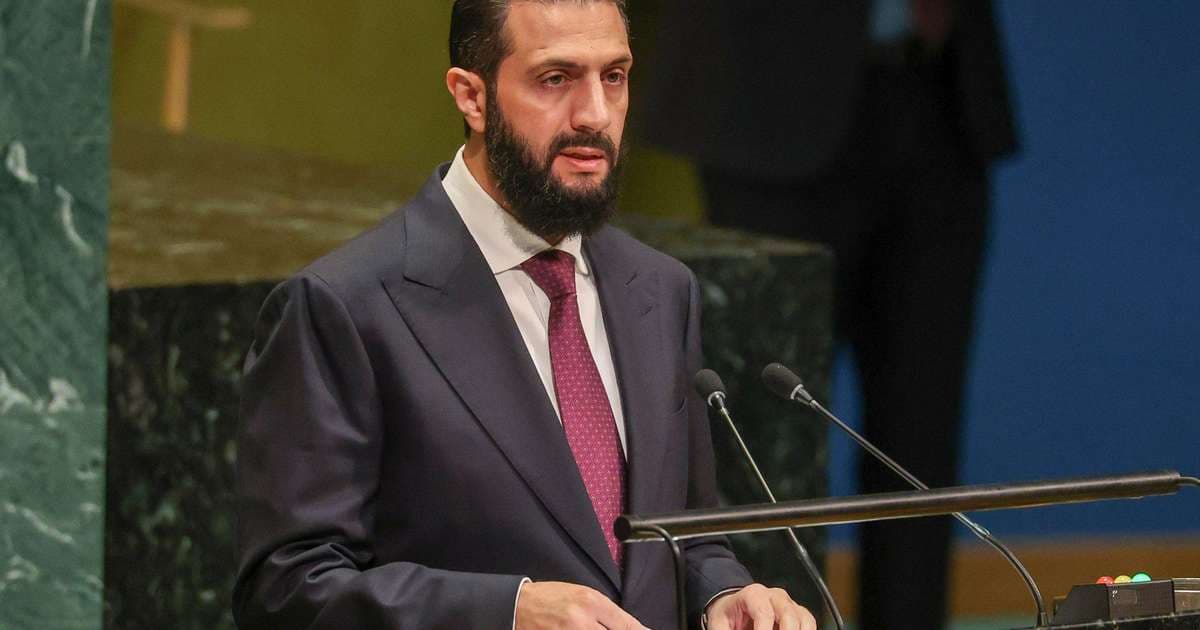
The speech of al-Sharaa during the United Nations General Assembly in 2026 symbolizes this new phase. The source did not elaborate on the content of the speech, but the presence of the Syrian president at the world’s leading diplomatic forum indicates recognition of his legitimacy despite his jihadist past.
What this means for the future
The initial question — whether global jihadism has failed or is just changing shape — has no simple answer. The facts indicate that the jihadist ideology remains alive, although fragmented and adapted to local contexts. The loss of territories did not eliminate recruitment capacity or influence on marginalized populations.
For the Brazilian reader, geographical distance does not eliminate the risk. Global jihadism feeds networks of funding, propaganda and radicalization that can reach any country, including Brazil. Attention to these movements is essential to understanding international security and the challenges of foreign policy.
The Boca no Trombone Portal will continue to track the unfolding of global jihadism and its regional impacts. Stay tuned for upcoming reports on international security and geopolitics.
Read also
Global jihadism failed or just changed shape?
American pastor advocates revoking women's vote
South America plans to integrate gas and electricity
Font
www.terra.com.br