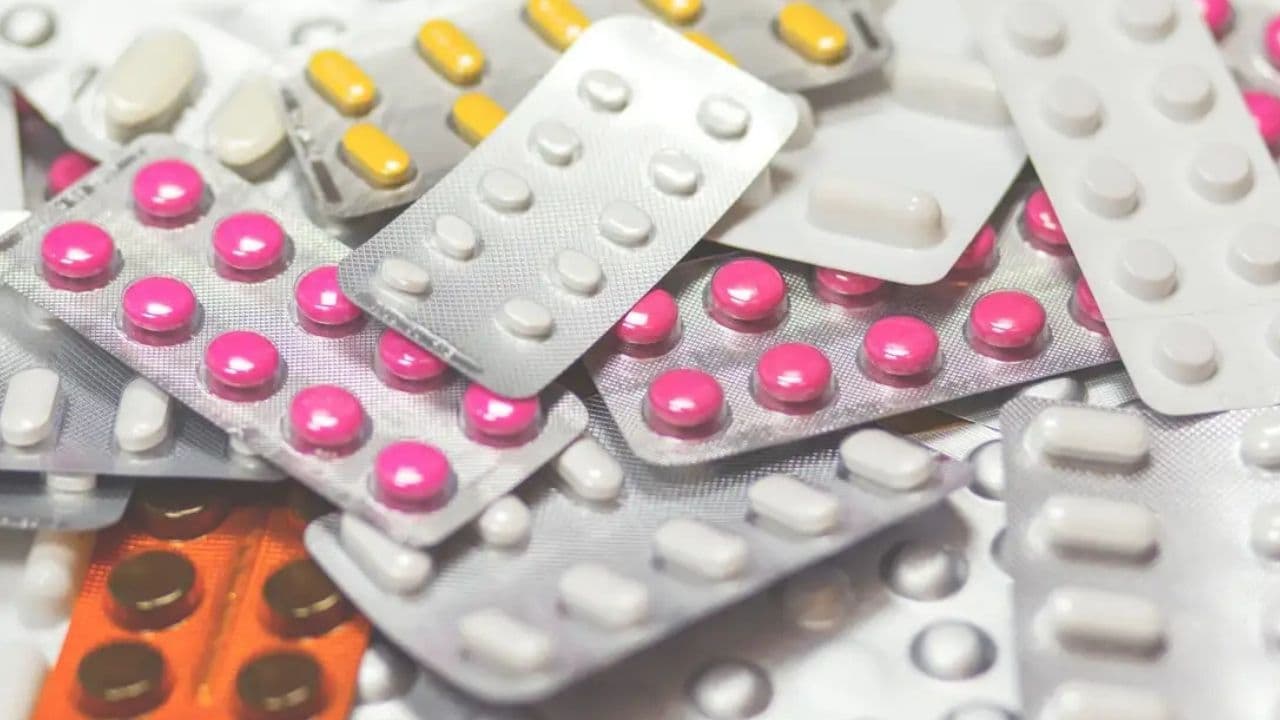
Health starts offering new oncological medications through SUS
Nine medications indicated for 13 different treatments

The Ministry of Health begins to offer, starting this week, nine new high-tech drugs for the treatment of cancer in the Unified Health System (SUS). Inclusion is the largest ever made for cancer care and will meet 100% of the demand for these products.
The new nine drugs are indicated for 13 different cancer treatments and should benefit more than 116 thousand people.
The availability begins in 20 treatment centers, in all regions of Brazil. The expectation is to expand to all other centers by the end of the year.
The annual impact on the acquisition of these products alone will be R$ 155.4 million per year.
The forecast is to reach 23 new oncological drugs by the end of the year, increasing by 35% the alternatives in the public health network.
According to the ministry, in order to make it possible to offer 23 new drugs, the department took over the purchase and direct negotiation of ten drugs, articulated the realization of an act for acquisition at a lower price by the states of nine others and, for the other four, expanded the transfers to ensure the costing of the oncology services of the SUS.
The impact will be R$ 4 billion per year.
The Minister of Health, Alexandre Padilha, said in a ceremony at the Hospital Beneficência Portuguesa, in the capital of São Paulo, that the expansion and qualification of the cancer network throughout the country is being done with what is most modern and advanced and represents a transformation that puts patients at the center of care, ensuring more access to tests, accurate diagnoses and appropriate treatments, in the right time.
“We are also strengthening the working conditions of health professionals, with more structured services and a public network increasingly prepared to meet the needs of the population,” he said during the ceremony.
According to the Ministry of Health, the nine treatments act in different ways, according to the type of tumor, the stage of the disease and the profile of each patient. Among the main benefits are increased survival and better quality of life.
There are also indications for after surgery, when there is no more visible sign of tumor, in order to prevent the disease from returning.
The health units that participate in this implementation stage are located in 16 states: São Paulo, Paraná, Bahia, Ceará, Pernambuco, Piauí, Pará, Amazonas, Rio de Janeiro, Paraíba, Minas Gerais, Goiás, Rondônia, Rio Grande do Sul, Tocantins and Sergipe, and in the Federal District.
Find out what the new medicines are:
trastuzumab - stomach cancer or esophagogastric junction;
abemaciclib - early breast cancer (RH+, Her2-, lymph node +);
lanreotide acetate - neuroendocrine tumors;
pazopanib - metastatic clear cell kidney cancer;
rituximab - chronic lymphocytic leukemia (1st line), follicular lymphoma, diffuse lymphoma;
abiraterone - non-metastatic and metastatic hormone-resistant prostate cancer and hormone-sensitive and metastatic;
gefitinib - non-small cell lung cancer in the first line;
Recombinant TSH (alphathyrotropin) - differentiated thyroid cancer with radioactive iodine indication;
sunitinib - metastatic clear cell kidney cancer and advanced or metastatic GIST after failure to imatinib.
Other innovations
The minister announced that SUS will also screen for bowel cancer, which is considered essential for early diagnosis of the disease. 400,000 fecal immunochemical tests (FITs) for colorectal cancer screening will be distributed to all states.
The examination will be used to identify, among asymptomatic men and women, aged 50 to 75, who will need to perform colonoscopy to confirm the diagnosis. The accuracy is 92%.
“We are building the world’s largest public rectal cervical cancer screening program. There is no country in the world that will do what we are doing,” ministro Alexandre Padilha said.
The screening of cervical cancer by means of the DNA-HPV test is also being implemented in SUS. In addition, the ministry will fund reflex cytology in a liquid medium, which uses the same collection to evaluate samples with warning signs. The annual investment will be R$ 2.7 million for more than 131,000 tests.
The Ministry of Health also starts to finance oncological videothoracic surgeries, which mainly include lung cancer. The technique uses small incisions, camera and specific instruments and is minimally invasive. Improvements for patients include reduced hospitalization time and postoperative complications.
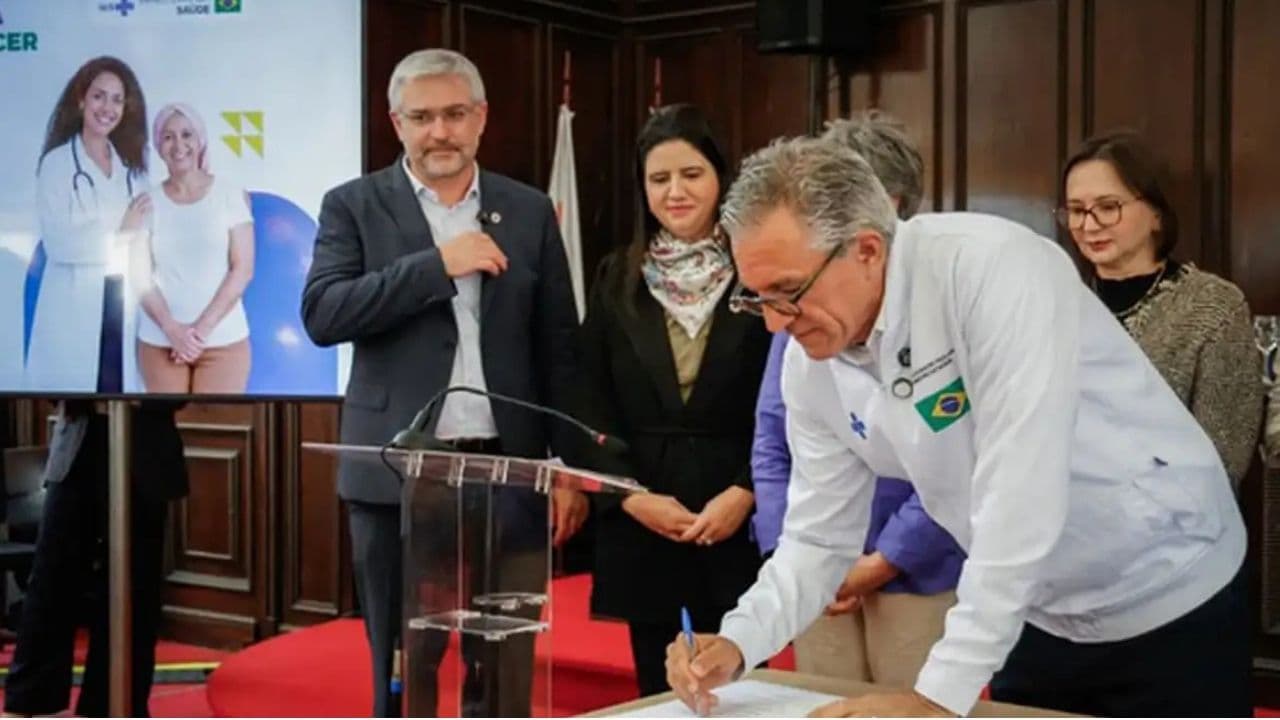
The Minister of Health, Alexandre Padilha, signed the commitment for the next three-year Proadi-SUS, which will allocate R$ 4 billion in investments in the next three years.
The amount equates to one third of all that was invested in the last 17 years of the program (R$ 11 billion).
Padilha pointed out that Proadi’s partner hospitals, such as Albert Einstein, Syrian-Lebanese, Oswaldo Cruz, Portuguese Beneficence, Windmills, A.C. Camargo and Hcor, play a key role in public health.
“Both in the transfer of technology, professional training and improvement of SUS management. Many of these philanthropic hospitals, even, operate today with more beds dedicated to SUS than to their own private services,” he said.
Padilha also announced the implementation of the Intelligent Hospital in partnership with the Instituto Tecnológico de Medicina Inteligente do Brasil (ITMI), responsible for management.
The first 100% intelligent hospital of the SUS will be implemented in the Hospital of Clinics of the Medical School of the University of São Paulo (FMUSP).
“The project provides ICUs with ultra-connected equipment and artificial intelligence, which allow remote monitoring in real time, with the professional being able to access what happens inside the ICU from any corner of the hospital, from his home, or in another service,” Padilha explained.
"In addition to modernizing pathological anatomy laboratories, the delivery time of biopsy reports will be reduced from a week to just 48 hours by means of telediagnostics," he added.
Also read: Anvisa bans batches of medicine to treat cancer