Hospital of Ponta Grossa performs first robotic surgery to treat prostate cancer
General Unimed Hospital of Ponta Grossa performs first robotic surgery in history. The procedure for prostate cancer lasted two hours.

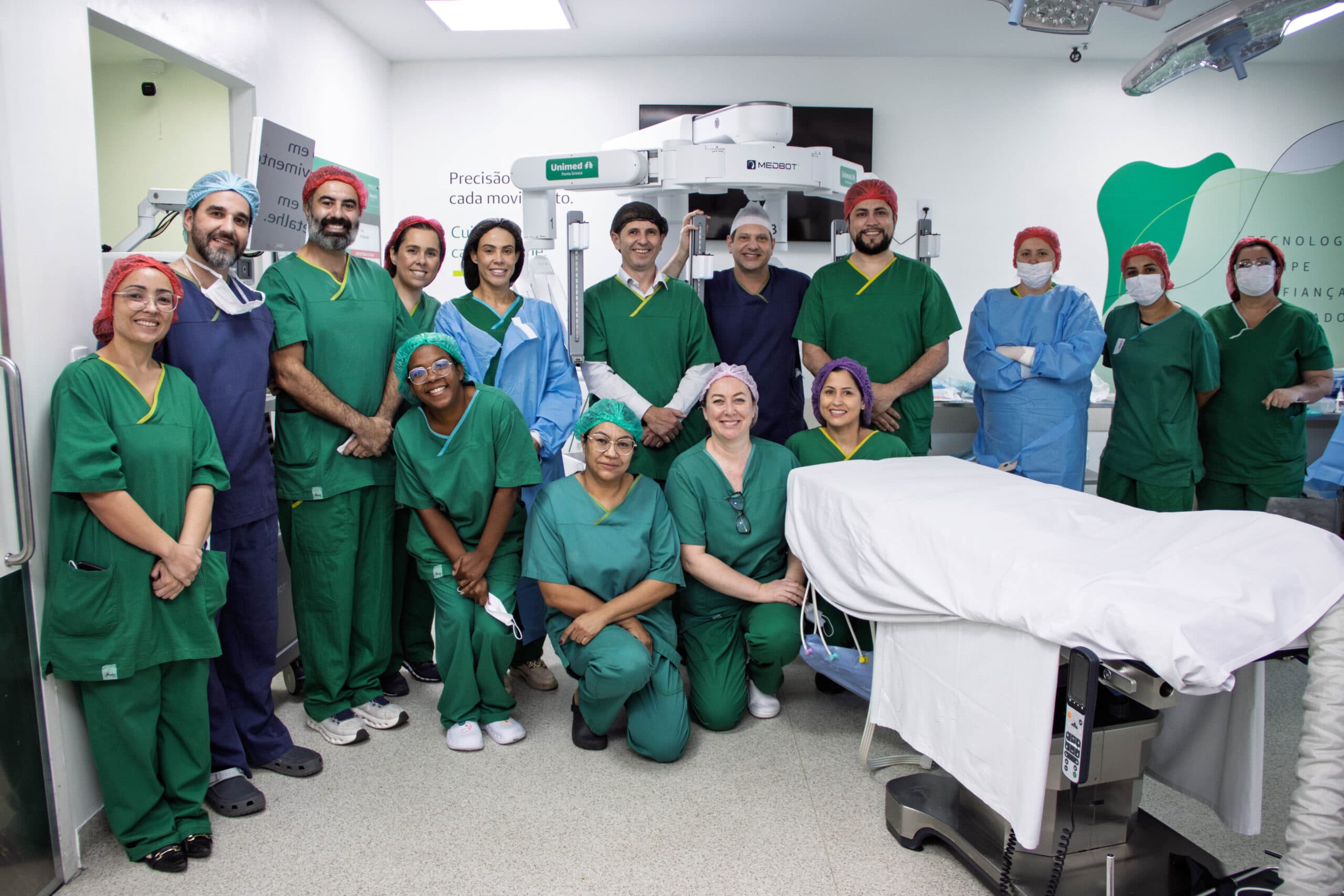
The Unimed General Hospital (HGU), in Ponta Grossa, achieved a milestone in the area of health by performing, for the first time in its history, a robotic surgery for the treatment of prostate cancer. The procedure was a radical prostatectomy, a technique used to remove the prostate in patients diagnosed with the disease.
The intervention lasted approximately two hours and was performed with the help of the robotic platform MicroPort MedBot 7. According to the institution, the surgery occurred within the normal range and represents an advance in the offer of high complexity procedures in Ponta Grossa and in the Campos Gerais region.
The technology allows doctors to perform precise movements through robotic instruments controlled by the surgeon, providing greater detail of the operated area and reducing the need for large incisions.
Robotic surgery offers advantages in patient recovery
Robotic surgery is considered a minimally invasive technique and may have benefits compared to conventional open surgery.
Among the main advantages are the reduction of bleeding during the procedure, minor incisions, less discomfort in the postoperative period and the possibility of faster recovery, depending on the clinical conditions of the patient.
In the case of radical prostatectomy, the precision of the movements also assists the surgeon in the removal of the prostate and in the care of structures close to the operated region.
The procedure carried out at Unimed General Hospital had official coverage and release approved by the Regulatory and Audit Institution (INS), as reported by the institution.
The first robotic surgery lasted about two hours
The team responsible for the surgery was led by the urologist and technical director of HGU, Dr. Eduardo Bisinella.
According to the expert, the procedure was successfully completed and demonstrated the possibilities offered by the new technology.
"The surgery lasted about two hours and ran within perfect normality, allowing millimeter accuracy in tumor removal and providing much faster and more comfortable postoperative recovery for the patient when compared to conventional prostatectomy," Bisinella said.
The doctor also stressed the importance of the integration between technological resources and the work of health professionals. Throughout the process, the patient was followed by the urologists and the multiprofessional team of the hospital.
Investment in technology expands service in Ponta Grossa
The performance of the first robotic surgery marks the beginning of a new stage in the program of minimally invasive procedures of the Unimed General Hospital.
For the CEO of Unimed Ponta Grossa, Dr. Pedro Moysés Jacintho, the progress is the result of the investments made by the cooperative to modernize hospital care.
“We are combining the most advanced in precision technology with the dedication of our teams. “Seeing this program in full operation reinforces our commitment to delivering modern, safe and caring medicine to Unimed at the highest level,” he said.
The institution highlights that the implementation of the technology integrates a strategy of qualification of care, focusing on patient safety and the expansion of the resources available for procedures of high complexity.
Prostate Cancer: Early Diagnosis Is Key
The realization of the first robotic surgery also draws attention to the importance of male health care, especially in the prevention and early diagnosis of prostate cancer.
The disease is among the most frequent types of cancer in the Brazilian male population, excluding non-melanoma skin tumors.
In many cases, prostate cancer may not show symptoms in the early stages. When they arise, manifestations such as difficulty urinating, the presence of blood in the urine, and changes in urinary flow need to be evaluated by a healthcare professional.
The investigation may involve clinical evaluation, PSA examination, and other procedures, as medically indicated. The need for screening should be discussed individually, considering age, family history, risk factors and possible benefits and harms of exams.
With the implementation of the robotic surgery program, Unimed General Hospital now has another technological alternative for the surgical treatment of selected patients, strengthening the specialized care structure in Ponta Grossa.