Mixed District Voting Could Be Voted in November
Deputy Domingos Neto (PSD-CE) intends to vote on the mixed district voting proposal in the Chamber until the end of November. The text combines electoral districts and party lists, with transition starting from 2032. The initiative faces resistance from PT and PL.

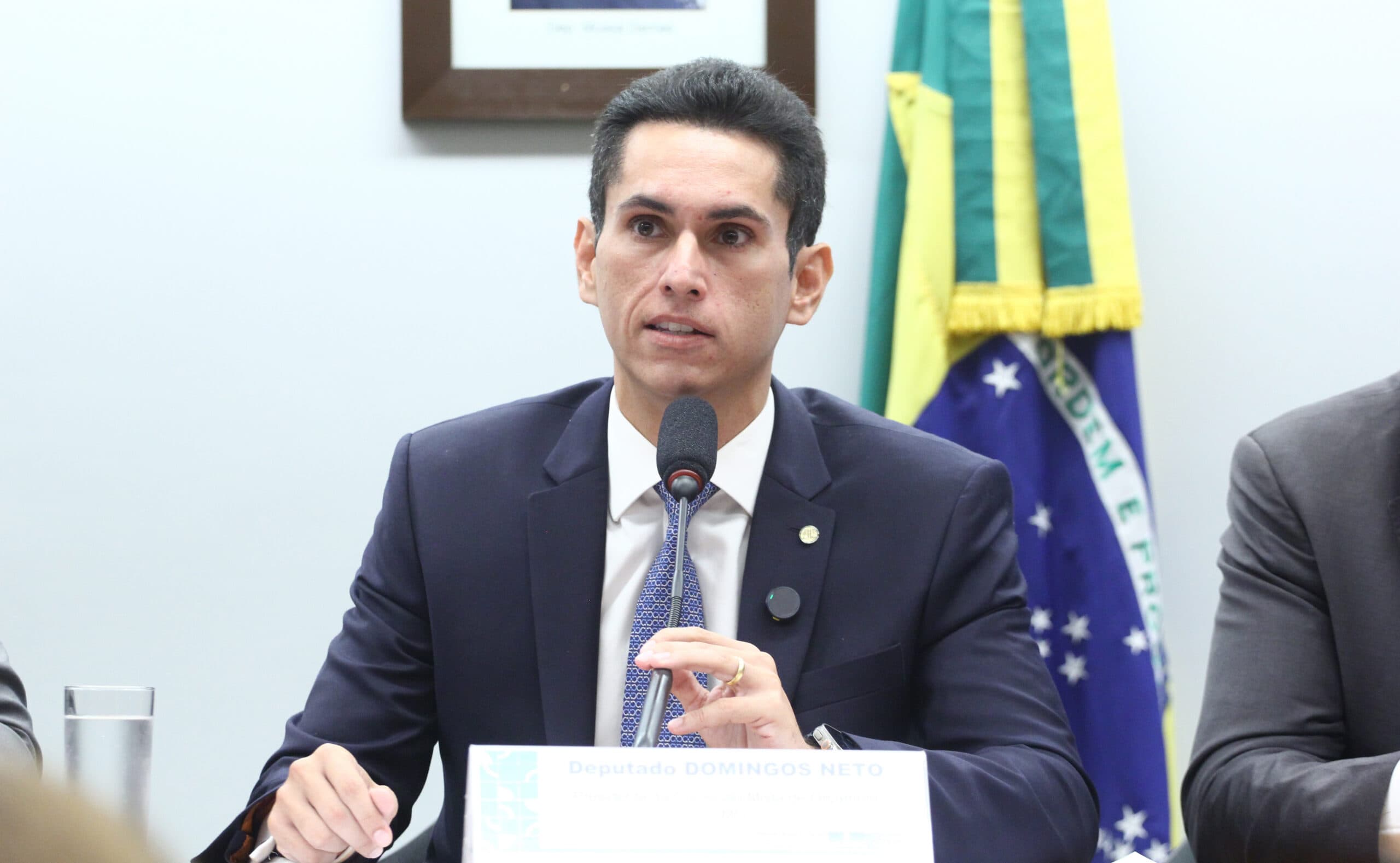
Federal deputy Domingos Neto (PSD-CE), rapporteur of the proposal that establishes mixed district voting in Brazil, intends to bring the text to a vote in the Chamber of Deputies by the end of November. The statement was given on Monday (9), during an event at the Commercial Association of São Paulo (ACSP), where it presented the guidelines of its report. The proposal replaces the current proportional system with a model that combines the election of representatives by electoral districts and closed lists of parties.
Rapporteur intensifies negotiations with parties
Domingos Neto said he intends to intensify negotiations with party leaders in the next two weeks to try to build an agreement on the change. “If we can get rid of a lot of these doubts in the next 15 days, we have an environment to vote on this until the end of November in the Chamber of Deputies,” he said. The articulation has the support of the mayor, Hugo Motta (Republicans-PB), who should resume the conversations with representatives of the parties.
The proposal faces resistance, especially from subtitles such as PT and PL, which have parliamentarians with large individual votes and that help to expand the representation of their acronyms in the proportional system. Despite this, the rapporteur is committed to dialogue in order to overcome differences and make the vote possible later this year.
Model provides for single vote in district
One of the main changes presented by Domingos Neto in relation to the project that the then senator José Serra (PSDB-SP) presented in 2017 is the adoption of a single vote per elector. Serra’s proposal provided for two votes: one for the district candidate and one for the party list. In the model defended by the rapporteur, the voter will choose only one candidate from his district.
The votes received by candidates from each party in all districts of the state will also serve as a basis for calculating how many seats the legend will be entitled to fill from the closed list. Thus, the system combines the direct choice of the district representative with the proportional distribution of seats between the parties.
Half of the vacancies will be by districts
The Chamber of Deputies will have half of the vacancies filled by candidates elected directly in the districts. The other half will be members of the party lists, according to the performance of each legend. In states with an odd number of deputies, the district system will have an additional seat.
If a party wins enough votes to hold seven seats, for example, but elects only three candidates in the districts, it will fill the remaining four seats with names from its closed list. If you win in seven districts, you won't need to go to the list. This mechanism seeks to balance territorial representation with party proportionality.
Districts will have population and geographic criteria
The system also provides criteria for the delimitation of electoral districts. The design should consider population data from the Brazilian Institute of Geography and Statistics (IBGE), respect the municipal boundaries and establish continuous territories. Each district shall have a population up to 5% greater or less than the average expected for the territories of the state.
According to the proposal, the rule seeks to prevent manipulations in the geographical division to favor certain parties or candidates, a practice known as gerrymandering. The definition of districts will be an essential step towards the implementation of the new system.
Transition begins in 2032, with rules for 2030 under discussion
The timetable presented by Domingos Neto foresees a transition from the 2032 municipal elections, with full implementation in the 2034 general elections. The rules for the 2030 elections are still under discussion. The proposal also establishes criteria for the composition of party lists.
One of the rules prevents three candidates of the same gender from appearing consecutively, with the aim of stimulating the participation of women in legislative disputes. The new system would reach the elections for the Chamber of Deputies, legislative assemblies, Legislative Chamber of the Federal District and municipal councils of cities with more than 200,000 voters.
Smaller municipalities maintain a proportional system
Currently, 103 municipalities fall under this criterion. In other cities, the proportional system would remain. The Federal Senate would not be affected by the change, as it maintains the majority voting system. The proposal still needs to advance in political articulation and the formalization of the Proposal for an Amendment to the Constitution (PEC).
To change the Constitution, the text will need at least 308 votes in favor in the House and 49 in the Senate, in two rounds of voting in each House. The rapporteur continues to seek consensus to bring the matter to the plenary later this month.
Read Also
Electoral reform may change voting in Brazil from 2032
Moro announces new Infrastructure and Security secretaries in Paraná
PGR requests archiving of fake news investigation
Font
www.gazetadopovo.com