Pope asks Argentina to overcome tension with Brazil
The Pope Leo XIV appealed for Argentina to maintain the will to dialogue and contribute to overcoming the diplomatic conflict with Brazil. Tensions escalated after insults from President Javier Milei to Lula and the withdrawal of ambassadors. The statement was confirmed by Monsignor Jorge Lozano, Archbishop of San Juan.

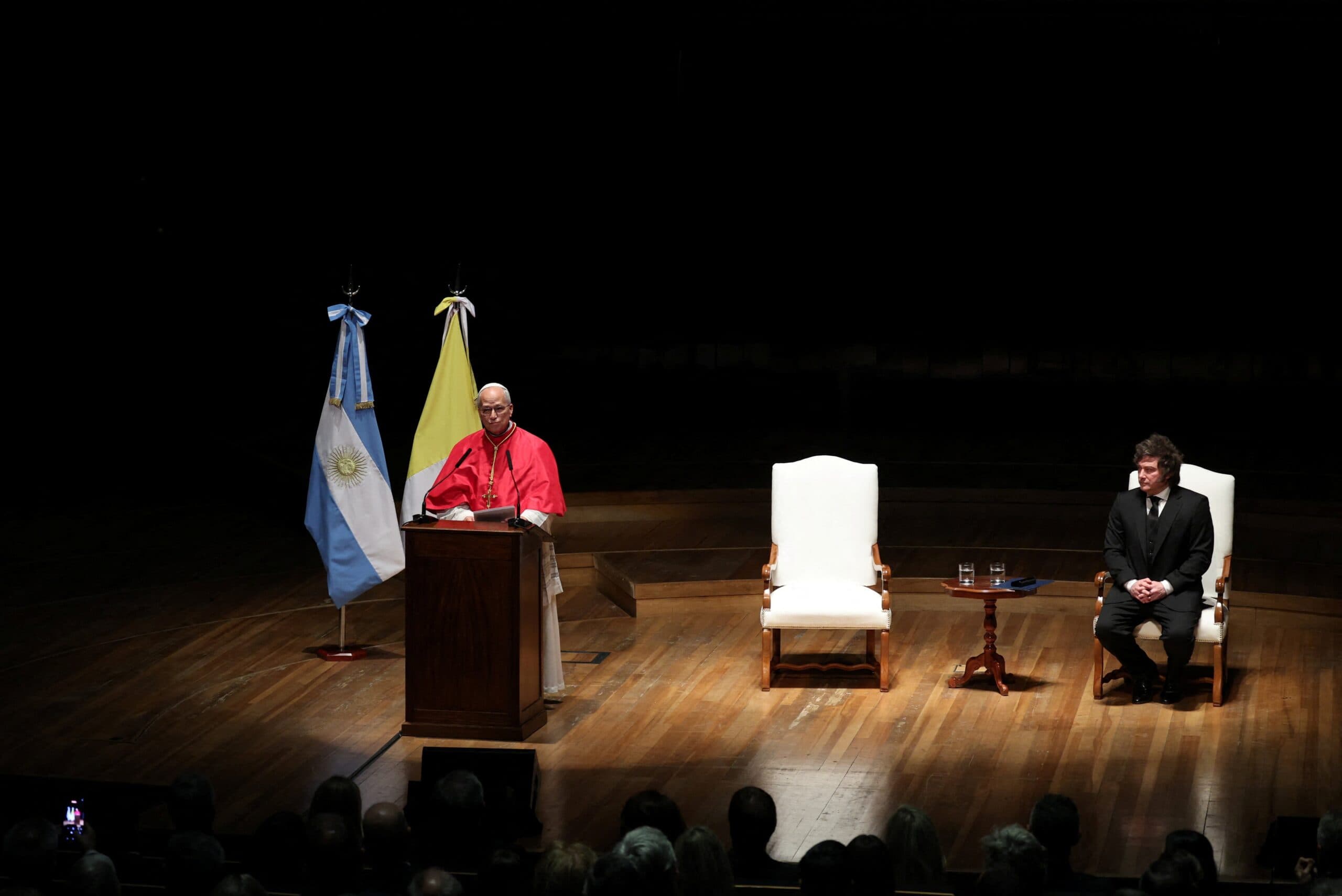
Pope Leo XIV called on Argentina to overcome its diplomatic conflict with Brazil, amid the downgrading of bilateral relations since August. The statement was given during his visit to the country and confirmed by Monsignor Jorge Lozano, Archbishop of San Juan and president of the Episcopal Commission for Media, in an interview with RFI.
“Argentina is called to preserve this desire for dialogue and to contribute to its continued fruitfulness,” said Leo XIV, at a time when diplomatic relations between Argentina and Brazil, the axis of regional integration, were lowered to the step before the rupture, with the withdrawal of ambassadors on August 4.
Pope cites tension among neighbors
The good relations with the neighbouring countries were evoked by Leo XIV in a call to attention to Milei for the level of diplomatic downgrading of the current relations of Argentina with Brazil. Monsignor Jorge Lozano confirmed that the pope also alluded to the diplomatic tension between Brazil and Argentina as a point that must be overcome.
The pontiff’s speech comes after a series of frictions between the two countries, started with insults from the Argentine president Javier Milei to the Brazilian president Luiz Inácio Lula da Silva.
Insults and withdrawal of ambassadors
Last July 26th, the Brazilian Ambassador in Buenos Aires, Júlio Bitelli, was called for consultations in Brasilia, after, the previous day, the Argentine President, Javier Milei, Insulting President Lula, Call him a “thief.”, “Corrupt” and “Prisoner”, during the launch of the presidential candidacy of Flávio Bolsonaro on São Paulo.
Milei uttered the insults alongside Argentina’s foreign minister, Foreign Minister Pablo Quirno, who applauded and encouraged every word of Milei. On August 4, after Milei repeated the assaults against President Lula, Chancellor Mauro Vieira reduced the level of diplomatic relations with Argentina, keeping Ambassador Bitelli in Brasilia and leaving the Brazilian Embassy in Buenos Aires at the level of charge d’affaires. The same thing happened on the Argentine side in Brasilia.
Brazil expects Argentine signal
According to later statements by Brazilian Foreign Minister Mauro Vieira, Brazil was waiting for a signal from the Argentine government to defuse the diplomatic conflict. But after 15 days of elections in Brazil, which consecrated the re-election of President Lula, Javier Milei continues without even greeting his Brazilian peer for victory.
The absence of any gestures of rapprochement maintains the impasse, which now receives attention from the Vatican.
Papal mediation in 1978
The largest intervention of a pope in a bilateral conflict involving Argentina took place in December 1978. Unlike a merely diplomatic conflict, Pope John Paul II avoided an impending war between Argentina and Chile over the sovereignty of the Picton, Nueva and Lennox Islands in the Beagle Channel on the southern shore of Tierra del Fuego.
At the Vatican, John Paul II summoned the ambassadors and offered the mediation of the Holy See, urgently sending Cardinal Antonio Samoré to Buenos Aires. Acceptance of the proposal at the last minute halted the military mobilization, when the troops were already ready to attack.
Peace treaty and papal visit
After years of discrete negotiations, in November 1984, the Treaty of Peace and Friendship was signed at the Vatican, later ratified through a popular consultation in Argentina. In April 1987, with democracy restored in Argentina, John Paul II visited Argentina, the last time a pope visited the country.
It took more than 39 years for a new visit, the current one of Pope Leo XIV who also aims to complete the pending trip of his predecessor, Pope Francis, who did not return to his homeland during the 12 years of his papacy.
The expectation is that the presence of the pontiff may pave the way for dialogue between the two countries, but there is still no sign of change on the part of the Argentine government.
Read Also
Nvidia CEO didn’t know mistress was a spy
Promotion of kebab in Germany ends in bang with police
Font
g1.globo.com