Pope in Uruguay: Church must live as a minority
In a visit to Uruguay, Pope Leo XIV said the Catholic Church needs to learn to live as a minority. The statement was made during a vigil at the Centenario Stadium in Montevideo, which gathered about 100,000 faithful. The pontiff also visited poor communities and will proceed to Argentina and Peru.

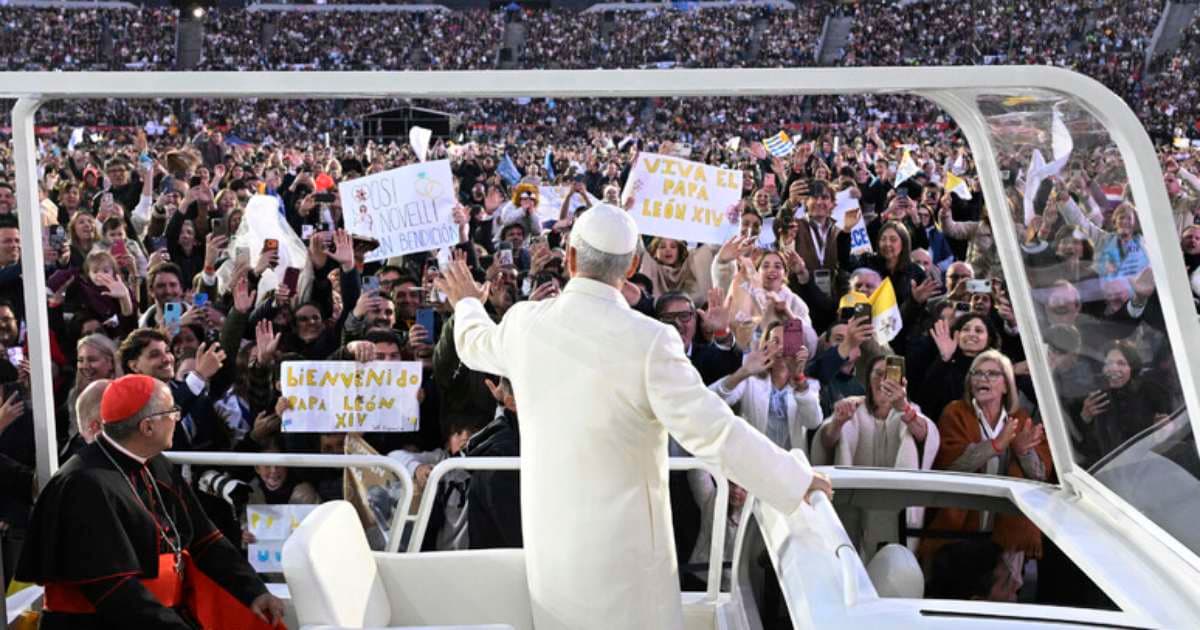
Pope Leo XIV said on Saturday during his visit to Uruguay, the most secular country in South America, that the Catholic Church must learn to live as a minority in the face of the advance of religious indifference. The statement was made during a prayer vigil at the legendary Estadio Centenario in Montevideo, which gathered about 100,000 people, 70,000 in the stands and 30,000 in the outdoor areas, according to the Vatican.
The pontiff stressed that Uruguayan Catholics had to learn to live and announce the faith in this scenario. "So their experience can help brothers and sisters in other parts of the world who are beginning to discover, in different ways, what it means to be a minority," he said.
Centenary Vigil gathers crowds
The vigil at the Estadio Centenario, a historical monument of Uruguayan football and the stage of the first World Cup final, was one of the high points of the passage of Leo XIV through a country that had not received a pontiff since 1988. The place, which has already hosted some of the most important moments of world sport, was the setting for a meeting of faith and reflection on the role of the Church in increasingly secularized societies.
During the event, the Pope stressed the importance of recognizing the new reality of the Church in many countries. The central message was one of humility and adaptation, without losing the essence of the evangelizing mission. The crowd present responded with enthusiasm, showing that, even as a minority, the Uruguayan Catholic community remains active and engaged.
The presence of 100,000 people in and around the stadium demonstrates that, despite the context of religious indifference, there is room for large-scale manifestations of faith. The Vatican released the figures, highlighting the expressive participation of the faithful.
Example of perseverance and faith
Robert Prevost, who accompanies the visit, praised the "perseverance" of "parents who pray with their children, teachers who seek to live and witness to the faith, young people who have discovered Christ and want to follow him even when they feel alone and priests who travel great distances to bring the sacraments to the faithful".
These words highlight the daily life of a Church that, in Uruguay, has learned to act in an environment where religion does not occupy the center of public life. The perseverance cited by Prevost reflects the daily effort to keep faith alive amid social and cultural challenges.
The Uruguayan experience, according to the pope, can serve as a model for other regions of the world that face similar processes of secularization. The idea of minority, far from being a sign of weakness, is presented as an opportunity for authentic and close witness to people.
Visits to communities and universities
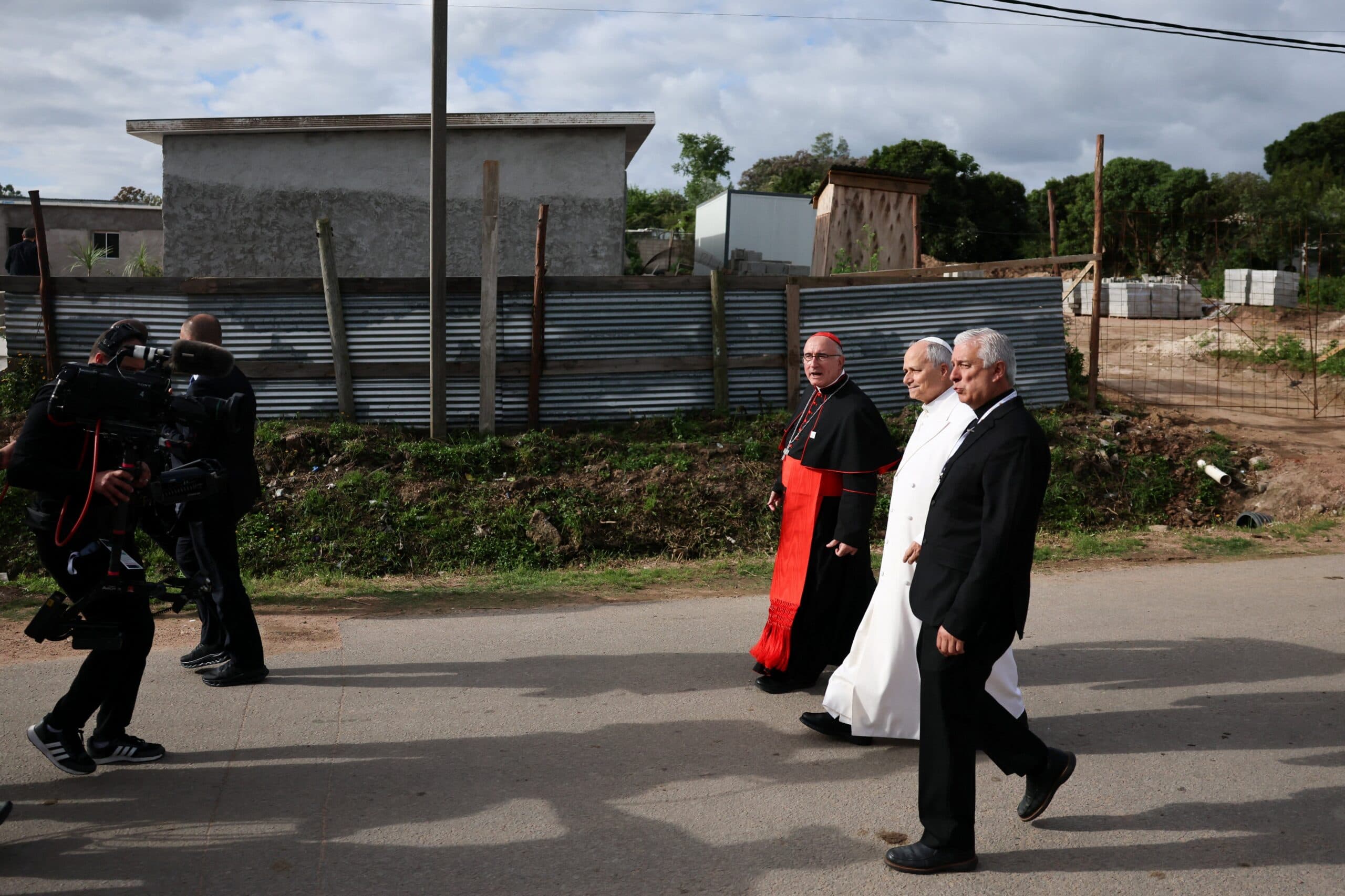
Earlier, he visited the city of Paysandú, on the border with Argentina, and the community of Casavalle, one of Uruguay’s poorest neighborhoods, in Montevideo. He also met with students and professors at a university in the capital.
These visits reinforce the pastoral character of the trip, with special attention to the peripheries and to young people. In Casavalle, the pope had contact with the reality of social vulnerability, while at the university he dialogued with the academic community about faith and reason.
The agenda in Uruguay combined moments of great visibility, such as the vigil in the stadium, with closer and quieter meetings, highlighting the diversity of audiences reached by the papal message.
Next stages of the mission
Prevost’s apostolic mission in South America will also include stages in Argentina and Peru, where he was bishop and missionary for more than 20 years. The passage through these countries must follow the same line of proximity and listening to local realities.
The return to Peru will have a special meaning for the pontiff, who knows closely the challenges of the Church in the Andean region. The expectation is that the next steps will reinforce the message of a Church that places itself as a servant, even when it is a minority.
The visit to Uruguay, therefore, is not closed in on itself, but is part of a wider itinerary that seeks to strengthen the Catholic presence in South America, a continent marked by profound religious and social transformations.
The Uruguayan example, with its history of secularism and democratic coexistence, offers valuable lessons for the Church throughout the world. The Pope’s speech on the centenary echoes as a call to humility and trust in the strength of daily witness.
Read Also
Pope Leo XIV condemns violence against children in Uruguay
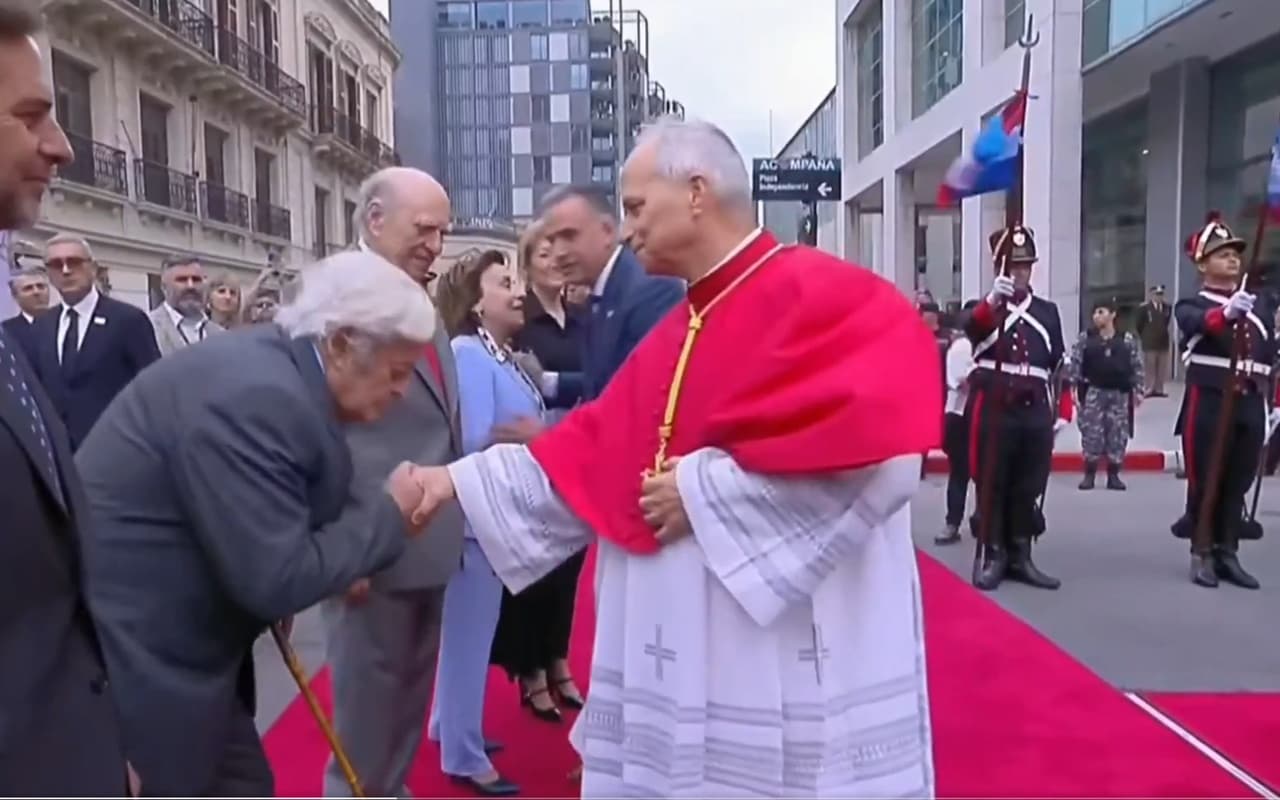
Former president tries to kiss Pope Leo XIV and is refused
Former Paraguayan president gives testimony after arrest
Font
www.terra.com.br