President of Paraguay resigns amid banking crisis; vice takes over
Santiago Peña justifies decision in the name of country's stability

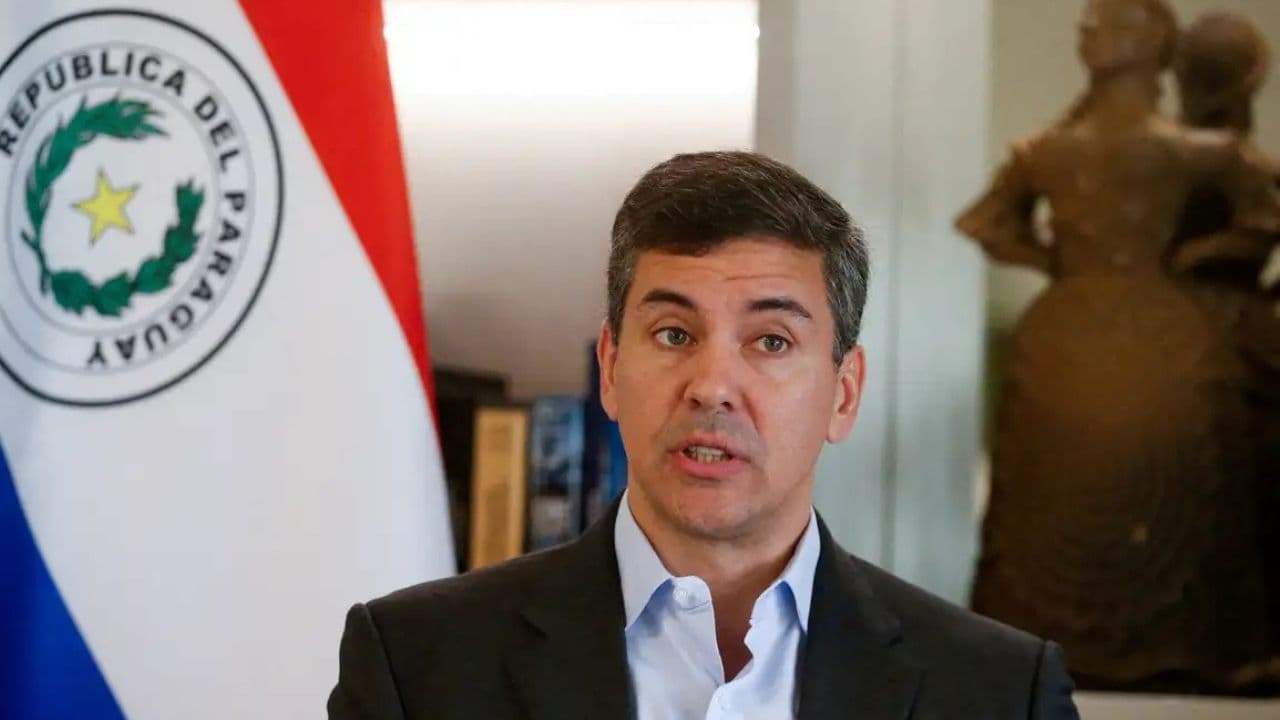
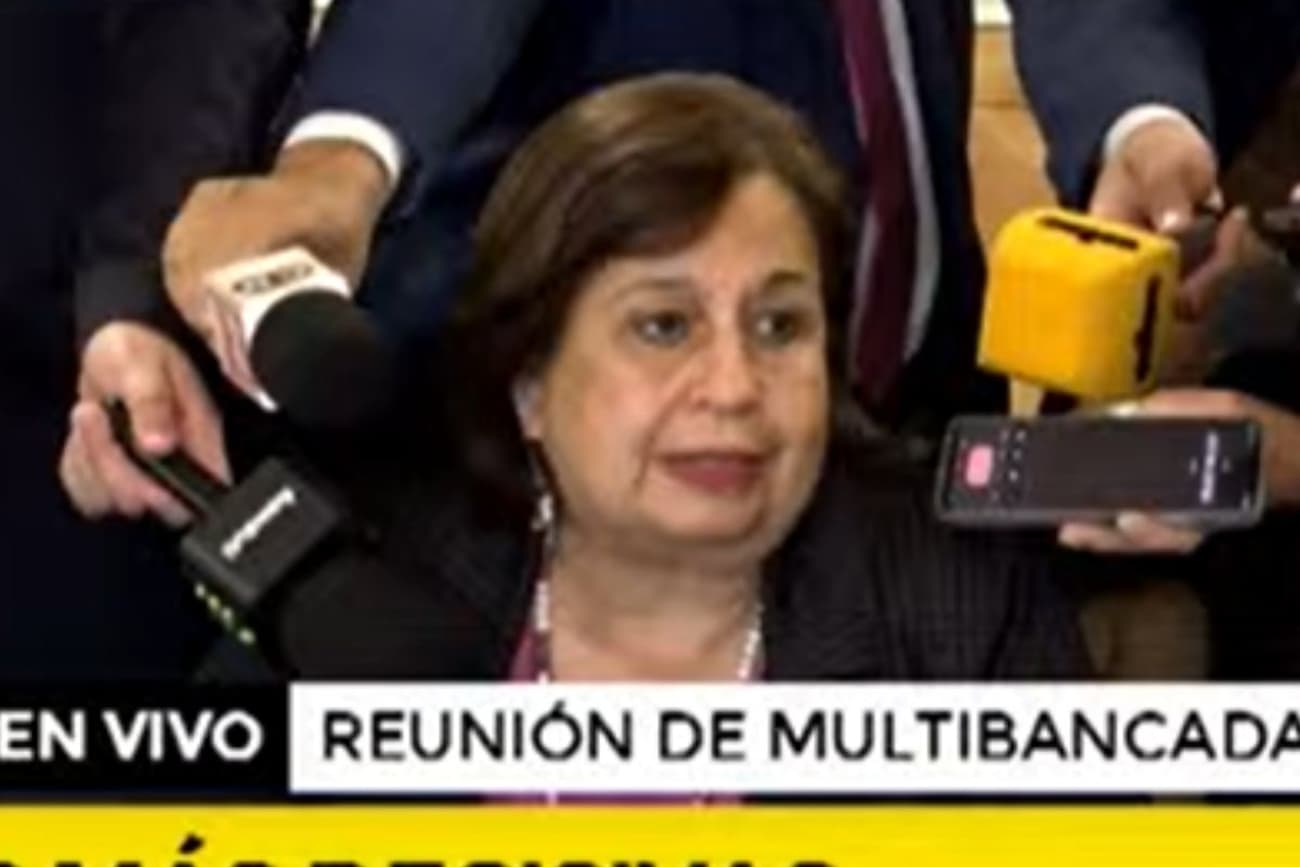
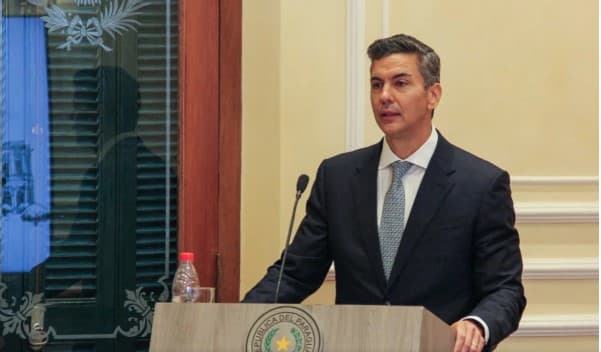
While the Paraguayan Chamber of Deputies discussed the opening of an impeachment process against the president, on Thursday, the country’s president, Santiago Peña, announced his resignation, amid a financial crisis caused by the intervention of the Paraguayan Banco Central (BCP) in the digital bank Ueno Bank.
Abandoned by the party itself, which began to charge its resignation, Peña justified the decision in the name of the stability of the country and the need to "preserve our institutions". Vice President Pedro Allana will take office.
“I address you at one of the most difficult moments of minha vida, with my heart turned to Paraguay and with the conviction that our Republic must always be above any person or circumstance,” the president said in a statement on social media.
"History will be in charge of judging and placing in its proper dimension the events that we must experience today. I have taken the decision to present my resignation to the Presidency of the Republic,” he added.
Even with the resignation, the Chamber of Deputies unanimously approved the impeachment process against Peña. Now, the Senate must decide whether the process of impeachment continues or loses effect due to the resignation.
The continuity of the process is important because, in Paraguay, every former president has the right to the office of senator for life, with the right to vote in Parliament, but not to vote. The exception is for presidents who are dissolved, who lose their right to office and privileged forum.
Crisis
The financial crisis that shook Paraguay began on Tuesday and turned into a political crisis.
This morning, the House began the debate to open an impeachment process that had the support of even the legend of the president, the Colorado Party.
The political earthquake in the neighboring country is a consequence of the liquidation of Ueno Bank, which had 2.9 million current account holders, about 60% of the adult population of the country. These people had their deposits frozen.
After the liquidation of the bank, the president of the Paraguayan Central Bank, Carlos Carvallo, resigned from his post. He was the head of the digital bank until 2023, before taking over the country’s Banco Central.
Street protests demand that those responsible for the crisis be punished. Paraguay’s prosecutor’s office has called for the arrest of eight people, including Ueno president Juan Manuel Gustale.
Presidency
The crisis hit President Santiago Peña because he was a shareholder, until March 2025, of the Vázquez Group, which controls the bank.
Elected in 2023, Santiago Peña is a conservative right-wing politician from the Colorado Party who has controlled power in Paraguay for seven decades, except for five years (2008-2013).
The opposition accuses the government of making investments in the state-run Ueno Bank by the Social Security Institute (PIS).
The digital bank still manages the pension payments of thousands of retirees and holds about 30 percent of public funds deposits, estimated at $850 million.
The opposition blames Peña for the crisis because he has appointed a former Ueno leader as BC president. In announcing his resignation, the president apologized to the Paraguayan people.
“I also want to apologize to the people in case at some point I have failed. It was never my intention to betray the trust they placed in me. Every day, I have assumed this responsibility with the desire to work for Paraguay,” said Peña.
Colorado Party
Colorado Party president and former president Horacio Cartes said the legend would not be next to “the robbery of public, private and retired funds.”
The president of the Paraguayan Congress, Bachi Nunez, two days before asking for Peña’s resignation, assessed to the press that the president could not be held accountable because the Banco Central had institutional autonomy.
The opposition accuses the Colorado Party of wanting to move away from the scandal it would have helped to build. The deputy of the Solidarity Country Party (PPS), Johanna Ortega, highlighted, during the session of the House, that the resources of the retirees were being deposited in a bank near President Peña.
“We have warned about conflicts of interest, about the use of public institutions to favor private businesses of a few, and about the crime of management for their own benefit – a practice in which this President of the Republic has systematically incurred,” he said.
Paraguay has a guarantee fund that can reimburse up to $38,000 per person, which represents ₲228,300,000 in the local currency, the equivalent of 75 minimum wages.
Economic consequences
Paraguay’s financial and political crisis shakes the country’s reputation as an emerging destination for foreign capital, with repercussions on the local economy.
The Association of Importers and Traders of Paraguay (Asimcopar) highlighted, in a note, that two out of three transactions of the country’s major retail networks are carried out through Ueno Bank accounts.
“There will undoubtedly be a semi-paralysis of the commercial market in Paraguay. This situation does not only affect us in the commercial sphere; it also impacts the daily lives of families, thus affecting the daily lives of millions of people,” the statement published in local media said.
The Moody’s risk agency said the case puts the authorities’ ability to manage a major bank’s situation to the test.
“One of the main risks that Moody’s identifies is in deposits that exceed insurance coverage. Although the BCP indicated that 97% of depositors would be fully covered, only 30% of Ueno’s deposits were within the guarantee limits,” Bloomberg Line said in a statement.
In Brazil, political groups have been arguing that the neighboring country would be an example of economic and financial success.
Anthropologist Salvador Schavelzon, a professor at the Federal University of São Paulo (Unifesp), says that the admiration of these groups with Paraguay comes from the occupation that Brazil’s agribusiness carries out in the neighboring country.
“The Brazilian right thinks it is a paradise because they already have political contacts established there. There are even branches of the Banco do Brasil, and Portuguese is spoken in public schools, contrary to Paraguayan law. It is like a land occupied by Brazilian agribusiness,” said the Paraguayan reality scholar.