Project proposes career plan for public servants with impact of R$ 1.3 million in 2027
Proposal from the Presiding Board establishes 4% progression every two years, incentives for qualification and rules for remote work

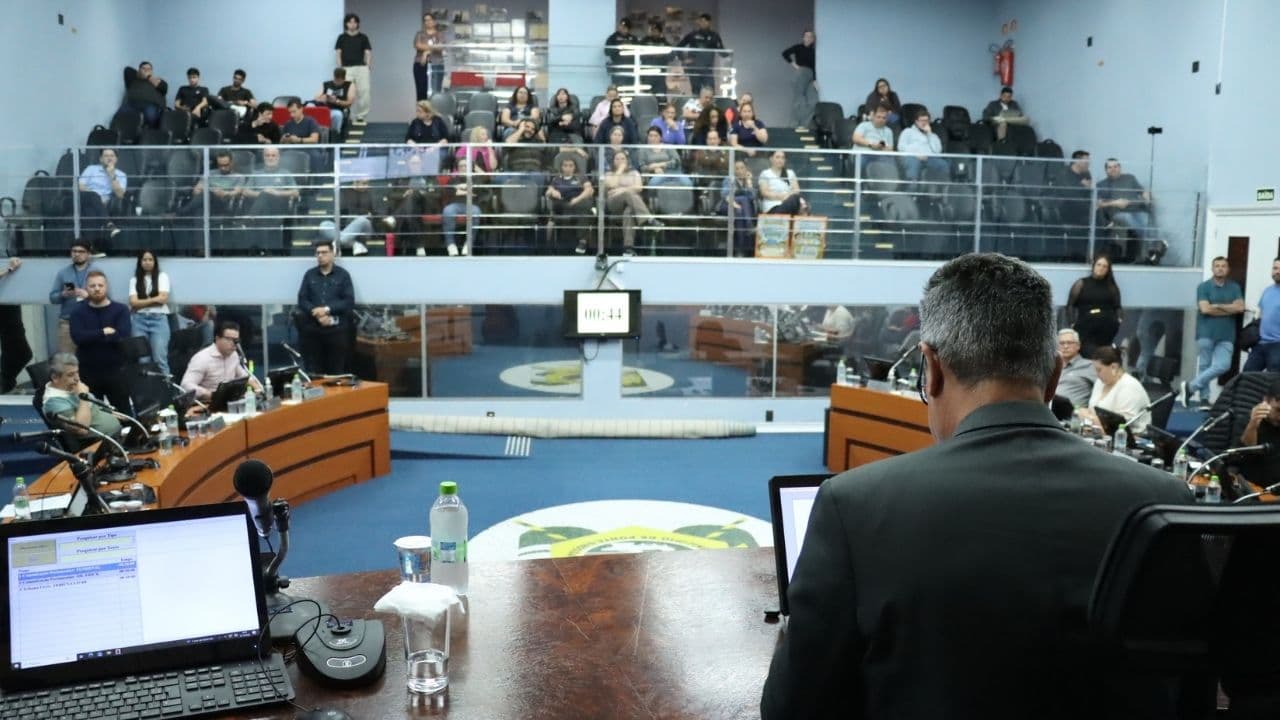
A bill presented by the Board of Directors of Câmara Municipal de Ponta Grossa proposes the creation of a career plan for the effective public employees of the Legislative. The proposal foresees salary progression by time of service, incentives to professional qualifications and changes in the rules of gratifications, hours and leave.
The financial estimate attached to Bill No. 358/2026 points to an impact of R$ 1,371,662.10 in 2027. For the following years, the projected values are R$ 1,378.118.24 in 2028 and R$ 1,384.831.28 in 2029.
Mazer 'almost cries' when talking about Lula's victory in the PG Chamber
According to the file filed, the proposal entered the House on October 22 and was submitted to the Legislation, Justice and Writing Committee on November 26, with a deadline to rule until November 13. The text still depends on approval.
Wage advance and qualification
Among the main points is the horizontal progression with an increase of 4% every two years, automatically, according to the criteria provided for in the project. The percentages of bienniums prior to the validity of the future law would be preserved in a specific heading.
The plan also establishes vertical progression by training and improvement, contemplating training courses, ensino médio, technical training, graduation and postgraduation. The percentages vary according to the education required for the position and the relationship of the course with the activities of the Legislative.
For this modality, the text provides a five-year interval between classes and limits on the salary base, according to the server input group.
The first framework considers the submission of supporting documents within 20 calendar days, from 1 January 2027. The proposal also states that the recasting cannot reduce salaries, except for the constitutional assumptions mentioned in the document.
Remote work and gratifications
The project provides for regulation of remote and hybrid work, conditioned on collective and individual agreements and the nature of the activities. Among the requirements is the maintenance of face-to-face service to the citizen, without the need for scheduling.
In the area of gratifications, the proposal establishes a new regime, with criteria related to technical responsibilities, management, advice, supervision and temporary activities. The text forbids new gratifications for the execution of tasks already provided for in the assignments of public employment.
It also provides for the preservation of the average of the gratuities actually received in the last three months of 2026, observing the conditions established in the plan.
House declares budget adequacy
In a statement attached to the project, the mayor, Julio Kuller, states that the expenditure has budgetary and financial adequacy and compatibility with the planning instruments of the municipality.
According to the statement, the projections remain within the limits of personnel expenditure and the constitutional ceiling of commitment of the twelfth to the payroll.