Safety in grain storage: preventing accidents in silos according to NR-31
Find out how to prevent accidents in grain storage, learn about the risks in silos and the requirements of the NR-31 and NR-33 standards

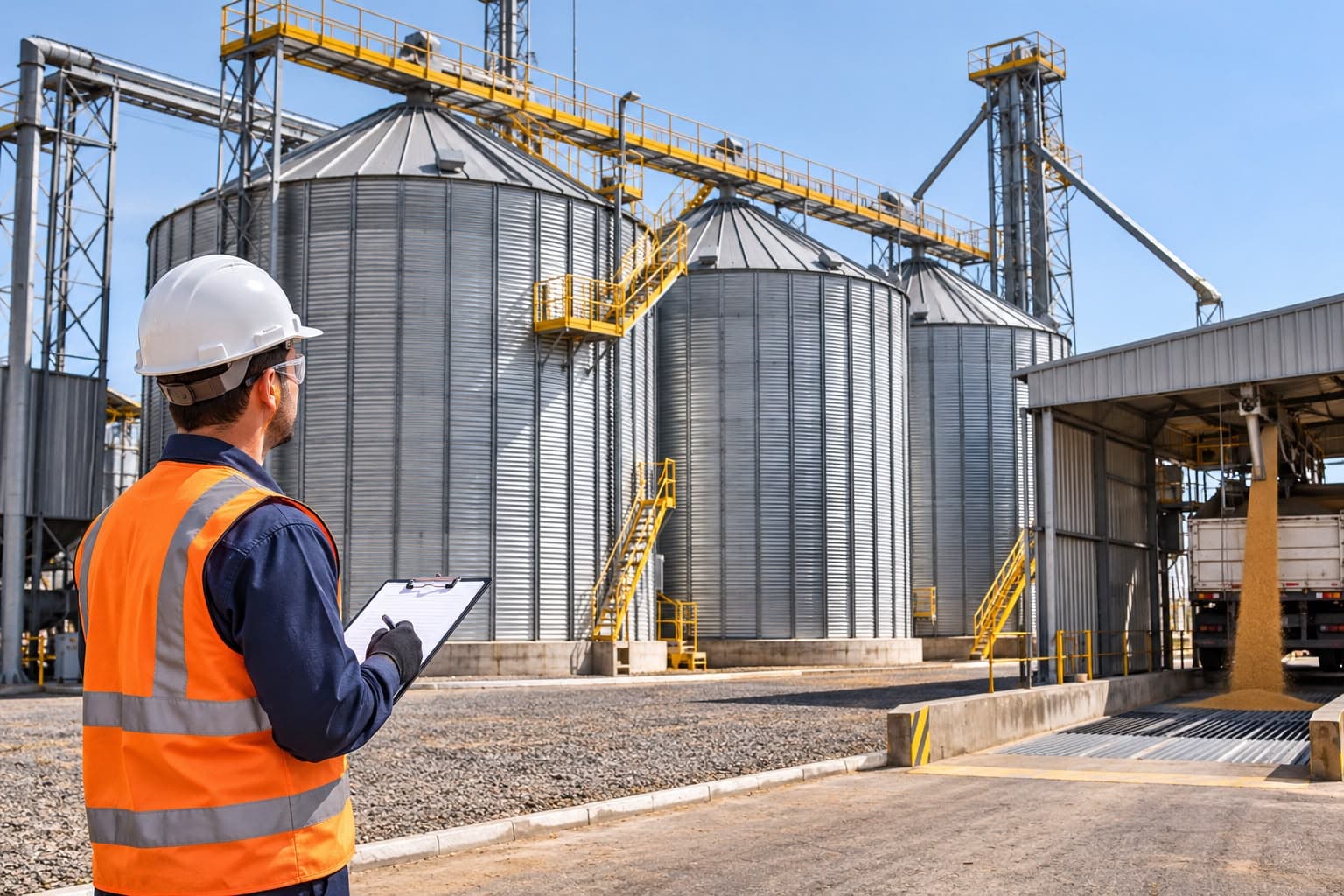
Grain storage is an essential activity for agricultural production, but involves risks that are not always perceived by workers. Silos, mugs, mug lifts, conveyor belts and dryers make up systems that require safe planning, maintenance and procedures.
Accidents can occur during the reception, cleaning, handling and removal of grains, especially when there is entry into confined environments, dust accumulation, intervention in machines or access to elevated structures.
The Norma Regulamentadora NR-31 establishes security measures for these activities in rural areas. Its item 31.13 deals with dryers, silos and confined spaces, contemplating requirements of design, operation, maintenance and protection of workers. The OPA methodology—Observe, Plan, and Act—helps transform these requirements into practical day-to-day decisions.
One of the most serious accidents is engulfment: the worker can sink into the mass of moving grains, get stuck under crusts or suffer burial after the collapse of a grain bridge. Even when the surface appears firm, there may be hidden cavities and instability of the stored material.
Another danger is the explosion of combustible dust. Fine dust suspended in the air can form explosive atmospheres in the presence of an ignition source, such as sparks, overheating, electrical failures or hot work. Dust buildup and inadequate maintenance raise this risk.
The lack of oxygen or the presence of contaminants in confined spaces, the unexpected movement of equipment, contact with moving parts, falls of height, noise, biological agents and physical efforts in cleaning and maintenance activities should also be evaluated.
Watch before executing
Before starting activities, the worker and his/her leadership need to check the conditions of the structures, accesses, guardrails, machine protections, ventilation systems, lighting and cleaning. It is important to observe signs of grain warming, unusual odors, excessive dust, abnormal vibrations and failures in operation.
The observation also requires attention to the behavior of the stored product: compacted grains, crusts and obstructions should not be removed by means of improvised entry into the silo or by the attempted unobstructing with the equipment in operation.
Planning means controlling risk
The NR-31 determines that access to the inside of the silo occurs only when extremely necessary and with the silo out of operation, after assessment of the risks of engulfment, burial, drowning and suffocation. It also requires the presence of at least two workers, with one of them remaining on the outside, and a fall protection system anchored to the structure that allows rescue.
When the environment is characterized as a confined space, the applicable procedures of atmospheric assessment before entry, Entry Permit and Work (PET), continuous monitoring of the atmosphere, adequate ventilation, surveillance, supervision, training and emergency and rescue planning, according to NR-31 and NR-33, should be observed.
In the planning should also include the blocking of hazardous energies before maintenance and cleaning, the control of ignition sources, the prevention of dust accumulation, the inspection of stairs and platforms and the choice of protective equipment suitable for the risks effectively identified. PPE does not replace collective protection measures.
Act: Security needs to appear in the routine
Prevention only works when the planned measures are executed. This means interrupting an unsafe operation, isolating and signalling risk areas, fixing defective protections, applying manufacturer procedures, and preventing unauthorized access.
Welding services, cutting or activities capable of generating static electricity in silos depend on special permission with analysis of the risks and necessary controls, according to NR-31. The cleaning of dust should be planned in such a way as not to produce dangerous clouds or generate ignition sources.
The rescue also needs to be planned in advance. In the event of an accident due to burial or dangerous atmosphere, workers should not enter impulsively to rescue the victim, as they can become new victims. The care must follow the emergency plan with appropriate teams, means and resources.
Prevention begins before the emergency
Periodic inspections, preventive maintenance, training, supervision and reporting of anomalies are essential. The risk assessment must cover the entire task: truck receipt, grinding wheel discharge, mechanized transport, drying, storage, dispatch and non-routine interventions.
More important than filling out documents is to ensure that each worker knows how to recognize the danger, has real conditions to perform the task safely, and is authorized to interrupt it when the controls are not implemented.
Conclusions
The safety of grain storage depends on choices made prior to operation. OPA summarizes an attitude that can save lives: observe conditions, plan controls, and act before risk turns into an accident.
No production, cleaning, or maintenance warrants entering a silo without hazard assessment, energy control, safe weather conditions, and rescue organization. The protection of life must guide all decisions.
Notice what may go wrong. Plan how to do it safely. Act before the accident happens.
Technical references
Brazil. Ministry of Labour and Employment. NR-31 — Safety and health at work in agriculture, livestock, forestry, forestry and aquaculture, especially item 31.13 (dryers, silos and confined spaces). Text updated by Ordinance MTE no 342, of 21 March 2024.
Brazil. Ministry of Labour and Employment. NR-33 — Safety and Health at Work in Confined Spaces. Applicable according to the characterization of the environment and working conditions.
Thank you for reading and until the next article.
Keep up with our weekly articles. For topic suggestions, please contact (42) 99997-4979.