Sanepar prevents 457 billion liters of sewage from reaching PR rivers
Sanepar treats 457 billion liters of sewage and contributes to improving the quality of Paraná rivers. Ponta Grossa is among the priorities

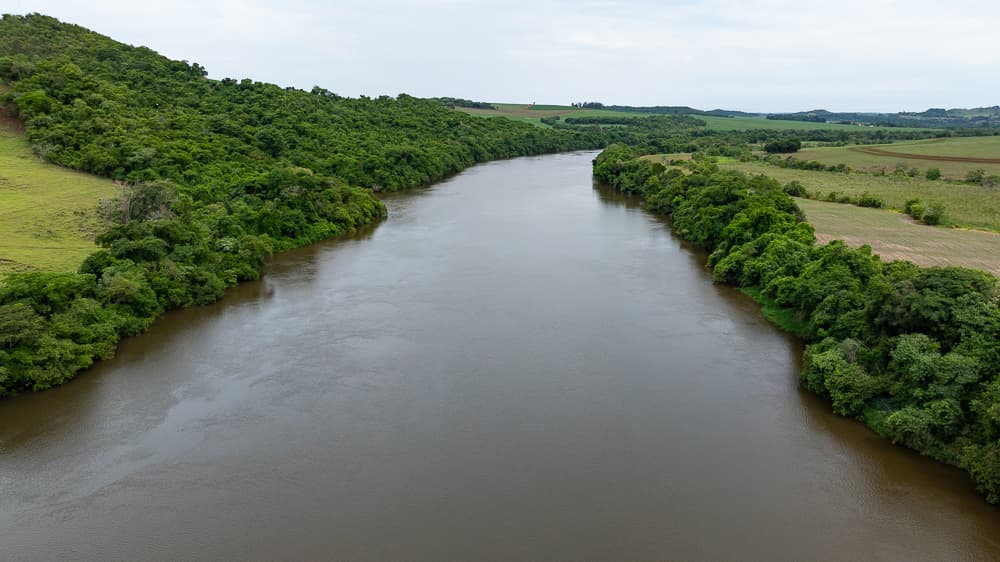
Sanepar treated approximately 457 billion litres of sewage in 2025, preventing this volume of waste from being released without treatment into rivers and streams of the Paraná. The result follows the improvement of the water quality indicators in the state, according to a survey published by the Paranaense Institute of Economic and Social Development (Ipardes).
According to the 2026 report, 87% of the 172 monitoring points analyzed presented water classified as good. The index represents an increase of six percentage points compared to the previous survey, published in 2022, when the percentage was 81%.
The expansion of collection and sewage treatment is pointed out as one of the factors that contribute to the environmental recovery of the Paraná river basins.
Sewage collection advances and Sanepar forecasts R$ 13 billion in investments
Currently, the sewage collection network serves 82.9% of the population in Sanepar’s area of activity, a percentage higher than the national average of 62.3%, according to data from the National Sanitation Information System (Sinisa) presented by the company.
In 2022, the company’s registered coverage was 78.9%. This means a growth of four percentage points in the period.
In addition to the expansion of the network, Sanepar informs that it treats 100% of the sewage collected in the municipalities served.
To continue expanding services, the company plans investments of R$ 13 billion by 2030, with a focus on the universalization of basic sanitation.
According to Sanepar CEO Wilson Bley, the improvement in environmental indices is related to the expansion of infrastructure and the efficiency of urban sewage treatment.
Ponta Grossa is among the priorities for water protection
The municipality of Ponta Grossa appears among the locations considered priority for the actions of the Água Segura program, developed by Sanepar to strengthen the preservation of the springs and reduce risks to the supply.
The initiative includes municipalities and regions with the highest demand for water resources, such as Curitiba and the Metropolitan Region, Londrina, Cambé, Maringá, Cascavel and cities in the Paraná Coast.
The program provides for preventive monitoring, identification of risk situations and measures to protect the sources used for public supply.
Among the strategies are the recovery of ciliary forests, the control of erosion, the preservation of springs and the encouragement of sustainable land use practices.
One of the initiatives is the Blue Fund, a mechanism that provides financial incentives to rural producers that contribute to the conservation of springs and environmental preservation areas.
Study identifies rivers that still present quality problems
Despite the evolution recorded in the Paraná, the Ipardes survey shows that there are still challenges for the preservation of water resources.
Of the points evaluated, 9% presented water quality considered reasonable, while another 4% received a poor rating.
The study also identifies regions that require special attention, including the Piquiri, Baixo Iguaçu, Alto Ivaí and Baixo Tibagi basins, where there are potential conflicts related to water use or risks of underground contamination.
To address these problems, Sanepar is developing new monitoring and response tools to environmental emergencies.
These include the Rapid Attendance Protocol (PAR) and the NOAH system, a platform for georeferenced identification of risk areas and the development of water vulnerability maps.
According to the company’s Water Resources Manager, Ester Amélia Assis Mendes, these technologies should help in the early identification of problems and the adoption of measures to protect the supply systems.
Preservation of rivers is essential to ensure supply
The report also looks at the distribution of water consumption among public supply, industry, agriculture and livestock.
Among the regions with the largest share of public supply in consumption, we highlight Alto Iguaçu, with 75%, Baixo Tibagi, with 54%, and the Coastal Region, with 51%.
The data reinforce the importance of preserving the springs, especially in urban regions that depend on complex systems of water collection and distribution.
The 2026 edition of the Paraná Sustainable Development Indicators for Watersheds brings together environmental and socio-economic information to guide public policies, investments and conservation actions.
The Water Quality Index is calculated from data collected in 172 monitoring sites, following the classification used by the Water and Land Institute (IAT).
Although the results indicate advances, the survey shows that the expansion of sanitation and the protection of rivers remain essential to ensure quality water to the population of Paraná.