Socialist Utopia Brought Australians to Paraguay 130 Years Ago
Over 130 years ago, a group of idealistic Australians left their country in crisis to establish an equal society in Paraguay. Led by journalist William Lane, they founded the colonies of New Australia and Cosme. The story is remembered by descendants and experts.

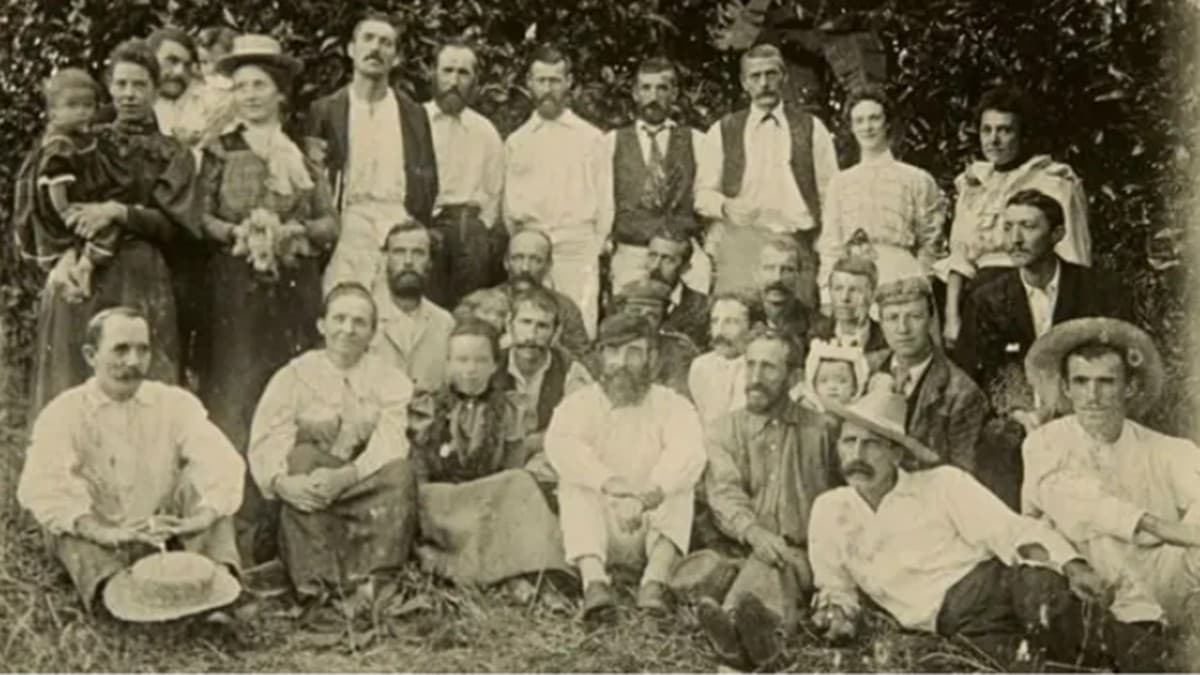
In the late 19th century, a group of Australians disenchanted with the economic crisis and government repression decided to leave the country in search of a socialist utopia in Paraguay. More than 130 years later, BBC News World remembers the journey of these idealists who emigrated full of hope to an unknown land.
The movement, known as the New Australian Movement, was led by English journalist William Lane. He believed that it was possible to create an egalitarian society, without government, bankers or army, away from Australia.
Context of crisis and repression in Australia
Australia, then a set of British colonies, faced a severe economic, political and social crisis. Some regions suffered from droughts, while others faced floods. The unemployment rate was high, and “the country was on the verge of bankruptcy,” said Roy Boland, an honorary professor of Latin American studies at the University of Sydney.
There were many protests and strikes by workers, trade unionists, shavers and rural workers. The “authoritarian” government’s response, says Boland, was to repress them with violence, especially in Queensland. One of the workers who joined the strikes was Billy, Rodrigo Wood’s grandfather and secretary of the sheepshearers’ union.
In this context, a trade union movement emerged that became socialist and sought a place outside Australia to found an egalitarian society. “Australia is a country of immigrants. As far as I know, this is the only case in the history of the country in which many people have organized to leave," Boland told BBC News World.
William Lane and the Dream of a New Society
William Lane, the leader of the movement, was an English journalist who had left his country at a very young age. After living in Canada and in the Estados Unidos, he settled in Australia, where he witnessed a period of great turmoil. Lane realized that he would not be able to create the community society he wanted, without government and employers who oppressed the workers.
But he understood the workers' demands. He listened to what they had to say and organized them to look for "something better" outside of Australia. "Their determination and courage were admirable," Boland adds. He believes that the group did not have enough information about what they would find in the place Lane chose for the project.
The group was called the New Australian Movement and left for Paraguay, a country that, for them, was very remote. There, they founded two colonies: New Australia and Cosme.
Memories of a descendant
Rodrigo Wood, the grandson of Billy and Lili, grew up hearing stories about their grandparents’ adventure. "I must thank my grandparents, Billy and Lili, for coming to Paraguay after a very difficult dream to understand," Rodrigo Wood told BBC News Mundo, of Asunción.
He remembers the stories he heard from his parents and uncles and those he heard on the numerous trips he made to the two colonies where the Australians settled in Paraguay. For Rodrigo, the grandparents’ journey was an act of courage and idealism.
"It's a very curious case in the history of Australia, it's unusual," says Roy Boland. The professor points out that the movement was unique in the country, marked by the voluntary emigration of a significant group of people in search of an ideal.
Legacy and reflections
The history of Australians in Paraguay remains as a little-known chapter of immigration. The New Australia and Cosme colonies, although they have not fully achieved the dreamed utopia, have left marks on the memory of descendants such as Rodrigo Wood.
The episode illustrates the power of utopian socialist ideas in the 19th century, which preached a peaceful revolution to establish harmonious relations between workers, bosses and landowners. "The classics, Marx, the utopian socialists of France and the Estados Unidos, who did not believe in the need for a bloody revolution. They believed in a peaceful revolution, which would open the way for a good relationship between the workers, the bosses and the landowners,” the source said.
For the readers of the Boca no Trombone, the saga of these Australians offers a reflection on migration, idealism and the challenges of building an alternative society. The source did not detail the outcome of the colonies, but the memory of the crossing remains alive in the families who descended from those pioneers.
Read Also
Trump criticizes EU spending on Ukraine, Zelenskiy says
Russian missiles crash in Poland and drone hits ship
Phumzile Mlambo-Ngcuka, former vice president of South Africa, dies
Font
g1.globo.com
'They told me that my baby had died... 42 years later, he sent me one (www.bbc.com)
Athlete who had fecal incontinence in Hyrox test talks about trauma and asks for d (www.bbc.com)
Why Australia Wants to ‘Turn Off Algorithm’ of Meta and Other Networks (www.bbc.com)