Trump cannot run for re-election in 2028; understand what the U.S. Constitution says
Donald Trump cannot be re-elected in 2028. Learn the constitutional rule that prevents a third term and when he will leave the White House.

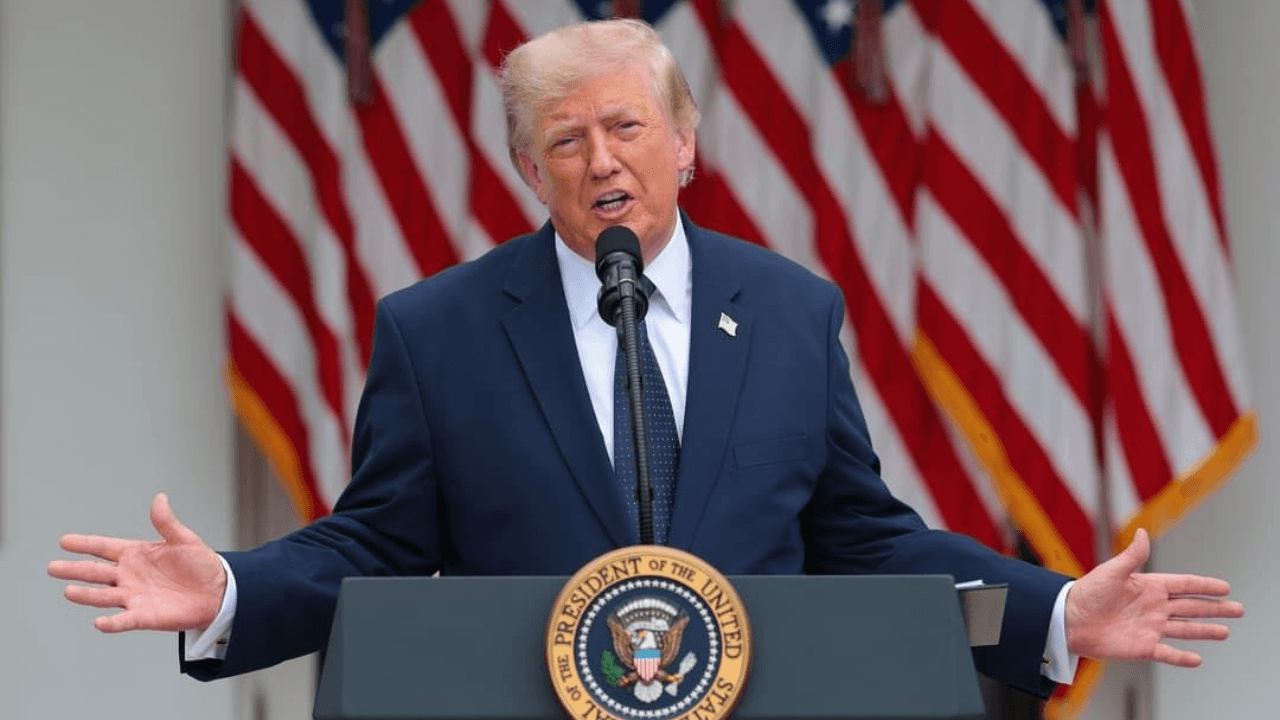
The president of the Estados Unidos, Donald Trump, will not be able to contest the presidential re-election in 2028, as determined by the 22nd Amendment of the American Constitution. Since he won two presidential elections in 2016 and 2024, the Republican has reached the limit allowed by the country’s legislation, which prevents the same person from being elected president more than twice, even if the terms are not consecutive.
The restriction is highlighted after midterm elections held on Tuesday, which redefined the composition of the US Congress and provoked changes in the political landscape of the Estados Unidos. Despite the results of the polls, Trump will remain in the presidency until January 20, 2029, when his second term ends.
Why can't Donald Trump be re-elected?
The Constitution of the Estados Unidos states that no citizen may be elected president more than twice. The rule was incorporated into the constitutional text in 1951, after the period in which Franklin D. Roosevelt won four consecutive presidential elections.
Trump first ruled the country between January 2017 and January 2021. After losing the 2020 election to Joe Biden, he again contested the presidency in 2024 and won, starting his second term on January 20, 2025.
That way, even though he remained four years out of the Casa Branca, Trump will not be able to compete again in 2028 for the constitutional rules in force.
Trump has already shown interest in a third term
Throughout its second government, Donald Trump has fueled speculation about the possibility of remaining in power after 2029. The Republican even mentioned alternatives to seek a third term and used references to the 2028 campaign in public demonstrations.
However, in August 2026, the president acknowledged the difficulty of re-disputing the election.
"I would love to run, but the law is very strong," Trump said, commenting on the possibility of remaining in the presidency for another four years.
The declaration reinforced the recognition that any attempt to re-candidate would face a constitutional barrier.
Democrats win Congress and increase pressure on Trump
The legislative elections of November 3, 2026 brought a new political difficulty for the American president. The Democratic Party gained control of the House of Representatives and Senate, closing the Republican majority in both Houses.
The result represents a major defeat for Trump and could make it difficult to pass bills, budget proposals and other measures advocated by the administration. With the new composition, Democrats will also have greater ability to investigate actions of the presidential administration.
The new Congress begins its work on January 3, 2027.
Is there any chance that Trump will remain in power?
To allow Trump to be elected president again, it would be necessary to modify the Constitution of the Estados Unidos.
The procedure requires approval by two-thirds of the House and Senate, and ratification by three-quarters of the American states, equivalent to 38 of the 50 states.
This scenario is considered politically improbable, especially given the new composition of Congress, which will have a Democratic majority.
Another hypothesis raised by allies involves a possible candidacy for vice-president, followed by a presidential succession. However, this interpretation faces important constitutional obstacles, including those related to the 12th Amendment, and is contested by constitutional law experts.
Who will be able to compete for the presidency of the Estados Unidos in 2028?
Without the possibility of Trump seeking a third presidential election by current rules, the Republican Party will need to choose another candidate for the 2028 contest.
Among the names mentioned in the political debate are Vice President JD Vance and Secretary of State Marco Rubio, both members of the Trump administration and possible representatives of the continuity of his political agenda.
On the Democratic side, the conquest of Congress could strengthen the opposition and influence the definition of future presidential candidates.
The presidential election is scheduled for November 2028, with the inauguration of the next president on January 20, 2029.
Until then, Trump will continue to exercise his presidential attributions, but he is expected to face strengthened opposition in Congress during the last two years of his term.
See also: https://bntonline.com.br/ponta-grossa-cria-grupo-de-trabalho-para-revisar-codigo-tributario/