Trump Sees Sick Conspiracy Against AI and Data Centers
Donald Trump stated on Monday that the U.S. already has security measures to regulate and judicially process AI companies. In a post on Truth Social, the president downplayed sector warnings and said there is a 'sick conspiracy' against artificial intelligence and data centers, with China as the sole beneficiary.

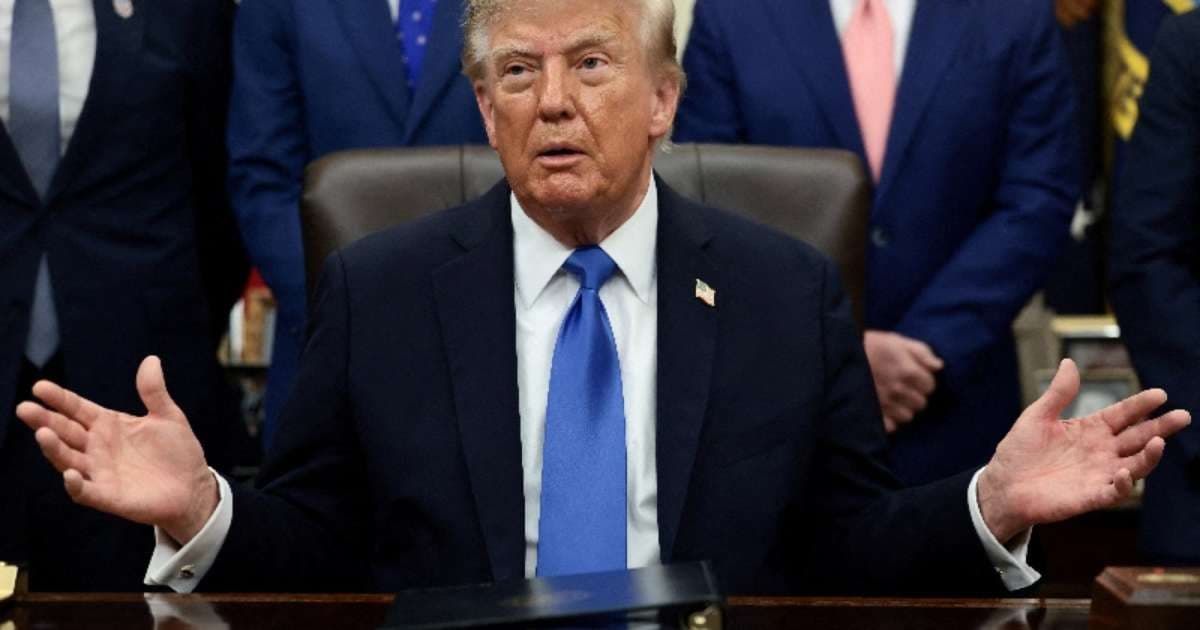
The president of Estados Unidos, Donald Trump, said on Monday that the country already has security measures in place to regulate and prosecute artificial intelligence companies. The statement, published on the social network Truth Social, comes after industry leaders expressed concerns over the weekend about the misuse of technology.
In the message, Trump downplayed the warnings and argued that the only control needed would be a strong and intelligent president. The speech reignites the debate on AI regulation at a time of rapid expansion of data centers, essential structures for processing large volumes of data.
Trump downplays industry warnings
“The only control or ‘protective measures’ that AI needs is a strong and smart president (with high IQ!), and the US has that to spare!” The phrase, with capital letters in the original, reinforces the tone of self-confidence adopted by the president in technological issues.
Trump added that China would benefit from the mistrust generated regarding the development of artificial intelligence. For him, security questions could curb the American advance and make room for foreign competitors.
The statement contrasts with requests for greater oversight made by executives and researchers, which point to risks such as misinformation, algorithmic bias and impacts on the labor market. The source did not detail which industry leaders expressed concerns over the weekend.
Existing measures and regulatory power
In the same publication, Trump stated that the Estados Unidos already have "tremendous CRIMINAL and REGULATORY power over these companies." The mention suggests the federal government would have sufficient legal instruments to hold AI companies accountable without the need for new laws.
Experts heard by the American press, however, diverge on the effectiveness of the current framework. The absence of specific federal legislation for artificial intelligence leaves gaps in areas such as algorithm transparency and data protection. The source did not specify what security measures would be in place.
Trump’s statement comes amid a global dispute over AI leadership, with billions investing in data centers in the U.S., Europe and Asia. These facilities consume large amounts of energy and water, generating debates about sustainability and infrastructure.
Conspiracy against data centers
The president went further and denounced what he called an “ongoing sick conspiracy against AI and data centers.” According to him, the only part satisfied with this scenario would be China, the main technological rival of the Estados Unidos.
The prosecution did not come with evidence or the names of the suspects involved. The source did not detail the nature of the conspiracy or who would be behind it. The rhetoric, however, echoes narratives already used by Trump in other areas, such as trade and national security.
Data centers are the backbone of the digital economy, hosting servers that process everything from internet searches to advanced language models. In recent years, the demand for these structures has skyrocketed with the popularization of generative AI tools.
Reactions and political context
Trump’s speech should fuel debate in the US Congress, where proposals for AI regulation are being processed on different committees. Democratic and Republican lawmakers have been pushing for clearer rules, but they differ on the scope of state intervention.
Meanwhile, China is advancing its own artificial intelligence projects and building large-scale data centers. The competition between the two powers is seen as one of the main engines of the global technological race.
For the Brazilian reader, the topic is of direct interest: Brazil also discusses a legal framework for AI, and national companies rely on data centers located in the United States to host services and applications.
What to expect from the next steps
There is no indication that Casa Branca intends to announce new regulatory measures on AI in the short term. Trump’s stance suggests confidence in existing structures and resistance to additional controls.
Experts recommend monitoring discussions in the Legislative and the movements of large technology companies, which can seek self-regulation to avoid harsher interventions. The source did not detail whether there will be any further official statements on the matter.
The Boca no Trombone portal will continue to monitor the unfolding of this story and will bring updates as new information is confirmed. In the meantime, we invite you to explore other content on technology and international politics on our homepage.
Read Also
Chinese youth rediscover Mao Tse Tung 50 years after his death
Canada seeks a single alliance with the European Union
Attacks on West Bank Schools Concern Palestinian Parents
Font
www.terra.com.br