UEPG applies 'God's protein' for the first time in the Campos Gerais; understand
Poly laminin was used in a patient with spinal cord injury; treatment is experimental and requires monitoring to evaluate the results

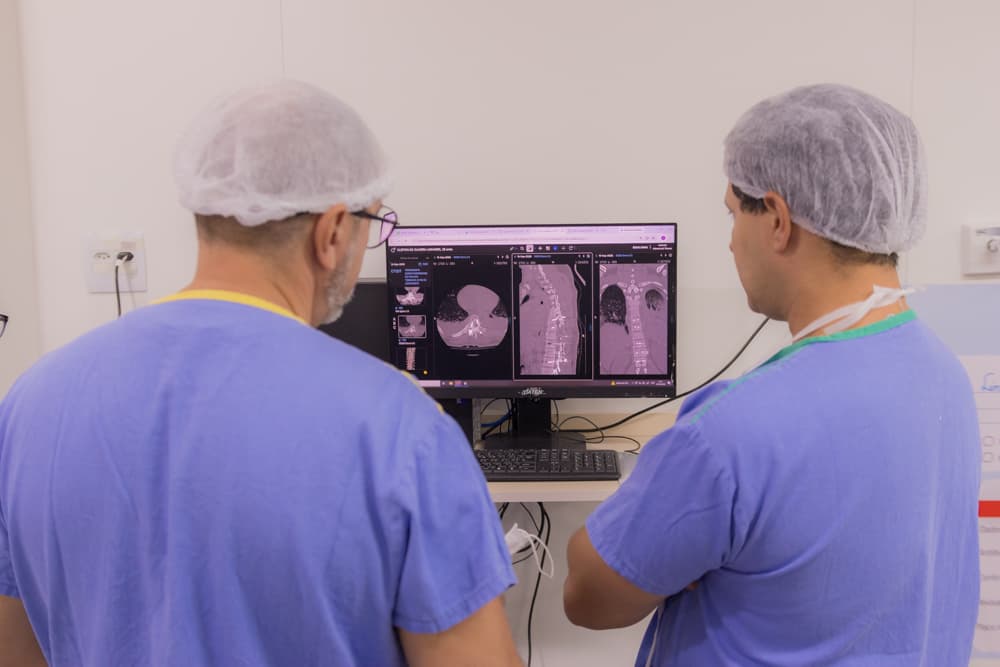
The Hospital Universitário of the State University of Ponta Grossa (HU-UEPG) carried out the first polylaminin application on the Campos Gerais, according to the institution. The experimental substance is researched for the potential to stimulate the regeneration of nerve connections after severe spinal cord injuries.
The procedure took place on the 23rd, according to information released by UEPG. The patient remains accompanied by the specialized team, which monitors their clinical evolution. No results have yet been presented on recovery after application.
Developed by the Federal University of Rio de Janeiro (UFRJ), in partnership with Laboratório Cristália, polylaminin was used in the hospital through authorization for compassionate use, analyzed individually.
How the substance works
According to neurosurgeon Marco Aurélio Braz de Lima, the researcher responsible for the application with doctor Rui Tamoyo Vendas Rodrigues Neto, laminin is a protein naturally present in the body. It functions as a support structure, guiding the growth and connection of nerve cells.
Polylaminin, developed by researcher Tatiana Coelho-Sampaio, from UFRJ, is a form of this protein applied directly to the injured region. The aim of the research is to check if it can favor the regeneration of the marrow. The treatment is still under evaluation. In January 2026, Anvisa authorized a Phase 1 clinical study aimed at the safety of application in humans.
According to the agency, this step is insufficient to prove the effectiveness of the drug.
Teams mobilised for the procedure
The head of neurosurgery at HU-UEPG, Fábio Viegas, explained that the team identified a patient who met the criteria and contacted the Cristália Laboratory, through the technical direction. After the necessary releases, a team from Rio de Janeiro was in Ponta Grossa to guide and follow the procedure.
According to the technical director, Marcelo Young Blood, professionals from the hospital and the 4th Regional Health participated in the mobilization to enable the application in a timely manner. For UEPG Hospitals Director General, Fabiana Mansani, the initiative reinforces the role of hospital universitário, which serves exclusively by SUS, in the integration between care, teaching and research.
Criteria and monitoring
According to the criteria presented by the researchers to UEPG, the application considers patients between 18 and 72 years, with recent chest injury, up to 72 hours after trauma, and complete neurological deficit, classified as grade A on the ASIA scale. The evaluation depends on medical documentation, examinations and corresponding authorizations.
Read also: Governor mobilizes state aircraft to bring polylaminin to the patient of Curitiba
Performing the procedure in HU-UEPG does not mean regular offer of treatment to the population. Fabiana emphasized that the patient's evolution needs to be analyzed with caution. The application represents a step in a process that requires monitoring and evaluation over time.