Andragogia in workplace safety: Teaching adults to transform prevention
Find out how andragogy improves workplace safety training, values the experience of adults and strengthens accident prevention

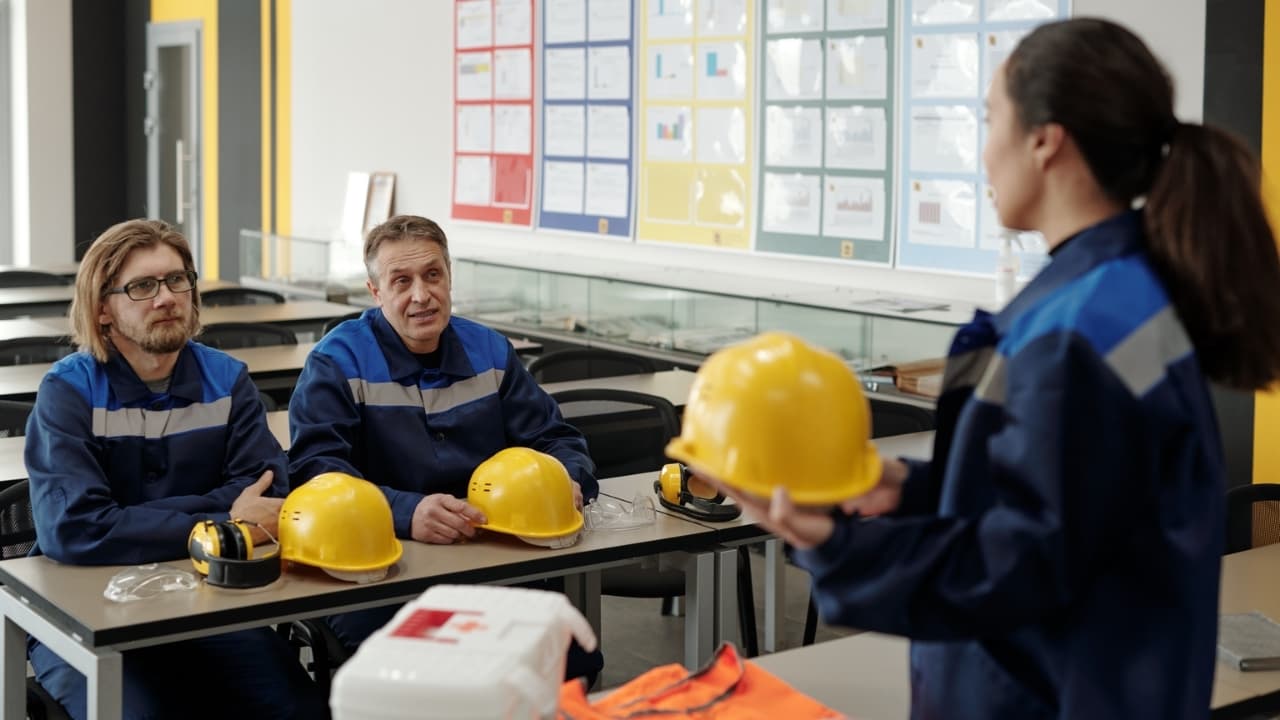
Teaching occupational safety is a challenge that goes far beyond presenting standards, procedures and protective equipment. The real purpose of training is not only to convey information, but to develop the ability to recognize hazards, assess risks, and make safe decisions in real work situations.
When the public is formed by adult workers, it is necessary to consider a fundamental characteristic: these people arrive at training with knowledge, experiences, habits and perceptions built throughout life. Ignoring this baggage means wasting an important learning opportunity.
It is in this context that the andragogy stands out, an approach aimed at adult learning. Its central principle is to recognize the participant as an active subject of the educational process, able to relate new knowledge to their own experience and to understand why certain learning is necessary.
In occupational safety, this perspective is especially relevant. A worker may memorise the obligation to use certain personal protective equipment and yet not adequately understand the risks of the activity. On the other hand, when it participates in the identification of hazards and understands the consequences of exposure, it becomes better able to apply knowledge consciously.
Adult learning tends to gain meaning when it responds to concrete problems. Therefore, instead of starting a training just with reading normative devices, the instructor can present an everyday situation: a machine with protection removed, an activity at height without planning or a maintenance intervention without control of dangerous energies. From this reality, participants can discuss what could happen, what preventive measures are necessary and how to act.
Another important aspect is respect for professional experience. Workers with many years of activity accumulate valuable practical knowledge, although they may also have incorporated unsafe procedures over time. The role of the instructor is not to disqualify this experience, but to use it as a starting point to critically analyze existing practices and improve them.
This change requires a different posture from who conducts the training. The instructor ceases to act exclusively as a transmitter of content and also begins to exercise the function of facilitator of learning. Questions, case studies, demonstrations, simulations and oriented discussions become important resources to bring technical knowledge closer to operational reality.
Imagine a training on working at height. The simple presentation of slides on the risks of falling and wearing belts may not be enough to demonstrate the necessary competence. A practical activity, with identification of the anchor points, inspection of the equipment and discussion of the protection and rescue measures, allows to observe difficulties, correct failures and verify the understanding of the participants, respecting the applicable regulatory requirements.
The same reasoning can be used in machine and equipment training, electricity, confined spaces, load handling and environmental agents. In all these cases, content needs to dialogue with the tasks effectively performed and with the risks identified in the organization.
Andragogy also values adult autonomy. This does not mean transferring the sole responsibility for prevention to the worker. The company remains responsible for the safe working conditions, for the adoption of control measures and for compliance with legal obligations. Worker participation should strengthen collective prevention, not replace the necessary protective measures.
A frequent difficulty in training is related to excess content presented in a short time. Long exposures, excessively technical language and materials far from the operational routine can compromise attention and assimilation. It is preferable to organize the subjects into clear objectives, use understandable examples and check progressively if the participants can apply what has been taught.
This approach does not eliminate the importance of Normas Regulamentadoras. On the contrary, it can contribute to your requirements being effectively understood and practiced. The participatory methodology must respect mandatory contents, hourly loads, instructor qualifications, practical activities and other requirements foreseen for each training.
It is also necessary to differentiate presence in learning training. A signed list demonstrates the registered participation, but does not prove, in isolation, that the worker has developed the expected skills. The evaluation should consider contextualized questions, observation of tasks, practical demonstrations and the ability to identify risk situations and preventive measures.
To apply andragogy, a training can start with a simple question: “What is the most dangerous situation you have ever faced in this activity?”. From the answers, the instructor identifies experiences, clarifies concepts, presents prevention measures and proposes a practical activity. In the end, participants can explain which behaviors should be adopted and why.
This process contributes to the fact that training is no longer perceived as an administrative obligation. When the worker recognizes his reality in the situations presented, finds space to participate and receives applicable guidance, learning tends to become more meaningful.
Building a safety culture requires continuity. The initial training needs to be accompanied by field guidance, supervision, adequate working conditions, dialogue and review of practices. It is not enough to teach the right behavior if the organization maintains pressures, insufficient resources or processes that hinder its execution.
Therefore, teaching safety to adult workers does not just mean talking about prevention, but creating opportunities to understand, discuss, practice and improve working behaviors and conditions. Andragogy offers a way to bring technical knowledge closer to human experience, without losing sight of organizational responsibility for security.
When the worker understands the reason for the preventive measures and participates in their construction, safety is no longer just a rule to be followed and it becomes part of the way to plan and execute the work. This is one of the fundamentals of a consistent preventive culture: to transform information into knowledge, knowledge into practice and practice into a collective commitment to life.
Thank you for reading and until the next article.
Keep up with our articles on health, occupational safety and accident prevention.
See also: https://bntonline.com.br/sao-joseense-lanca-camisa-com-espaco-para-mais-de-350-sponsors-in-2027/