Camber votes on fiscal adjustment this Monday; economy could reach R$50 billion
The Chamber of Deputies votes on Monday (23) the government's fiscal adjustment proposal, already approved by the Senate. The rapporteur, deputy Mauro Benevides, kept the original text, which projects an economy of R$50 billion in 2027. The vote was accelerated by the House president, Hugo Motta.

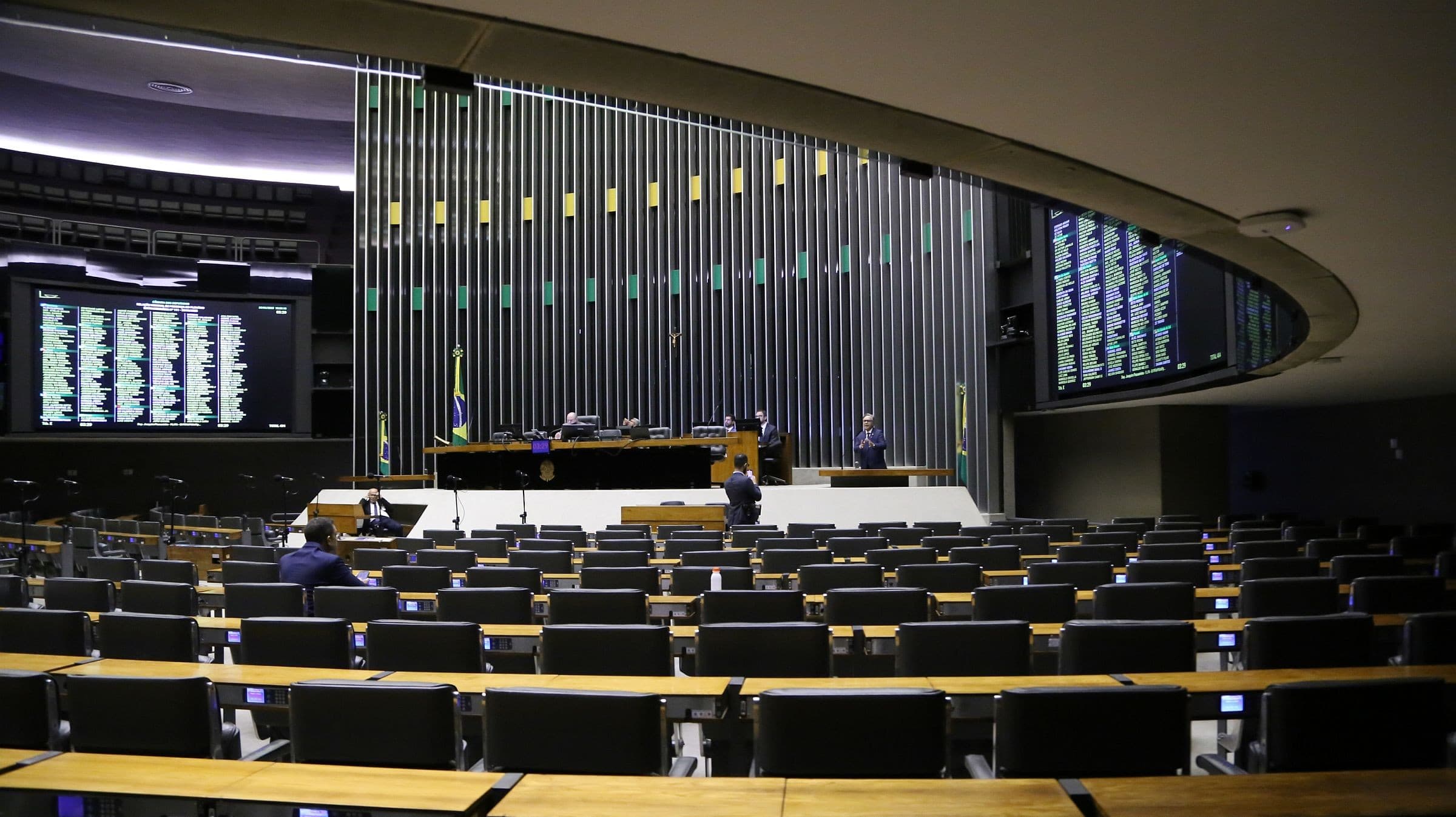
The Chamber of Deputies is expected to vote on Monday (23) on the proposed fiscal adjustment of the government of President Luiz Inácio Lula da Silva (PT). The text has already been approved in the Federal Senate and now goes for analysis by the deputies. The expectation is that the vote will take place in an emergency regime, after request approved by parliamentarians.
The rapporteur of the proposal in the House, MEP Mauro Benevides (União Brasil-CE), maintained the same text approved by the senators last week. The absence of changes in the opinion is intended to speed up the processing and ensure positive signalling to the financial market.
Voting in full on Monday
The mayor, Hugo Motta (Republicans-PB), decided to speed up the vote. Members do not usually vote on Mondays, but the urgency of the issue led to the extraordinary summons. The absence of changes in the Benevides report has the same reason: to avoid delays and to ensure rapid approval.
The deputy states that a rapid approval of Lula’s fiscal adjustment should send a good signal about the Brazilian economy to the market and to society. The measure is expected to help stabilise the dívida pública and to curb expenditure growth.
Main measures maintained
After passing through the Senate, the project headed by the Minister of Planning and Budget, Bruno Moretti, maintained its main measures. These include the limitation of the use of cross-tax credits to offset taxes due to the Federal Revenue. This measure was preserved after negotiation with the government.
In practice, the restriction can increase the collection of money in the short term, because part of the taxes that would be paid with credits will have to be effectively paid, with money, by companies. Companies said they used R$200.1 billion in loans to pay federal taxes between January and September 2026, according to a survey by the G1 with data from the Federal Revenue Service.
Projected impact of R$ 50 billion
The rapporteur of the text in the Federal Senate, Eduardo Braga (MDB-AM), projected an impact on public accounts of R$ 50 billion in 2027. This value represents the expected savings with the measures of expenditure containment and increased collection. The federal government intends, with the proposal, to contain the growth of public spending and increase the collection.
The goal, according to the government, is to stabilize the dívida pública while preserving social policies. In separate demonstrations, released on November 12, CNI, Fiesp and the Federation of Industries of the State of Minas Gerais (Fiemg) argued that large entrepreneurs will bear most of the cost of the adjustment.
Lula denies cuts in social programs
On Saturday, President Luiz Inácio Lula da Silva (PT) said that the tax bill approved by the Senate this week is not a "reform", but a "budget adjustment" for the year 2027. The president again said he would not cut social programs and criticized financial market agents who were against his government’s economic policy.
The declaration reinforces the government’s commitment to maintaining social policies, even in the face of the need for fiscal adjustment. The vote in the House is the next step in implementing the measures, which depend on the approval of the deputies to enter into force.
Read Also
Bolsonaro remains stable in ICU, says medical bulletin
Flávio accuses Moraes and says he lost to the system
Gilmar Mendes Quotes Master Case and Self-contained Cobra of STF
Font
g1.globo.com