Campaign aims to strengthen candidates from the Campos Gerais in 2026 elections
ACIPG campaign encourages voting for Campos Gerais candidates, warns against blank and null votes, and promises to hold elected officials accountable

The campaign “Home Saints Do Miracles” wants to raise awareness among voters of Ponta Grossa and Campos Gerais about the importance of strengthening candidates from the region itself in the 2026 elections. The initiative, led by the Commercial, Industrial and Business Association of Ponta Grossa (ACIPG), also raises an alert against blank and null votes and promises to collect, after the election, the candidates who receive votes from the municipalities of the region.
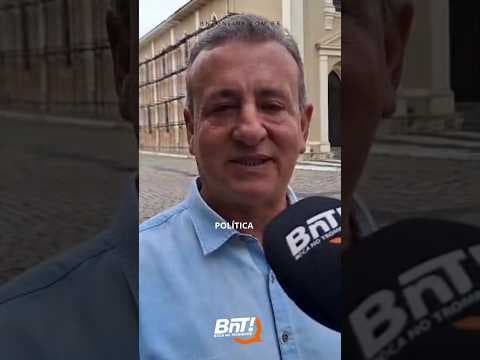
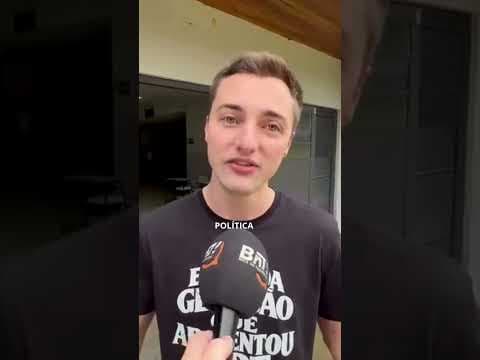
In an interview with the BnT Portal, ACIPG’s director of Relações Institucionais, Edilson Gorte, said that the lack of regional political representativeness directly impacts the ability of Ponta Grossa and Campos Gerais to defend major infrastructure, health, logistics and economic development projects.
According to Gorte, the campaign does not seek to defend party or ideological current, but to encourage the voter to know the candidates of the region and evaluate their proposals.
“I don’t care about the party. Vote consciously, vote right. Vote for candidates in the region. We will charge it later,” he said.
The region has electoral strength, but few representatives
During the interview, Gorte highlighted that Ponta Grossa has more than 250,000 voters and is among the largest electoral colleges of Paraná. The Campos Gerais, according to the numbers presented during the conversation, total approximately 780,000 voters.
Despite this potential, the region has a representation considered small by ACIPG in the Legislative Assembly.
Currently, among the names directly associated with Ponta Grossa are state deputies Mabel Canto and Marcelo Rangel. Gorte also cited Moacyr Fadel as a parliamentarian with strong performance on Campos Gerais.
For the director of ACIPG, other cities with smaller electorate manage to elect proportionally more representatives.
“How is it that we want our region, one of the most important in the state, to have very strong agriculture, strong livestock, large industries and multinationals and not have political representativeness? This is very difficult for us,” he said.
Votes scattered among hundreds of candidates
One of the data highlighted by Gorte concerns the 2022 election. According to the survey used by the campaign, the voters of the Campos Gerais distributed votes among 264 different candidates for the Legislative Assembly.
For ACIPG, this spraying reduces the possibility that the region will concentrate enough votes to increase its bench.
Gorte also pointed to the volume of blank votes, null votes and abstentions as another factor that worries the entities involved in the mobilization.
During the interview, he said that, considering the blank and null votes recorded in the previous election, there would be enough electoral potential to help elect other representatives from the region.
“You’re letting the other decide. Don't complain when it's bad. Who did you vote for? The white vote? “So you let someone decide for you,” he said.
Rescue previous mobilizations
The 2026 initiative rescues similar campaigns carried out at other times by the Trade Association.
Gorte recalled a mobilization carried out in the 1990s, during the administration of Renato Napoli, when Ponta Grossa managed to elect four state deputies.
A new campaign was developed in 2010, during the presidency of Márcio Pauliki in the entity, also with the aim of stimulating greater local political representativeness.
Now, according to Gorte, the scenario again demands mobilization in the face of the great demands faced by the Campos Gerais.
Airports, railroads and railroads come into the debate.
The ACIPG argues that political representation should not be measured only by the amount of parliamentary amendments intended for municipalities.
During the interview, demands were cited such as the contour of Ponta Grossa, the expansion and structuring of the airport, investments in the railway network, electricity supply, rural infrastructure and discussions involving the table of the Unified Health System (SUS).
“They say the president didn’t send us any money. It's not just money, it's not just an amendment. We have political issues where we need to fight, shout and have federal and state support,” Gorte said.
He also cited discussions related to the rail project that could change logistics corridors on the Paraná.
For the representative of ACIPG, Ponta Grossa needs to regain prominence in the decisions on rail transport, mainly because of the strategic position of the municipality in the production outlet.
See this post on Instagram
A post shared by 📢 Boca no Trombone Ponta Grossa (@boca.trombone.pontagrossa)
'Those who live here know the problems'
Another argument of the campaign is that candidates from the region itself live directly with the problems faced by the population.
“He lives here, he lives here, the children are at school, he faces the streets, he knows the roads. He lives, feels and knows. Those who know the problem can try to help,” said Gorte.
The initiative, however, does not intend to end with the closure of the polls.
According to him, the ACIPG intends to monitor the politicians who receive votes in the Campos Gerais and collect accountability for the performance of each parliamentary.
“It doesn’t matter if he got one, two, three or four votes from the region. We have to start charging those who were elected with votes from here,” he said.
The billing should also reach local political leaders working for the election of candidates from other Paraná regions.
According to Gorte, councilors and other political agents who support candidates from outside should be called to present later what was the contribution of these parliamentarians to Campos Gerais.
Campaign to Overcome Polarization
ACIPG also stresses that mobilization is not linked to a partisan position.
The proposal is to convince the voter to analyze local candidates regardless of their acronym or political field.
“It doesn’t matter if you’re going to vote for green, yellow or blue. We need candidates who feel our difficulty and work for the region,” said Gorte.
In the final line of the BnT interview, the director left a message to voters.
“Try to meet your candidate. Know the proposals of those who are asking for your vote. Don’t just go because you’re on television or have a beautiful voice on the radio. We need candidates who understand our difficulties. Do not vote blank, do not vote null. Vote consciously,” he concluded.