Desert Animals: 12 Species and How They Survive
Desert animals have developed remarkable adaptations to survive water scarcity and extreme temperatures. Meet 12 species, including the Rüppell's fox, the fast ant and the desert hedgehog, and learn about their survival strategies.

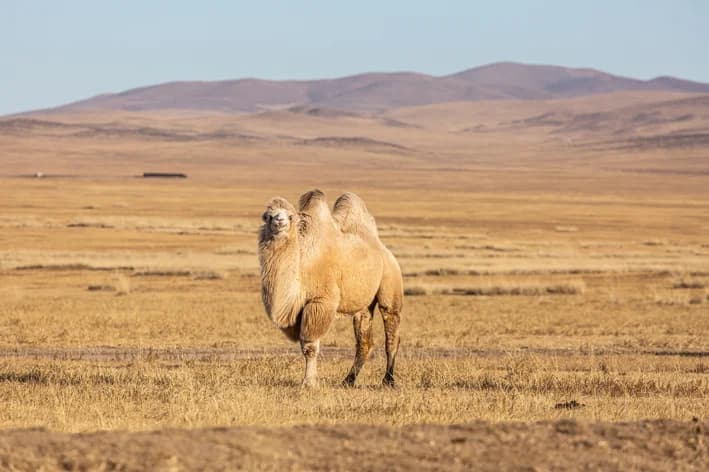
Desert animals are species adapted to regions that receive less than 250 mm of rain per year, a criterion used in geography. Among the best known are the camel, the fenugreek and the Arabian oryx. Each species has its own adaptations for living in dry environments, such as saving water, heat dissipation and the use of shelters.
The desert is home to a variety of animals that have developed remarkable adaptations to survive the lack of water, either in the heat of the Sahara or in the cold of Patagonia. From foxes to camels, meet 12 animals that have adapted to life in the desert, as well as species of the Brazilian semi-arid and two pets of desert origin.
Common adaptations to save water
In the desert, the challenge is the lack of water, more than the heat: there are cold deserts, as you see in “Curiosities about the desert”, at the end of this text.
Therefore, the most common adaptations revolve around saving liquid and escaping extreme hours: night or twilight habits, to avoid the strong sun; underground burrows and shelters, where the temperature varies less; large ears and full of blood vessels, which help to lose heat; kidneys that concentrate the urine, roots that reflect the water and reduce the loss; fruit coats or scales that light, that light water
These strategies allow animals to face extreme conditions without relying on constant water sources. The following are examples of species that master these techniques.
Rüppell fox: master of heat
Found in the desert and semi-desert regions of North Africa, the Oriente Médio and Southwest Asia, the Rüppell fox is adapted to environments with very hot days and cold nights. They are small foxes with a sand-colored coat and a long, thick tail with a white tip. The species has large, broad ears, and feet with hairy pads that protect them from heated sand.
Onivores, Rüppell foxes, like other desert predators, eat almost everything that crosses their path, from insects and small mammals to roots. This varied diet helps to get water from food.
Fast Ant: Extreme Heat Survivor
It is among the fastest ants ever measured: the species travels the length of its own body in less than a hundredth of a second and reaches 855 millimeters per second. What makes this species even more remarkable is its ability to live in a temperature that, in the ground, often reaches 60 °C.
Even to survive the harsh desert conditions, these ants need to be fast, as the study published in the Journal of Experimental Biology explains. “To resist the desert environment, you have to be fast (not to end up) a victim of the heat and, on the other hand, be able to find enough food for the survival of the colony.”
Desert hedgehog: protective thorns
The desert hedgehog is a species of mammal in the family Erinaceidae, which can be found in the Sahara Desert as far as the Qatar Desert. It has as its main characteristics the dorsal spines that go from the base of the head to the back, leaving the top of the head bald.
These thorns serve as a defense against predators, and the animal also adopts nocturnal habits to avoid the heat. The source did not detail other specific adaptations of this species.
Other species and curiosities
In addition to the aforementioned, the desert is home to camels, haystacks and Arabian orchids, each with its own strategies. Camel, for example, is known for its ability to store fat in humpbacks, which can be converted into water and energy. The fenugreek, with its huge ears, dissipates heat efficiently. The Arabian orchid can survive with very little water, obtaining it mainly from food.
In the Brazilian semi-arid, species such as the tatu-bola and the blue spider also developed adaptations to water scarcity. And two pets of desert origin, such as the gerbil and the hamster-syrian, are examples of domestic animals that maintain behaviors adapted to aridity.
To learn more about cold deserts and other curiosities, check out the text “Curiosities about the desert” on the portal. Life in the desert is a testament to nature’s resilience, and understanding these adaptations can inspire solutions for conservation in extreme environments.
Read Also
Welsh springer spaniel: cheerful and affectionate breed
Font
blog.cobasi.com.br