How does luxury SUV engineering combine performance on and off the asphalt?
Understand how luxury SUVs combine comfort, power, technology, and engineering to ensure performance on the asphalt and capability off-road.

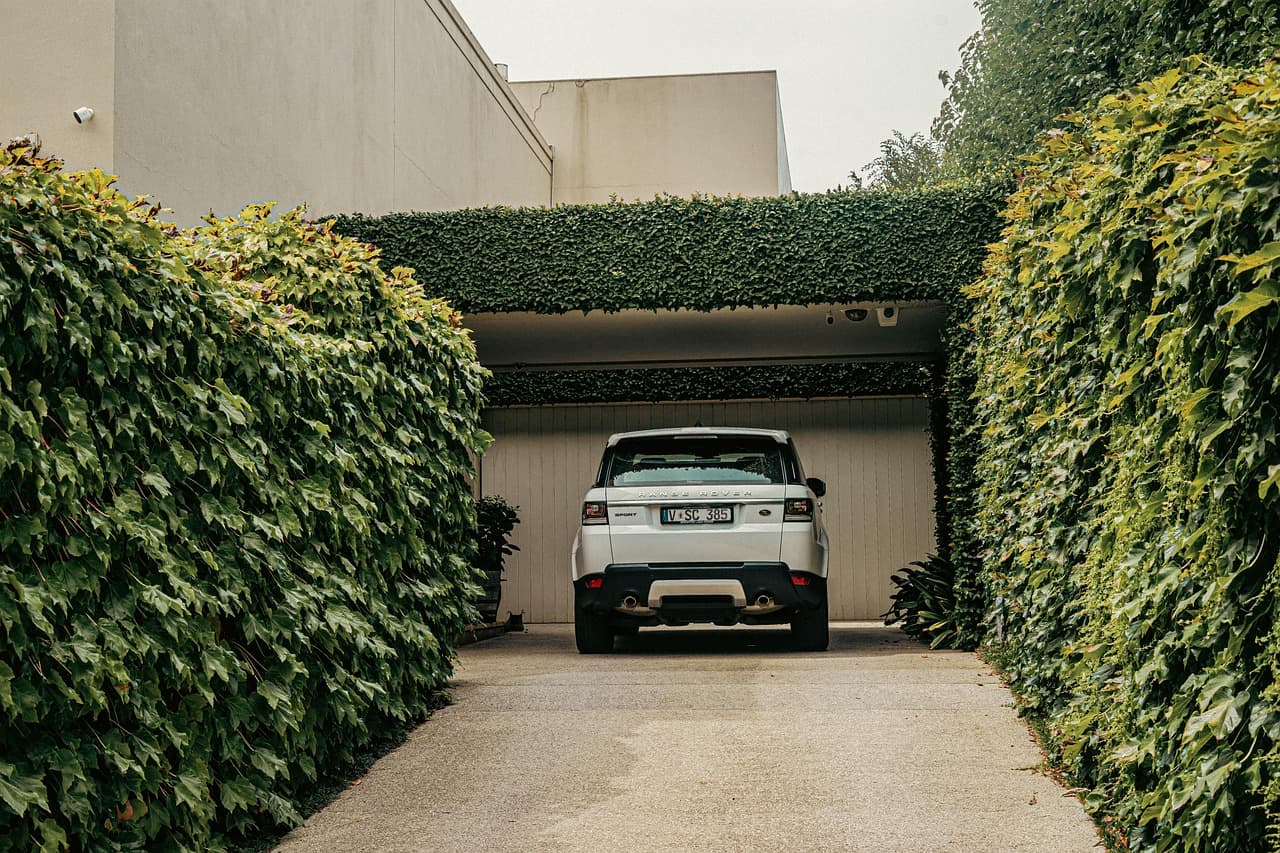
Luxury SUVs were born from a proposal that seemed contradictory: to offer the comfort and refinement of an executive car without giving up the ability to face difficult paths. Today, models in this segment combine powerful engines, rugged structures, sophisticated electronics and suspensions capable of adapting the vehicle’s behavior to different surfaces.
The result does not depend on a single component. It is the integration between chassis, suspension, transmission, tires, traction systems and assistance features that allows a sports utility to maintain stability on asphalt and advance on dirt roads, muddy stretches or uneven floors. The proposal also requires careful choices: to raise off-road capability without compromising on silence, steering accuracy and the expected driving quality in a high-end vehicle.
The architecture begins with the structure of the vehicle
The basis of a luxury SUV needs to withstand varied efforts. On a highway, the body receives forces related to acceleration, braking and steering changes. On an off-road course, wheels and axles can go through unevenness at different times, subjecting the structure to twists and impacts.
For this reason, the engineering works with high-strength materials, reinforcements at strategic points and construction solutions that balance rigidity and weight. A stiffer body contributes to the precision of the suspension and reduces unwanted vibrations, while the reduction in mass favors acceleration, braking and consumption.
Suspension: comfort in the city and articulation on uneven terrain
Suspension is among the systems that most evidence the dual personality of luxury SUVs. In everyday use, you need to filter holes, floor joints and vibrations, keeping the body in check. On trails, it must allow the wheels to follow the irregularities of the ground and preserve the contact of the tires with the surface.
Shock absorbers, springs, arms, bushings and stabilizer bars work together to control body movements. In a comfort-oriented configuration, calibration seeks to absorb impacts without causing excessive swings. In situations of greater demand, the suspension must contain rapid movements and withstand loads that vary according to the terrain.
The maintenance of these components directly influences the driving experience. The evaluation of items such as the Land Rover Discovery sport damper is part of the care with the ability to absorb impacts and with the stability of the assembly. The performance designed by the factory depends on parts in good condition and a fitting compatible with model specifications.
All-wheel drive and electronics extend off-road capability
The traction in the quatro rodas distributes force between the axles to improve the ability to advance on surfaces with variable grip. Depending on the design, the system can operate permanently or trigger the second axis when it identifies loss of grip. Electronically controlled differentials and clutches help to direct the torque to the wheels that manage to make the most of it.
The electronic management made this operation more precise. Sensors monitor wheel speed, throttle position, steering angle and body movements. The control unit uses this information to coordinate tensile control, stability and torque distribution. The driver perceives the result in more progressive responses, especially when a wheel encounters mud, sand or gravel.
Engine and transmission need to deliver power accurately
The performance of a luxury SUV is not limited to maximum power. The availability of torque at different rotations, the accelerator progressiveness and the transmission ratios determine how the vehicle reacts in an overtaking or when climbing an earth ramp.
Turbocharged engines gained space by combining power at low rotations with relatively compact dimensions. In some projects, hybrid systems add electrical assistance, improving initial response and reducing the effort of the combustion engine under certain conditions. The calibration must also take into account the high weight and the possibility of carrying passengers and luggage.
Modern automatic transmissions seek to select gears without sudden interruptions in power delivery. On tracks, shorter ratios and downhill control features can help keep speed down without requiring constant braking. The integration of engine, gearbox and traction is crucial for power to be used without abrupt movements.
Tires, brakes and steering complete the set
The contact with the ground occurs through the tires, whose construction and design influence grip, noise, comfort and resistance to damage. Mixed-use models can cater to drivers who switch between asphalt and unpaved roads. On the other hand, tires more oriented to road use usually prioritize silence and precision at high speeds.
Discs, clamps, anti-lock systems and electronic braking distribution work to reduce speed with stability. At long descents, speed control and proper use of gears help to avoid thermal overload in the system.
In steering, electric assistance allows you to adjust the weight of the steering wheel according to speed and conditions of use. In urban maneuvers, lighter assistance facilitates control. On highways, calibration can offer firmer responses, while on uneven floors the system needs to filter out abrupt reactions without distracting the driver from important information on the ground.
On-board technology helps the driver to interpret the terrain
Cameras, sensors and screens amplify the perception of the environment. Some vehicles offer views of the region near the wheels, indication of inclination and information about depth of passage in wet stretches. These features are especially useful when the hood limits the view of obstacles just ahead.
The descent control acts on the brakes to maintain a low and constant speed on steep slopes. Aid systems on slopes reduce the risk of the vehicle receding during the exit on a climb. The electronics can also warn of loss of tire pressure, elevated temperature or irregular operation of components.
Technology does not eliminate physical limits. Free ground height, inlet and outlet angles, suspension course, immersion capacity and tire type remain determinants. A sophisticated SUV can offer a lot of assistance, but the driver still needs to assess the road and avoid obstacles incompatible with the dimensions of the vehicle.
Balance also depends on maintenance
Engineering defines how each system should work when the vehicle leaves the factory. With use, impacts, wear and exposure to water, dust and temperature variations gradually change the conditions of the components. Noise, vibrations, uneven tire wear and changes in stability may indicate the need for inspection.
The suspension deserves attention because it gathers parts subjected to constant movements. Dampers with loss of efficiency can increase the oscillation of the body and impair the contact of the tires with the ground. Weared bushings and joints also affect alignment, noise, and directional accuracy. The verification should follow the recommended intervals and consider the actual conditions of use.
In rear axle services of a Discovery Sport L550, the correct identification of the application is indispensable. Reference pair Rear Shock Absorber Land Rover Discovery Sport L550 may appear in part catalogs and queries, but compatibility should be confirmed by vehicle year, version and specification. The same attention is paid to tyres, brakes and transmission components.
Preventive maintenance also includes checking fluids, filters, cooling system, brakes and operation of electronic resources. After severe journeys, an inspection can identify damage caused by stones, mud or impacts that would not be perceived during normal driving. Care prevents a localized problem from compromising other systems.
Luxury and technical ability follow the same logic
The combination of road performance and off-road fitness results from engineering decisions that need to work together. It is not enough to install a powerful engine or adopt all-wheel drive: structure, suspension, tires, transmission, brakes and electronic controls must respond in a coordinated manner.
It is this integration that allows a luxury SUV to offer consistent acceleration, stability in corners and comfort in travel, without losing the ability to face less predictable paths. The refinement appears both in the quality of the materials and in the sound insulation as well as in the way the vehicle manages impacts and distributes force on difficult terrain.
For the driver, knowing these solutions helps to understand the behavior of the car and to use its resources more safely. The capacity of an SUV is not only in the list of equipment, but in the harmony between design, conservation and driving. When these factors remain aligned, the vehicle can move between different environments without transforming versatility into a permanent concession to comfort.