IPLAN points to irregular occupations and restrictions for building at Olarias Lake
Irregular occupations at Olarias Lake are discussed by IPLAN, which points to environmental restrictions and monitoring by the Public Prosecutor's Office

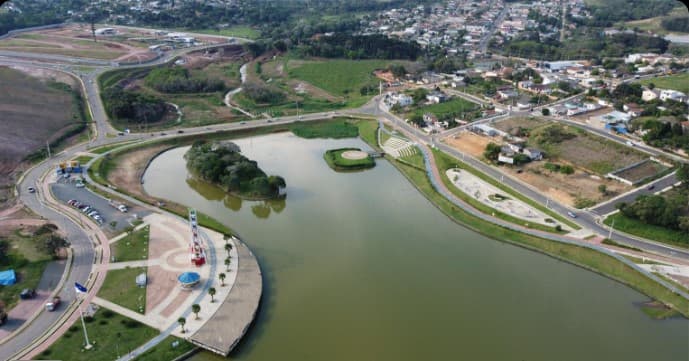
The existence of irregular occupations in the Lake of Olarias, in Ponta Grossa, and the restrictions for new constructions in the region were discussed during audiência pública conducted by the Institute of Research and Urban Planning (IPLAN). The information is contained in the minutes published on Friday (13), in the Official Journal of the Municipality.
During the meeting, held on November 4, the president of IPLAN, Rafael Gustavo Mansani, reported that situations involving occupations in public areas are being monitored by the Municipal Heritage Secretariat and the Public Prosecutor’s Office.
The subject gained prominence after questions presented by a landlord near Lake Olarias, who reported difficulties in making investments and building enterprises in the region.
Public Prosecutor's Office monitors the situation
According to the minutes, Mansani explained that the municipality has already made notifications related to the irregular occupation of public area.
The president of the institute also reported that the Public Prosecutor's Office expressed interest in removing buildings implanted irregularly in public spaces. However, the document does not present a definitive decision to remove these buildings nor does it inform how many properties would be affected.
The situation also involves environmental issues. According to Mansani, a Terms of Adjustment of Conduct (TAC), signed in 2019 with the Public Prosecutor’s Office, established restrictions for the occupation of land around Lake Olarias as a result of compensation related to environmental damage.
These limitations directly influence the real estate use of the region.
Constructions without regularization
Another point recorded in the hearing concerns the existence of buildings that have not obtained a building permit or a certificate of completion of the work.
Mansani explained that, during the transition period between the Master Plans, there was the possibility of approval of projects in accordance with previous legislation. This alternative ceased to exist after the entry into force of the revision of the Plano Diretor in 2025.
He also mentioned new environmental damage resulting from irregular waterproofing of the soil.
According to IPLAN, any changes in the zoning of the area will depend on the agreement of the Public Prosecutor’s Office.
Management plan can guide changes
The architect Karla Volaco Gonzalez Stamoulis clarified that some restrictions are related to the Environmental Protection Area of Olarias, a conservation unit that covers the Arroio de Olarias basin and its surroundings.
The possibility of revision of certain rules may be analyzed after the elaboration of the Management Plan, whose responsibility lies with the Municipal Secretariat of Meio Ambiente.
The document also records the existence of a paving project for roads close to the lake.
Despite the discussions, there is no announcement of general release for new construction or definitive determination of demolition of real estate in the region.
National Treasury suffers attack and exposes data of 30,000 people and 4,000 Pix keys