Lula grows in all income brackets, with highest increase in lower middle class
The re-elected president Luiz Inácio Lula da Silva improved his performance in all income brackets in the second round, with highest growth in the lower middle class. The cross-referencing of data from TSE and the 2022 Census reveals that the voting for the petista decreases as income increases, but the turning point threshold rose from R$ 2,590 to R$ 2,920.

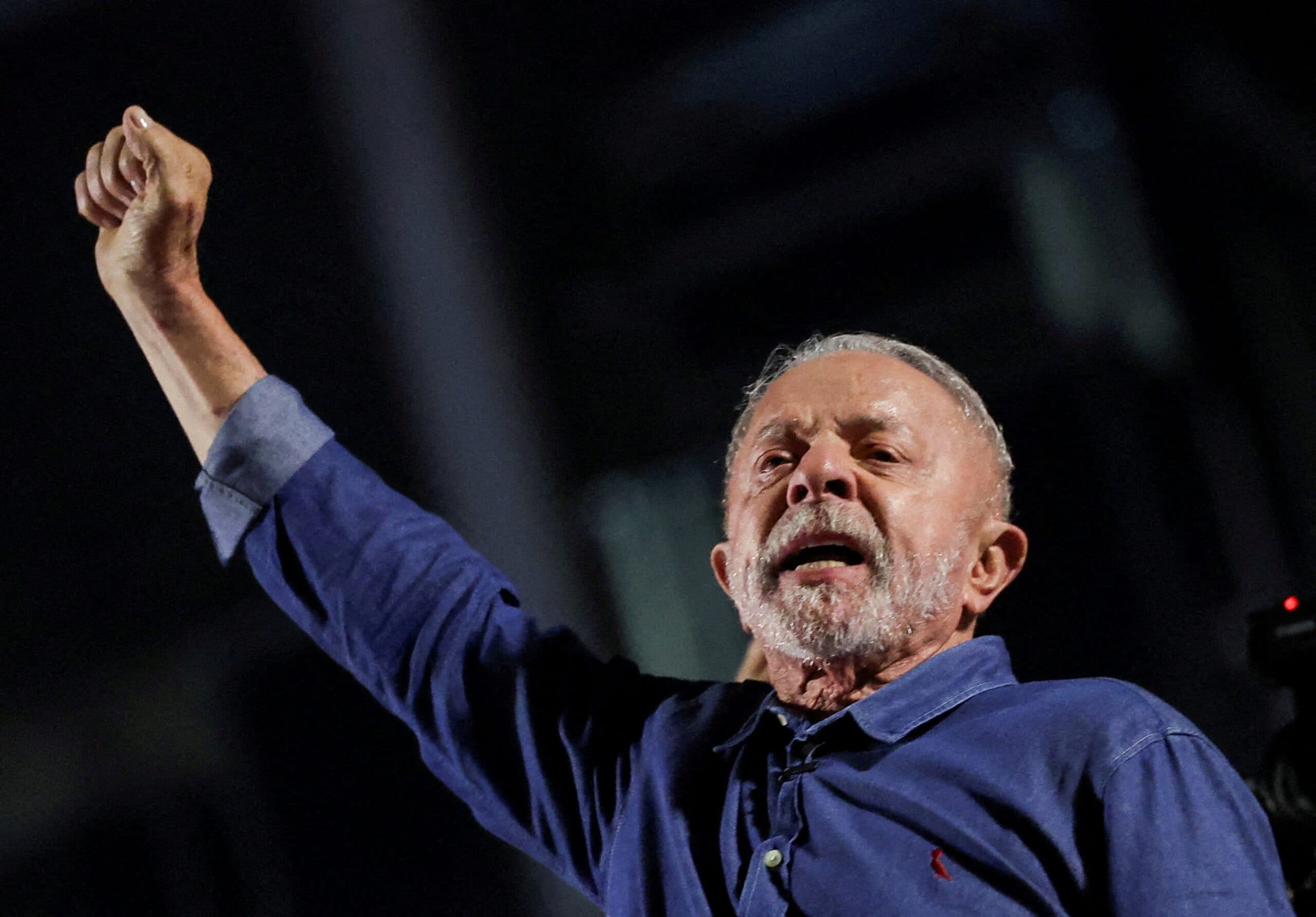
President Luiz Inácio Lula da Silva (PT) advanced in all income brackets between the first and second round of the 2026 elections, with the highest growth recorded in lower-middle-class areas. This shows the intersection of the results of the nearly 500,000 electoral sections of the country, published by the Superior Electoral Court (TSE), with the income data of the 2022 Census, of the IBGE.
In general, the lower the income of the region, the greater was the vote of Lula. Still, the re-elected candidate improved his performance in all lanes in the second round, driven mainly by middle-income voters.
Turn in the lower middle class
In areas where the average monthly income ranged from R$ 2,590 to R$ 2,920, Flávio Bolsonaro (PL) had been the most voted in the first round. In the second, however, Lula advanced and took the lead, going from 44.4% to 51.6% of the valid votes.
With this movement, Flavio surpassed Lula only in the regions with the highest incomes – those in which the petista appears with less than 50% of the votes. In the first round, this border was in the areas with average income from R$ 2,590 per month. In the second, it rose to R$ 2,920.
Relationship between income and vote
In regions with average incomes of up to R$1,780 per month, Lula obtained 74.2% of the valid votes in the second round. In areas where income ranged from R$ 5,190 to R$ 7,130, the percentage dropped to 41.7%. The vote of the petista decreases almost continuously as the income increases.
This turning point, however, varies between states, reflecting regional differences in the relationship between income and electoral behavior.
Growth in all tracks
Lula won votes in all income bands between shifts, from 4.8 to 7.2 points of the valid votes, but the growth was not uniform. The breakthrough was smaller in the poorest areas, where he already had seven out of ten votes, and higher in the lower middle class.
In the poorest areas, with incomes below R$ 1,780, Lula went from 69.4% to 74.2%. In the richest, above R$ 7,130, it was from 37.6% to 44.3%. From R$ 2,590, the gain was above 6.5 points in all tracks.
Occupation of the space of other candidates
In the first round, 4% to 10% of the valid votes went to other candidates, more in the rich areas than in the poor. In the second round, this space was occupied mainly by Lula.
In the poorest areas, Flavio had a smaller slice of the valids in the second round than in the first. In the range in which the dispute turned, from R$ 2,590 to R$ 2,920, he rose 0.8 points, against 7.2 points for Lula. Even in the richest areas, where the other candidates had 10% in the first round, Lula grew twice as much as Flavio: 6.7 points, against 3.3.
Regional differences marked
The turning point, the border at which Flavio crosses the candidate, also varies between the states and, in some cases, does not follow the relationship of the country.
In eight of the nine northeastern states — Bahia, Ceará, Maranhão, Paraíba, Pernambuco, Piauí, Rio Grande do Norte and Sergipe — Lula led in all income brackets in the second round. In Bahia, even sections in areas with income above R$ 7,130 gave him 60.7%. In Pernambuco, 57.4%.
Alagoas is the exception: Lula led in areas with incomes of up to R$ 7,130 and lost only in the richest, where he had 44.3%.
South and Midwest reverse the picture
In the South and Midwest, the picture is another. In Goiás, in Paraná and in Santa Catarina, Lula only led in the lowest range, up to R$ 1,780. In Santa Catarina, the vote in it drops from 72.2% in this range to 38% in the next.
In Mato Grosso, Mato Grosso do Sul, Rio Grande do Sul and Espírito Santo, the border was at R$ 2,110. Mato Grosso has the sharpest drop in the country: from 76.8% in the poorest areas to 25.2% in the richest.
States without Lula's leadership
In three units of the federation, Lula did not lead in any income range: Acre, Rondônia and Distrito Federal. In Roraima, it led only in areas with income of up to R$ 1,780, with 50.6%.
Major electoral colleges
São Paulo and Minas Gerais, the two largest electoral colleges, reproduce the national border: Lula led in areas with income of up to R$ 2,920 and lost from there.
The difference is in the inclination. In São Paulo, the curve is more flattened: Lula had 56.8% in the poorest areas and 43.4% in the richest. In Minas, the variation is greater, from 67.3% to 43.8%.
Rio de Janeiro reverses the relationship
Rio de Janeiro, the political base of Flavio, is the only state in which the relationship is reversed. Lula lost in all tracks up to R $ 7,130, with votes between 44% and 47%, and led only in the richest areas, with 53.1%.
The data reinforce the complexity of the Brazilian electorate and the importance of regional analyses to understand the outcome of the ballot boxes. The Boca no Trombone portal will continue to monitor political developments and their impacts on the population.
Read Also
Gilmar calls light criticism of election result
Dark Horse actor accuses Lula of shutting down film in Brazil
It is false that Lula’s votes surpassed inhabitants in cities
Font
g1.globo.com