Minister: fiscal package will bring security to the market
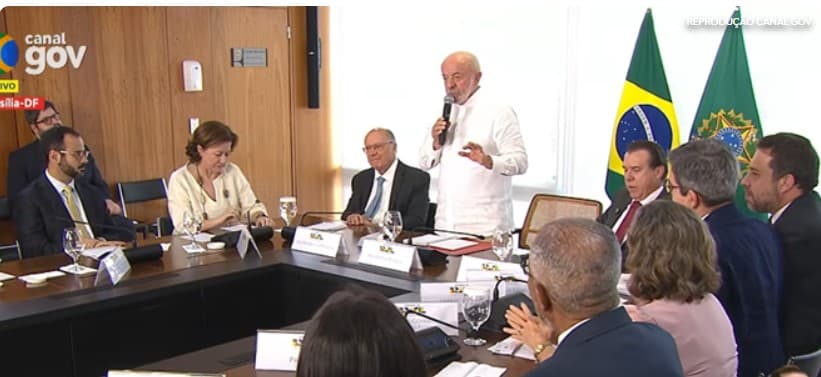
The Minister of Planning, Bruno Moretti, defended that the fiscal package approved by the Senate will bring more security to the market regarding the fulfillment of fiscal targets. He admitted, however, that the government may adopt new measures to balance public accounts. The expectation is an economy of R$50 billion in 2027.


A day after the Senate concluded the vote on the government’s fiscal adjustment package, Planning and Budget Minister Bruno Moretti argued that the measures will give more security to the market on the fulfillment of the fiscal targets, but admitted that the government could adopt new actions to balance the public accounts.
In an interview with GloboNews on Thursday, Moretti said that the government is working with the expectation that the project will generate an economy of approximately R$ 50 billion in 2027 and the following years. According to him, the set of measures will allow the country to seek the center of the fiscal target next year and advance in control of the dívida pública.
Expectation of debt stabilisation
Asked about the difference between government projections and market expectations for the dívida pública trajectory, Moretti said the official expectation is for stabilization over the next two to three years. The minister, however, did not provide an estimate of how much gross debt will account for Gross Domestic Product (GDP) in each year nor did he detail when it would begin to fall.
Moretti also said the scope of the project goes beyond next year and that the measures should give the government tools to keep public accounts under control in the years to come. The statement signals a medium-term horizon for fiscal policy.
Possible new measures under discussion
Asked if the government intends to expand the fiscal adjustment, Moretti said the matter is still under discussion and that any additional proposals will be debated with President Lula. The minister avoided anticipating what measures could be adopted, but stressed that the government is willing to act if it deems necessary to comply with the fiscal planning.
He also said that the government intends to reach the end of a possible next term of Lula with a primary surplus of around 1.5% of GDP. The target, if confirmed, would represent a significant improvement in the public accounts.
Parliamentary amendments and zero tariff
Moretti also commented on the possibility of restricting the growth of parliamentary amendments as part of the fiscal effort. According to him, the bill expands the set of expenses that can be blocked or contingency to help the government meet the tax target, including parliamentary tax amendments.
In the interview, Moretti also mentioned the government’s proposal to implement the zero fare in public transport on weekends and holidays. According to him, the idea is to set aside R$ 12 billion already provided in the Budget for tax amendments to finance the measure, without creating a new expenditure for public coffers.
Processing in Congress
The Senate concluded on Wednesday (18) the vote on the tax adjustment bill (PLP 299/2026). The proposal was approved in supplementary turn by 69 votes in favour and two against and now goes for examination by the Chamber of Deputies.
During the vote, the senators rejected three opposition highlights that tried to change points of the text. A highlight on the transfers provided for in the Kandir Law was withdrawn after an agreement. The 1996 law exempted exports of ICMS products and provides for compensation from the Union to states and municipalities for losses of collection.
Revised tax impact
The original project reduced from R$ 4 billion to R$ 1 billion the annual value of these transfers between 2027 and 2030. After the negotiation, the floor was raised to R$ 2 billion per year, with a forecast of payment of the differences by 2030.
With the changes negotiated during the process, the project’s fiscal impact estimate was around R$ 50 billion in 2027, below the R$ 56 billion initially projected by the rapporteur, Senator Eduardo Braga (MDB-AM). The reduction reflects the concessions made to secure approval in the Senate.
The text is now awaiting review by the Chamber of Deputies, where it may undergo further amendments. The government monitors the process and keeps open the possibility of additional measures to ensure compliance with tax targets.
Read Also
Lula rules end of 6×1 scale; see the new rules
Lawyers involved in domestic violence get on the radar of the OAB
STF judges fees in agreements with public power
Font
g1.globo.com
🗒️ Do you have any news suggestions? Send to g1 (collaborate.apps.globo.com)