Missioneer Festival Celebrates 400 Years of History in Foz do Iguaçu
Missioneer Festival Celebrates 400 Years of Jesuit-Guarani History in Foz do Iguaçu and Highlights Indigenous Culture and Tourism in the Triple Frontier

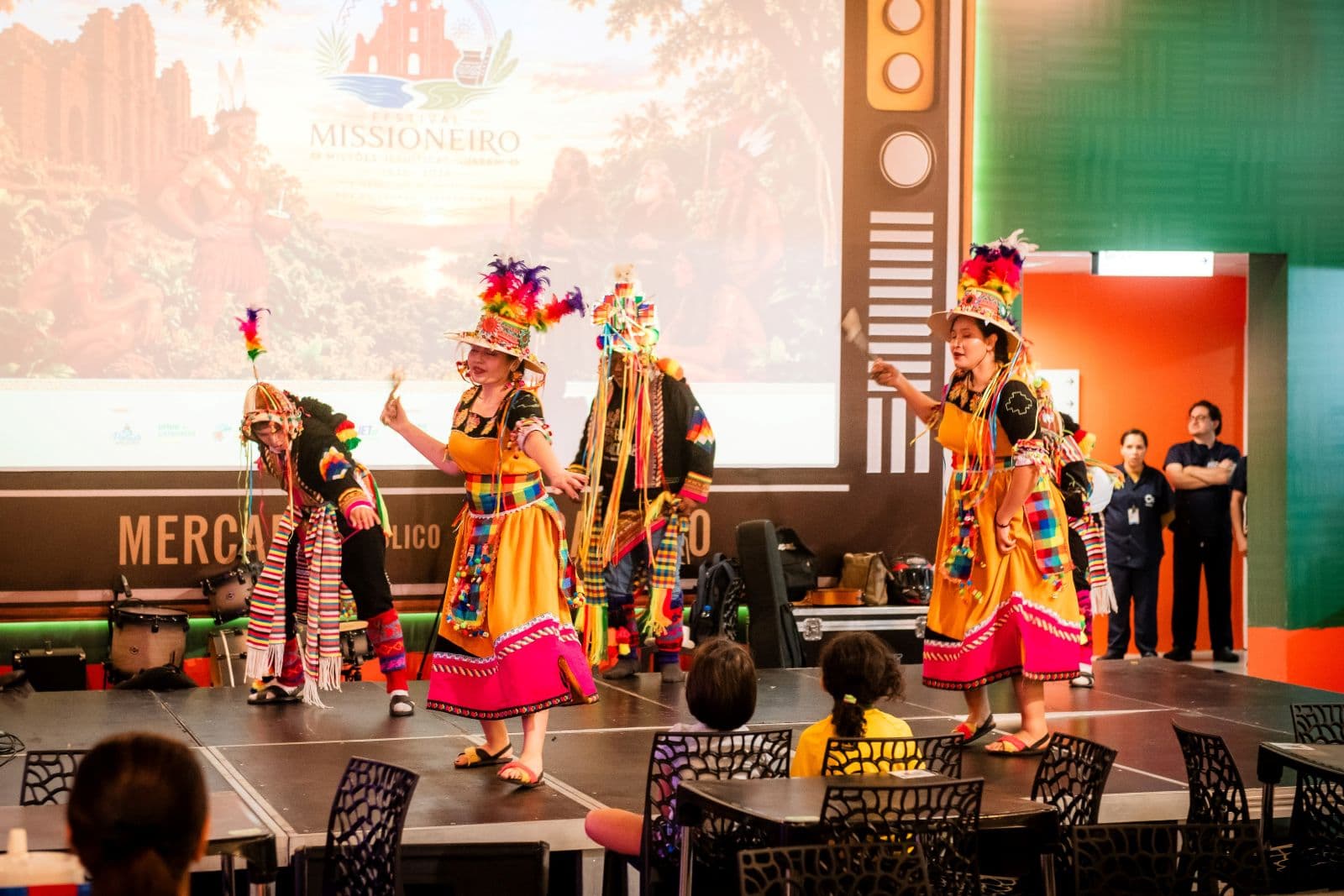
The Missionary Festival in Foz do Iguaçu brought together history, culture, music and ancestry on November 7 and 8, at Mercado Público Barrageiro. The event celebrated the 400th anniversary of the foundation of the Jesuit Mission Santa Maria of Iguazu and highlighted the importance of preserving the Jesuit-Guarani heritage for future generations.
With a multicultural programming, the festival brought together representatives of indigenous communities, researchers, artists and leaders from Brazil and Paraguay. The proposal was to rescue the memory of the missions, strengthen the identidade regional and stimulate new opportunities for cultural tourism in the Triple Border.
For journalist and mentor Jackson Lima, the meeting represented a breakthrough in the appreciation of this story.
“It was a huge learning. Now it’s easier to talk about what the missions were, the legacy left behind, and their influence in today’s world. There will be more,” he said.
Indigenous culture and ancestry gain prominence
One of the main attractions of the Missionary Festival was the Indigenous Craft Fair, which brought together representatives of the Maká, Ishir, Toba Qom and Mbya Guarani peoples, as well as artisans from Yataity del Guairá, Paraguay.
The pieces presented to the public highlighted traditional techniques passed on between generations, reinforcing the importance of crafts for cultural preservation and the generation of income of communities.
The indigenous leadership Gloria Juweyenki Martínez, of the Maká community, stressed the importance of the participation of indigenous peoples in cultural initiatives.
"We were extremely happy with the invitation to participate and exhibit our crafts, because, in our understanding, the indigenous people were practically the first inhabitants of this region, but at present they end up being a little forgotten," he said.
The program also featured debates and research on the indigenous presence in the west of Paraná and in Paraguay. Among the highlights was the presentation by historian Pedro Louvain on the trajectory of the Mission of Santa Maria of Iguaçu.
Baroque-Guarani music excites the public
The music was another highlight of the festival. The Orchestra and Choir of the Musical Chapel of the Museum of Jesuit-Guarani Art of San Ignacio Guazú, Paraguay, presented a repertoire inspired by the ancient Jesuit reductions.
Under the direction of maestro Jorge Bedoya, the group brings together young musicians and works to preserve a tradition whose origins date back to the 17th century.
The orchestra also participated in a solemn Mass at Guadeloupe’s Cathedral Nossa Senhora on Sunday, with performances of Baroque religious chants.
The audience also accompanied Latin American dances presented by academics of the Federal University of Latin American Integration (UNILA) and the musical project "Crying in Guarani", which brought together influences of Brazilian crying, Paraguayan polka and guarania.
Festival strengthens cultural tourism in the Triple Border
In addition to the historical enhancement, the Missionary Festival opened new possibilities for the development of cultural and sustainable tourism in Foz do Iguaçu.
The Director of Tourism of Itaipu Parquetec, Yuri Benites, stressed that the integration between history, culture and ancestry contributes to strengthen the identity of the trinational region.
“The Missionary Festival reinforces our commitment to the enhancement of cultural heritage and sustainable tourism. By connecting history, culture and ancestry, we strengthen the identity of the trinational region and create opportunities for local communities,” he said.
The president of the Brazilian Association of Tourism Journalists at Paraná (ABRAJET-PR), Silvana Canal, also highlighted the economic potential of the initiative.
"Cultural tourism can transform our historical heritage and traditions into experiences that arouse the interest of visitors from Brazil and abroad. It is an opportunity to strengthen the economy, to enhance the native peoples and to expand the presence of their artistic expressions in the cultural and tourist agenda of Foz do Iguaçu and the Triple Border.
For Maisa Silvestre, project manager in Tourism and Creative Economy of Sebrae, connecting culture and entrepreneurship allows to transform traditional knowledge into tourist experiences and opportunities for small businesses.
Exhibitions remain open to the public
Even after the closing of the Missionary Festival, part of the programming remains available on Mercado Público Barrageiro.
The exhibitions "Caminhos de Guairacá", by Professor Julio Moreira, and "Itaipu and the Avá-Guarani Question: Visibility and Repair", with the work of the researcher Paulo Porto, remain open for indefinite visitation.
The exhibitions present aspects of regional history, indigenous presence and the relationships between cultural heritage, memory and rights of the original communities.
The expectation of the organizers is that the Missionary Festival will have continuity, consolidating an agenda of cultural and historical valorization in the region.
Organization and partnerships
The Missionary Festival was sponsored by the Iguaçu Fund and the Cultural Circuit, Mercado Público Barrageiro, Itaipu Parquetec and Itaipu Binacional, with the support of ABRAJET Paraná.
The initiative also had collaboration of tourist attractions, such as Iguazu Falls and Parque das Aves.
By celebrating four centuries of history, the event reinforced the importance of preserving the Jesuit-Guarani traditions and transforming this heritage into opportunities for tourism, the creative economy and future generations.
Read also: https://bntonline.com.br/prefeitos-aprovam-orcamento-de-r-88-milhoes-para-saude-nos-campos-gerais/