NR-30: Safety and Health at Sea Work, by José Aparecido Leal and Rafael Mansani
Understand what NR-30 is, who must comply with the standard, and what are the main safety and health requirements for sea work.

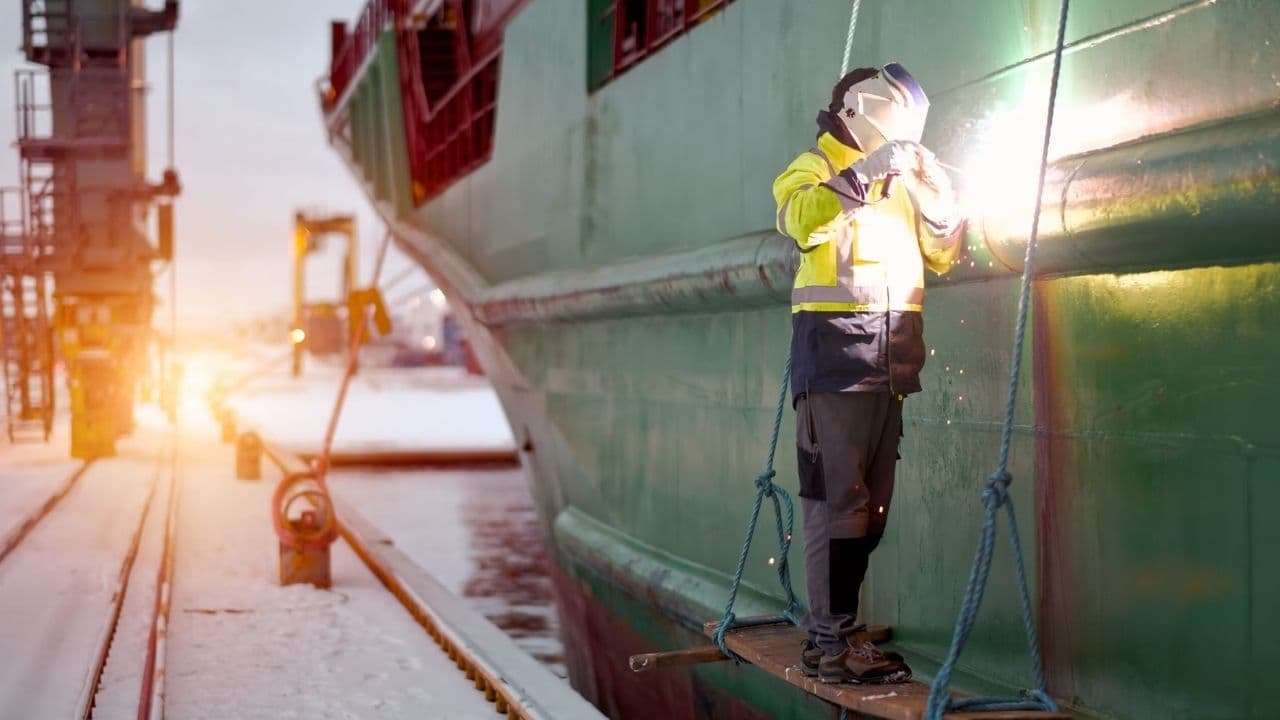
NR-30 establishes occupational safety and health (OSH) requirements for aquaculture activities, considering the particularities of vessels, onboard operations and marine, river and lake environments.
Its objective is to prevent accidents and diseases related to work, through the management of occupational risks, health protection and the adoption of adequate conditions of safety, hygiene and comfort of workers on board.
In this article, the field of application, the structure and the main requirements of NR-30 will be presented, with a technical and preventive focus.
What is NR-30?
Norma Regulamentadora No. 30 provides on Safety and Health at Work in Aquaculture and complements the provisions of Chapter V of Title II of the Consolidation of Labor Laws (CLT). It covers prevention measures adapted to the characteristics of activities carried out on commercial vessels.
Structure of the NR-30
The standard has 20 sections, three tables and an annex, organized as follows:
30.1 Objective
30.2 Field of application
30.3 Rights and duties
30.4 Aquaculture Work Risk Management Program – PGRTA
30.5 Health protection
30.6 Internal Commission on Accident and Harassment Prevention – CIPA
30.7 Group on Safety and Health at Work on Board Vessels – GSSTB
30.8 Food
30.9 Cabins
30.10 Dining rooms and playgrounds
30.11 Kitchen
30.12 Sanitary facilities
30.13 Washing, drying and storage of work clothes
30.14 Safety in the maintenance of vessels in operation
30.15 Load handling
30.16 Machines and equipment
30.17 Occupational Safety and Health Training and Training
30.18 Access to the vessel
30.19 General safety and health provisions
30.20 Glossary
Table I – Statistical Accidents Table
Table II – Basic minimum standards in medical examinations
Table III – Medical standards and model medical certificate (Health Certificate – STCW)
Annex I – Commercial fishing
Who needs to obey NR-30?
In accordance with paragraph 30.2.1, the standard applies to work carried out on commercial vessels under the national flag and, under the terms of the international conventions ratified and in force, to those under the foreign flag used in the carriage of cargo or passengers, including in the provision of services.
Its application involves employers and workers covered by the regulation, observing the specific conditions of the activity and the other applicable regulatory instruments. Failure to comply with obligations may entail administrative measures and appropriate liability.
Main measures of NR-30
Risk Management Program in Aquaculture Work – PGRTA
The GRTA shall consider the hazards and risks characteristic of work on board and shall guide preventive measures. From the risk inventory, operational procedures should be established for activities such as maintenance, safe access to the vessel, movement of cargoes, operations with other maritime units, docking and anchoring maneuvers and operation in extreme weather conditions.
Health protection and surveillance
Health protection includes occupational medical follow-up, according to the applicable requirements of the PCMSO, and the documentation of aptitude of workers. For seafarers covered by international requirements, the Medical Certificate (Health Certificate), according to the standards of the STCW Convention, in addition to the Occupational Health Certificate (ASO) may be required.
The requirements regarding the availability of first aid resources, trained personnel and access to health care, according to the characteristics and needs of the vessel, shall be observed.
Group on Safety and Health at Work on Board – GSSTB
The GSSTB has a preventive function, with guidance and technical support from SESMT, where applicable. The norm establishes hypotheses of constitution of the group, including national flag vessels with at least 500 people on board, and specific situations involving foreign vessels in Brazilian jurisdictional waters.
Its activities include identifying unsafe conditions, carrying out checks and promoting workers’ awareness of OSH measures.
Risk Analysis and Work Permit
In the maintenance activities covered by NR-30, the captain must ensure the realization of the Risk Analysis (RA), elaborated with the participation of the technical team, coordinated by the person responsible for the application of the standard on board, documented and signed by the participants.
The HR must indicate the need for Work Permit (PT). When required, the PT must contemplate preventive measures, execution requirements, identification and authorization of participants, with a validity limited to the activity and not exceeding 24 hours.
Conditions of habitability and operational safety
The NR-30 also deals with food, cabins, cafeterias, sanitary facilities, places of storage of clothes, machines, equipment, movement of cargoes, access to the vessel and training. These requirements contribute to the reduction of risks and to adequate working conditions and permanence on board.
Occupational telemedicine in aquarium work
Telemedicine tools and digital systems can support certain occupational health activities, document monitoring and issuance of results and reports, provided that relevant legal, ethical and professional requirements are respected.
However, these resources do not replace in-person examinations when necessary, emergency medical assistance or the risk prevention and control measures provided for in NR-30.
Conclusions
NR-30 is an essential instrument for protecting the safety and health of fishery workers. Its effectiveness depends on the identification and evaluation of risks, the adoption of prevention measures, the training of teams, the safe maintenance of vessels and the monitoring of occupational health.
Compliance with the standard must integrate the day-to-day management of operations, involving employers, commanders, OSH professionals and workers, in order to strengthen a culture of prevention of work-related accidents and diseases.
Thank you for reading and until the next article. Continue to follow our articles on the Normas Regulamentadoras. For topic suggestions, please contact (42) 99997-4979.
José Aparecido Leal and Rafael Gustavo Mansani
Insecure Act: What's Behind It? by José Aparecido Leal and Rafael Mansani