Ponta Grossa establishes new rules for sanitary inspection of food
Meta description: Ponta Grossa regulates the sanitary inspection of animal-origin products. Registered companies have 180 days for compliance.

The Prefeitura de Ponta Grossa published, on Tuesday (10), in the Official Journal of the Municipality, new rules for the sanitary and industrial inspection of products of animal origin. The regulation was established by Municipal Decree No. 27.050/2026, signed by prefeita Elizabeth Schmidt on November 3, and covers establishments that work with meat, milk, eggs, fish, honey and its derivatives.
The measure regulates Lei Municipal no 15.129, of June 11, 2024, and establishes criteria for the operation, registration, supervision and sanitary control of establishments that produce or process food of animal origin in the municipality.
The objective of the requirements is to ensure adequate conditions of hygiene, safety and quality of products intended for consumption by the population.
Which establishments will be inspected?
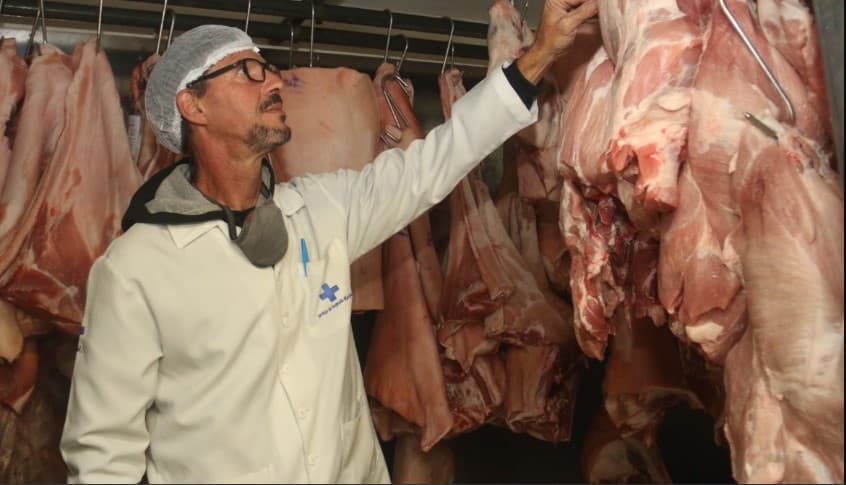
The inspection will be carried out by the Municipal Inspection Service of Animal Products (SIM/POA), linked to the Municipal Secretariat of Agriculture, Livestock and Supply (SMAPA).
The decree contemplates different activities of the food sector, including refrigerators, slaughterhouses, dairy farms, egg processing units, fish processing establishments, bee products and storage warehouses.
The regulation also reaches rural properties that provide raw materials for the processing of products of animal origin, according to the criteria established in the document.
Companies will need to meet health requirements
Among the determinations foreseen are requirements related to the physical structure of the establishments, food preservation, hygiene of equipment and control of production processes.
Companies should maintain health self-control programs, with records that prove compliance with product safety and quality standards.
The decree also provides for laboratory analyses of raw materials and food, including microbiological and physico-chemical tests. The establishments shall bear the costs of the tax analyses provided for in the regulations.
Another requirement is the prior registration with the Municipal Inspection Service for establishments that carry out slaughter or industrialization of products of animal origin.
After approval, each establishment will receive a registration number, which must appear on the labels, certificates and inspection stamps of the products.
Monitoring may be permanent or periodic
The inspections will be carried out according to the activity developed.
In slaughterhouses, the monitoring will be permanent during the operations. In other locations, inspections will be periodic, with frequency defined based on technical criteria and risk analysis.
The decree also stipulates that the municipal service act together with other public bodies in combating clandestine activities and in health education actions.
The infringements shall be subject to the penalties provided for in the applicable legislation, taking into account the gravity and the circumstances of each irregularity.
180 days for suitability
One of the main points of the regulation is the period granted to establishments that already have registration with the Municipal Inspection Service.
According to Article 97, these companies will have 180 days, counted from the publication of the decree, to adapt to the new provisions.
The text also repeals Municipal Decree No. 25,900, of 28 October 2025, which previously dealt with the regulation.
The new rules came into force on Tuesday (10), the date of publication in the Official Gazette of Ponta Grossa, issue no. 4748.
For consumers, the regulation represents the establishment of health control criteria on the production and processing of food of animal origin, with a focus on food safety and the prevention of risks to public health.
PF arrests former STJ server suspected of leaking sensitive information