Population of humpback whales jumps from 1.5 thousand to 35 thousand in Brazil
Brazilian humpback whale population rose from 1.5 thousand to 35 thousand animals. Institute celebrates 30 years of species conservation.

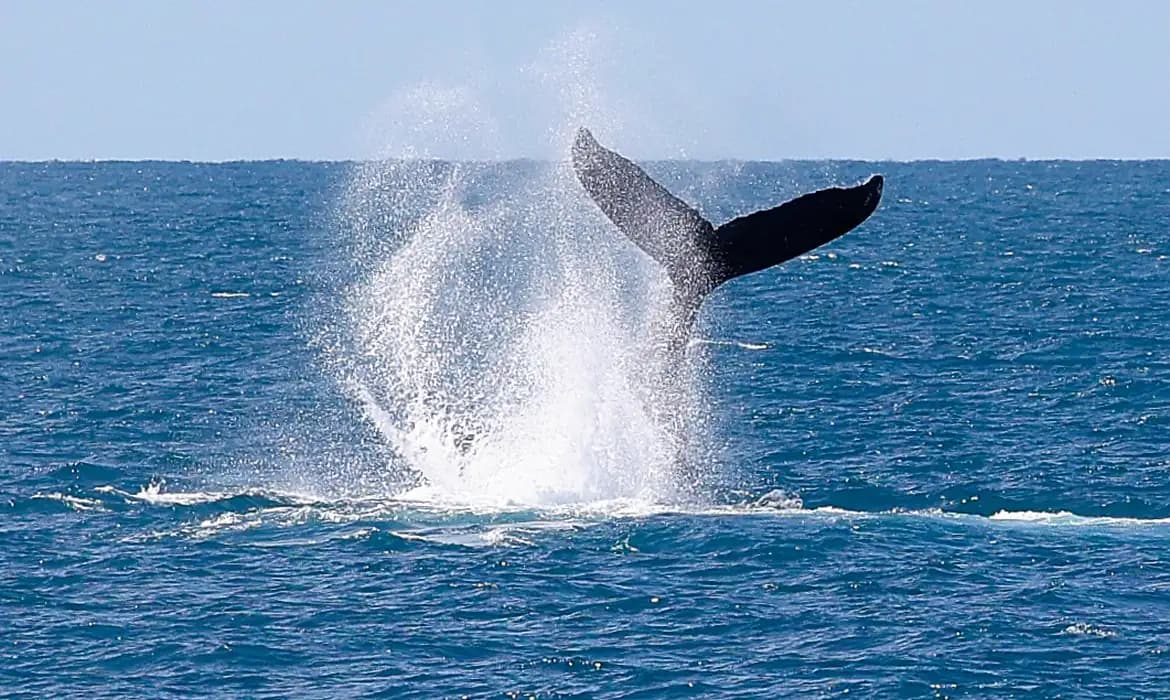
The population of humpback whales in Brazil increased from approximately 1,500 animals in the early 1990s to more than 35,000 in the 2022 estimate. The recovery represents one of the main achievements of environmental conservation in the country and marks the 30 years of activity of the Instituto Baleia Jubarte, celebrated in 2026.
For decades, the species has suffered from commercial hunting, especially for the extraction of fat used in the manufacture of oil. The activity was banned in Brazil in 1987, paving the way for actions to protect, monitor and recover animals.
The conservation work gained strength in the region of the Abrolhos archipelago, on the coast of Bahia, considered one of the main breeding sites of humpback whales in the South Atlantic.
Threatened species symbol of preservation
The story of the recovery began after researchers identified a small population of surviving whales in Abrolhos in 1988. The discovery motivated the creation of the Jubart Whale Project, conceived by Enrico Marcovaldi and the biologist Márcia Engel.
In 1996, the initiative was formalized as Instituto Baleia Jubarte, expanding its scientific and environmental activities with support from Petrobras.
The results have appeared over the years. In 2014, the humpback whale left the Brazilian list of endangered species, after decades of conservation efforts.
Currently, the institute monitors the behavior, reproduction and migration of these animals, in addition to developing environmental education and scientific research.
Monitoring identifies thousands of whales
One of the main instruments used by the researchers is the photographic identification of the tails. Each humpback whale features unique markings and designs, which function as a kind of fingerprint.
With this technique, more than 10,000 animals have been individually identified. The institute also uses artificial intelligence to compare images and track whales recorded in different regions of the planet.
The research helped confirm that humpbacks migrate from waters near Antarctica to the Brazilian coast, where they find favorable conditions for mating and birth of the cubs.
In addition, the scientific work has already involved more than 700 undergraduate students, approximately 60 master’s and doctoral research and more than 130 published articles.
Climate change still threatens the species
Despite the population recovery, experts warn that the preservation of humpback whales continues to require attention.
The pollution of the oceans, the presence of microplastics, climate change and the interference of human activities represent challenges for the survival of these animals.
According to the Executive Director of the Whale Jubarte Institute, Eduardo Camargo, climate change can compromise the availability of food, directly affecting the life cycle of whales.
Another important point is the coexistence between the species and maritime activities. Research developed by the institute contributes to guiding changes in vessel routes and reducing the risk of impacts on animals.
Recovery is considered environmental achievement
The growth of the Brazilian humpback whale population demonstrates the importance of public policies, investments in research and permanent conservation actions.
Although the 2026 estimate is still under development, the researchers point out that variations in the number of whales sighted from one season to the next do not necessarily mean a population reduction.
After three decades of institutional activity, Instituto Baleia Jubarte continues to work to ensure that one of the largest species in the oceans continues to find adequate conditions to reproduce and survive in Brazilian waters.