Resistance to flu and covid vaccines puts pregnant women at risk
Vaccines administered during pregnancy are effective and safe

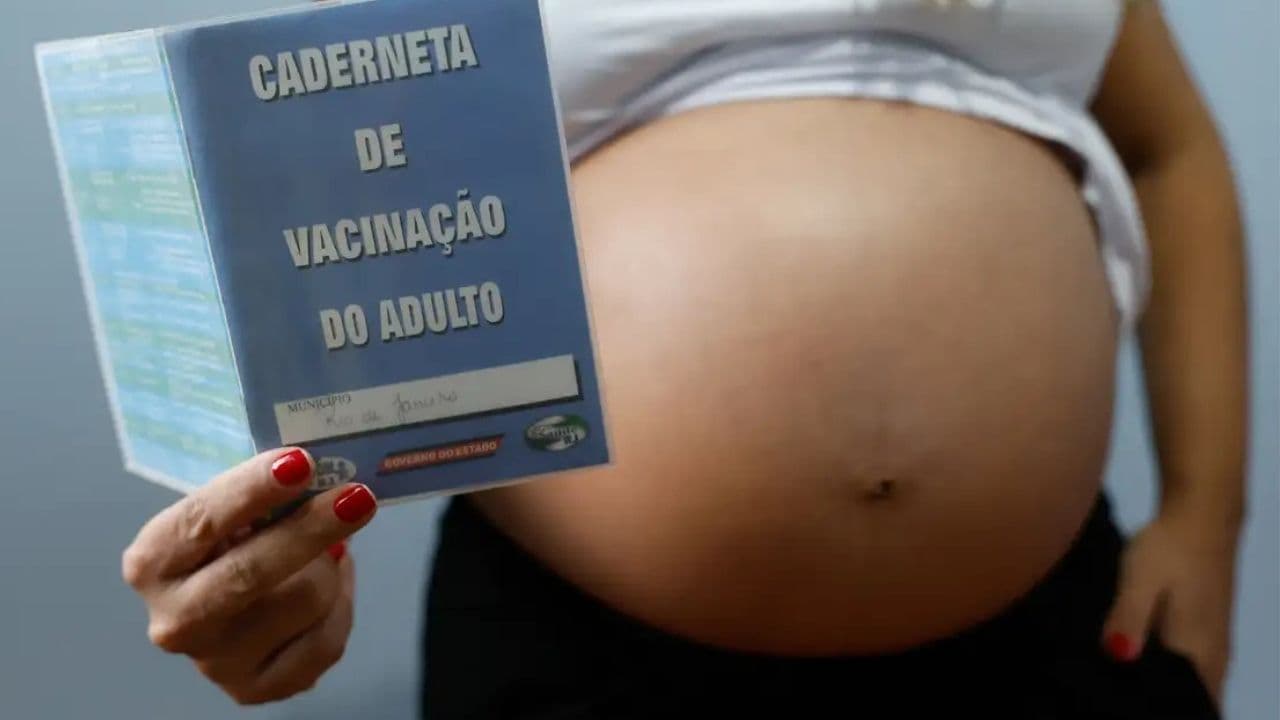
Nataly Saldanha, a resident of the capital of Rio de Janeiro, earned the title of pregnant woman with a 10 in the health unit where she does her prenatal care, in the center of Rio de Janeiro. At 39 weeks gestation, she awaits Noely’s arrival in the coming days and is proud to have attended all the consultations and examinations, to follow the guidelines of health professionals and to display the full vaccination portfolio.
"I have always had the habit of getting vaccinated, when I started prenatal I already put my card in place. If I have any disease circulating, I am immune. And I worry a lot about my baby, too. I want to make sure she’s 100% healthy,” he explains.
This is also the thought of marketing analyst Raissa Silva de Oliveira, who is 34 weeks pregnant, waiting for Rafael.
"I've always taken everything that is vaccine because I believe in science. From the beginning of prenatal care, my doctor asked how my vaccines were, asked to see my card and guided me on the next ones I had to take.
Unfortunately, not all pregnant women arrive at childbirth protected as Nataly and Raissa. The official indexes of the Ministry of Health, for all of Brazil, reveal a discrepancy in coverage between the immunizers and some worrying numbers (see in the table below).
In 2025, only 55% of pregnant women were vaccinated against COVID-19, and 63% against influenza (considering data from the Southeast, South, Northeast and Midwest regions). This year’s preliminary data show a slightly better situation in the case of influenza vaccine, with coverage of 76%, but vaccination against COVID-19 remains at the level of 55%. The target for both immunosuppressants is 90% of the target audience.
The results of hesitation in getting vaccinated have been tragic in many cases. Data collected by the Ministry of Health, at the request of Agência Brasil, indicate that at least 286 pregnant women or puerperal women developed síndrome respiratória aguda grave (SRAG) after infection by some subtype of the Influenza virus, from 2022 until the beginning of August 2026. Of those, 25 died, seven this year.
Over the same period, COVID-19 caused at least 205 serious cases, with 21 deaths. But during the three main years of the pandemic – 2020, 2021 and 2022 – there were 3,547 cases of SARS proven to be caused by the virus in pregnant women or postpartum women. Nearly a quarter of these women died, totaling 811 deaths.
For the director of the Brazilian Society of Immunizations (SBIm), Flávia Bravo, two factors are central to understanding these indices: accommodation in the case of influenza, and misinformation, when it comes to covid-19.
"In relation to the flu, people still think 'is this vaccine so important?' There is a devaluation of the disease. Covid-19 has prevailed over this myth that it is an experimental vaccine, made in a hurry, which is a lie. It is an old technology, and we have been able to adapt it faster to COVID-19 because it has had collaboration from all over the world and a lot of investment.
Vaccination was decisive for the decrease of these rates up to the current levels. Brazilian scientists compared the records of SRAG in pregnant women and postpartum women before and after the start of vaccination in this public and found that the rate of monthly cases fell to one third of what it was, and the mortality was almost five times lower.
Still, covid-19 and influenza together account for almost 30% of the cases of SARS in pregnant women and postpartum women registered this year in Brazil. When the deaths are analyzed, this percentage rises to more than 50%.
Respiratory viruses are the main cause of the syndrome, but it is not always possible to identify which type led to the condition, which means that these proportions can be even higher. "Pregnant women are one of the highest risk groups for these two diseases, so much so that these two vaccines are administered at any time of pregnancy," emphasizes Flávia Bravo, director of SBIm.
Calendar of pregnant women
The Ministry of Health offers in the Unified Health System (SUS) four more vaccines for pregnant women, in addition to influenza and covid-19: hepatitis B, dT, dTpa and RSV (see table below). In addition, the yellow fever vaccine may be indicated exceptionally to pregnant women who live in areas with proven circulation of the disease, in a situation of outbreak, emergency or high risk, or who will travel to those places.
With information from the Agência Brasil.
Read also: Petrobras closes billion-dollar deal to buy US gas for 22 years