Sponge Test in Esophagus Detects Cancer Without Endoscopy
A new test that uses a sponge to collect cells from the esophagus may detect cancer and Barrett's esophagus without the need for endoscopy. The technique, recommended by NICE for the British public health system, is less invasive and requires fewer resources.

A new test that uses a small sponge to collect cells from the esophagus can detect cancer and a precancerous condition without the need for endoscopy. The technique was recommended by the National Institute of Excellence in Health and Care (NICE) for use in the UK public health system. The proposal is to offer the procedure to people with persistent symptoms such as heartburn, reflux and intense indigestion.
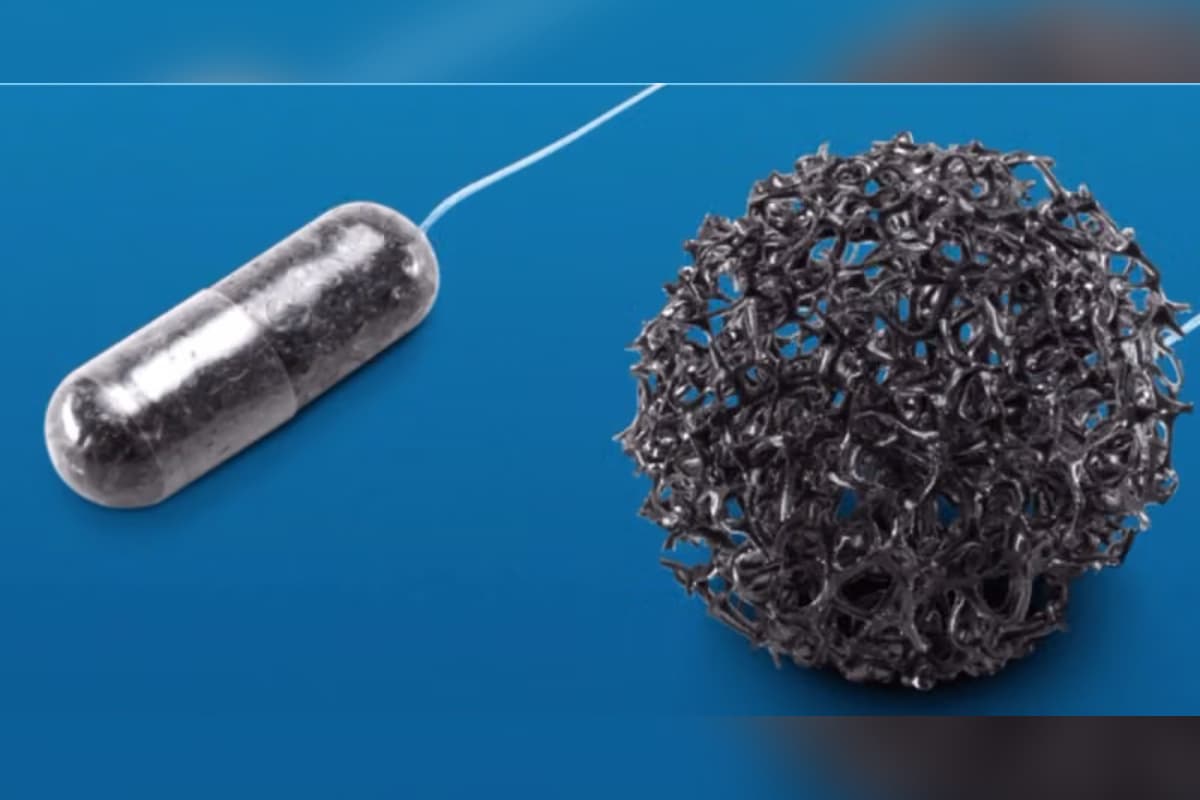
The technique is less invasive than endoscopy, an examination that uses a tube with a camera introduced through the mouth to observe the inside of the esophagus and stomach. With the new approach, the patient swallows a soluble capsule attached to a thin wire. When it reaches the stomach, the capsule dissolves and releases a small sponge, which remains connected to the wire.
How the sponge test works
After a few minutes, the health care professional pulls the wire back to remove the sponge by the mouth. During the passage through the esophagus, it collects cells from the lining of the organ. The material is sent for analysis in the laboratory, where experts look for changes that may indicate cancer or Barrett's esophagus.
The test can also identify the Barrett esophagus — a change in the cells that line the inner part of the esophagus. The condition may arise after years of exposure to stomach acid, usually in people with persistent reflux. This early identification is important for the monitoring and prevention of esophageal cancer.
Devices recommended by NICE
NICE recommended two devices for use in the British public system: Cytosponge from Medtronic and EndoSign from Cyted Health. Both follow the same principle of collecting cells using a sponge. The recommendation of the British body reinforces the clinical validity of the technique.
Endoscopy is the most commonly used examination to investigate changes in the esophagus, but it requires hospital structure, specialized professionals and, in many cases, sedation. The sponge technique can be performed in a few minutes and requires fewer resources. This can expand access to diagnosis, especially in regions with lower health infrastructure.
For whom the test is indicated
The proposal is to offer the procedure to people with persistent symptoms such as heartburn, reflux and intense indigestion. These symptoms may be associated with Barrett's esophagus or early stages of cancer. The sponge test emerges as a less invasive alternative to investigate these cases.
The patient swallows the capsule without the need for sedation, which reduces discomfort and risks. After collection, the sponge is removed and the material is followed for laboratory analysis. The result may guide the need for additional examinations, such as endoscopy itself, in specific cases.
Advantages over endoscopy
The endoscopy requires fasting, sedation and recovery, in addition to demanding equipment and trained staff. The test of the sponge can be done in the office or basic unit, with less cost and time. The simplicity of the procedure can make it easier to track at risk populations.
However, the source did not detail whether the test is already available in Brazil or whether there is a forecast of incorporation into the national public system. The NICE Recommendation applies to the United Kingdom, but serves as a reference for other countries. Brazilian experts can evaluate the feasibility of the technique in the local context.
For readers of Ponta Grossa and Campos Gerais, the novelty may arouse interest, although there is no information about the exam offering in the region. The search for less invasive alternatives is a trend in diagnostic medicine. The Boca no Trombone portal will continue to follow the theme and bring updates if the test reaches the Paraná.
Read Also
Exercise may potentiate psychotherapy in depression
Ultrasound Adhesive Anticipates REM Sleep in 43 Minutes
Font
Metropoles.com
Cytosponge (www.medtronicsolutions.com)