Veruschka, the first German supermodel, dies at 87
Veruschka von Lehndorff, the first supermodel from Germany, died at 87 in Berlin. An icon of fashion in the 1960s and 1970s, she also stood out as an artist. The cause of death was not disclosed.

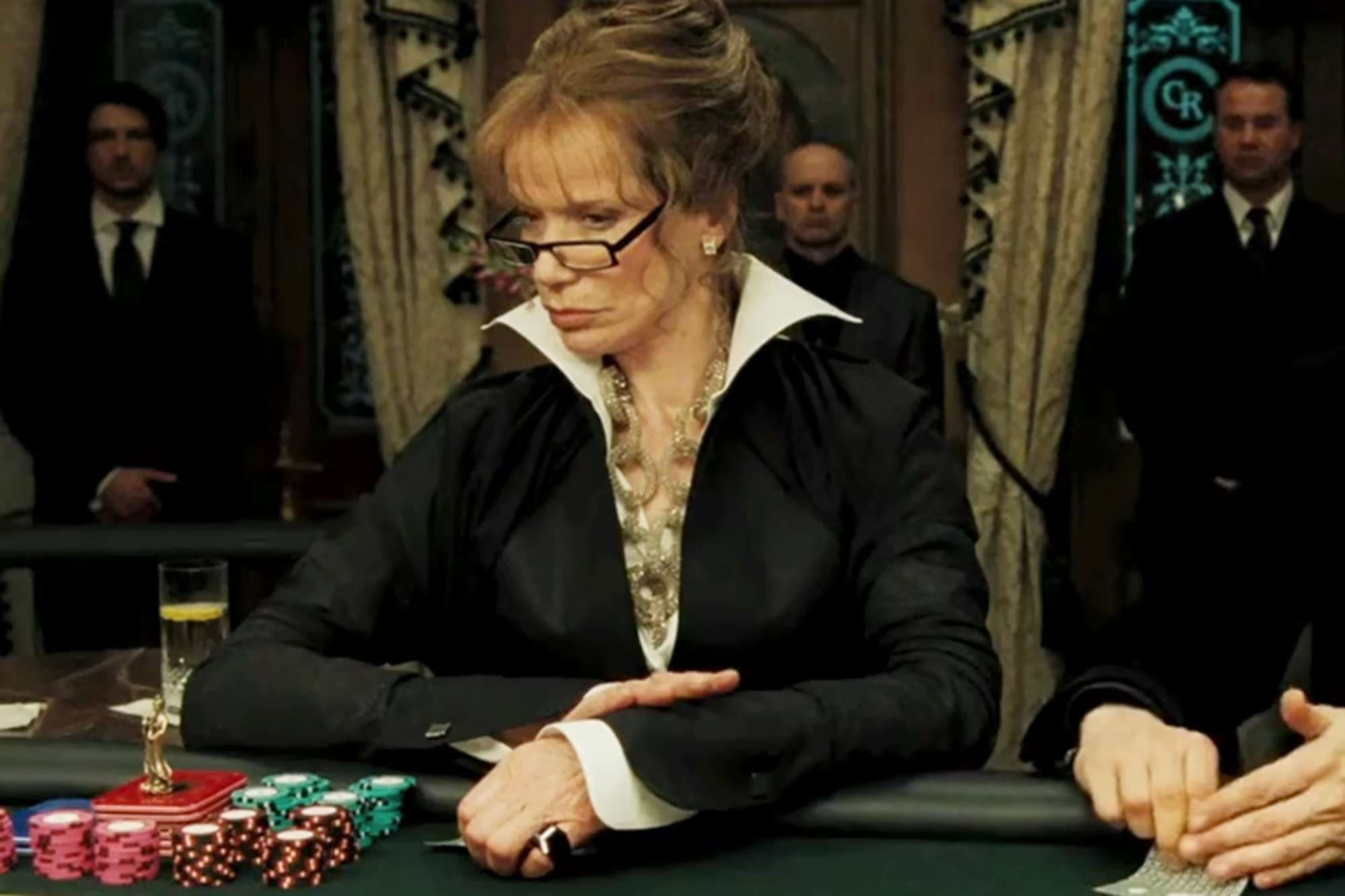
Model and artist Veruschka von Lehndorff, considered Germany's first supermodel, died on Tuesday at the age of 87. She was at her home in Berlin, family members told the German newspaper Bild. The cause of death has not been detailed.
At 1.83 meters tall, the model, born under the name of Vera Anna Gottliebe Gräfin von Lehndorff, became a fashion symbol in the 1960s and 1970s. She achieved international projection with her participation in the film "Blow-Up - Depois Daquela Beijo" (1966), by the Italian Michelangelo Antonioni.
Trajectory marked by art and fashion
Veruschka has printed covers of numerous magazines and circulated among artists such as Salvador Dalí and Helmut Newton. Despite her fame on the runways and in front of the cameras, she never defined herself only as a model, but always as an artist. His body painting works, developed in partnership with the artist and photographer Holger Trülzsch, were some of his artistic works that became internationally known.
The company Gräfin von Lehndorff Design e.K., of his sister, Catharina Kappelhoff-Wulff, published a statement in which it says: "We regret the loss of an extraordinary woman, of Catharina's sister and of an artist who shaped our home from the beginning."
From body painting to international exhibitions
Veruschka also drew attention for his work with body painting. In partnership with the artist and photographer Holger Trülzsch, he produced photographic series of body painting. This year, the East Prussia Museum in Lüneburg dedicated a special exhibition to the two. His works have already been exhibited in some of the most renowned museums of the Estados Unidos and in Europe, including institutions in New York, Paris and Milan.
Origins in the Prussian aristocracy and family tragedy
Vera von Lehndorff was born on May 14, 1939, in Königsberg, in the former German region of East Prussia, now Kaliningrad and part of Russia.
She spent her first years of life on the family estate, Steinort Castle, which had belonged to the Lehndorffs since the 15th century. His father, Count Heinrich von Lehndorff-Steinort, was part of the anti-Nazi resistance and was involved in the July 20, 1944 conspiracy, the most famous attempt to assassinate the dictator Adolf Hitler and overthrow the Nazi regime during World War II.
After a failed assassination attempt, he was arrested and executed on September 4, 1944. Vera was five at the time. The Nazis imprisoned the family under the policy of collective punishment. Her mother, who was pregnant, was sent to a forced labor camp, and Vera and her sisters were placed in an SS orphanage.
From childhood in refugee camps to discovery
After the war, the family lost their ancestral property in East Prussia, which remained in territory annexed by Poland. The family moved to refugee camps. Veruschka lived in several houses and frequently changed schools. Initially, she wanted to be an artist, studied art and went to Italy. In Florence, the photographer Ugo Mulas (1928–1973) noticed the exceptionally tall young German. She then began working as a model, adopting the pseudonym Veruschka (diminutive of Vera).
Meteoric rise and departure from fashion
Its great rise occurred in the 1960s. Veruschka worked in Paris and New York, appeared on international covers of Vogue and, in 1967, on the cover of American magazine Life. For a time, she was among the highest paid models in the world. In 1966, Veruschka starred in the film "Blow-Up - After That Kiss", by Michelangelo Antonioni (1912–2007). Just a few minutes on the scene was enough to immortalize her. This surprised Veruschka herself: "I never understood why I was so successful; with only two scenes and one speech, I became world famous!"
In the mid-1970s, after conflicts with the then-chief editor of American Vogue, Veruschka moved largely away from the traditional fashion industry. From then on, he devoted himself more intensely to art, consolidating his legacy as a multifaceted figure. The Boca no Trombone portal will continue to follow the developments and tributes to the artist.
Font
g1.globo.com