NR 32: what is it, its purpose and its importance
Understand what NR 32 is, the risks it aims to prevent and its importance for the health and safety of workers in the health sector.

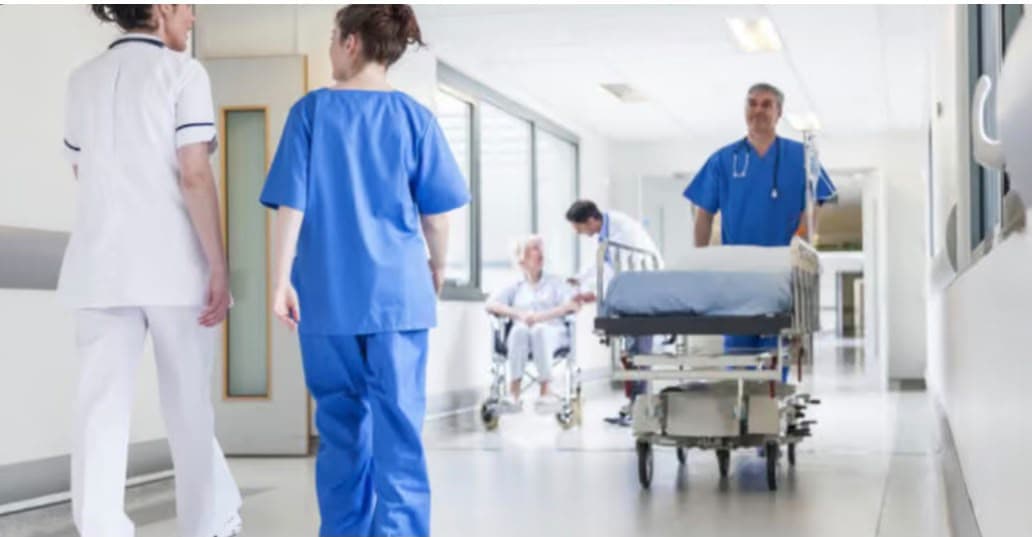
Those working in the health field, NR 32 is a very important standard, since it is responsible for safeguarding the safety of workers working in this sector, avoiding physical, chemical and biological accidents.
Similarly, for those who frequent these environments, NR32 is very important, mainly because, often, employees also have direct contact with the public.
Thinking about the importance of this norm, we elaborate an article to clarify more on this topic. Throughout the article we will not only talk about what NR32 is, but also explore the main risks and the importance of this standard for workers.
What is NR 32?
The NR32, i.e. the norma regulamentadora NR 32 is a set of protective measures aimed at the safety of all people who are in a clinical or hospital environment.
In other words, it serves both employees and patients and companions in a practice. Thus, NR 32 establishes basic guidelines and measures to protect the safety and health of workers.
Objective of NR 32
The main objective of norma regulamentadora 32 is to implement actions that protect the health of workers.
These workers, in turn, are those who carry out activities in the health sector, and may involve people who work in promotion, assistance, recovery, teaching or even health-related research.
Considering this focus, the guidelines of this standard involve a large number of professionals who daily need to follow specific care to avoid risks and accidents.
Risks of NR 32
As we mentioned, the main objective of NR32 is to safeguard the health of workers – and consequently, of patients and visitors to hospital environments, reducing the risks of work.
To better understand this protection, it is also important to understand what risks these professionals are subject to. They are, therefore:
Chemical hazards;
Biological risks;
Physical risks;
Ergonomic risks;
Risks in laundry;
Risks by accident.
Next, let’s talk a little more about each of them.
Chemical hazards
The chemical hazards, in turn, are related to elements with gases and products that present toxic substances. These substances, in turn, when they come into contact with the skin or the human organism, can cause serious problems.
To prevent this from happening, NR23 advises on the need to:
Observing the label of the packaging;
Identification of bottles and containers containing chemicals;
Perform proper handling of items.
Biological hazards
Biological hazards are all those hazards where there is a likelihood of occupational exposure to biological agents, i.e. microorganisms, cell cultures, parasites, toxins and prions, for example.
To avoid the possibility of exposure to these agents, NR32 determines the need for identification of which areas they are present, as well as the cleaning guidelines.
In this way, all equipment must be subjected to prior decontamination for handling.
Physical hazards
Physical risks are those that involve the likelihood of exposure to physical agents. Among them, we can mention the various forms of energy, such as noise, vibration, abnormal pressure, illumination and extreme temperature.
In addition, we can mention the ionizing and non-ionizing radiations. According to the standard, all hospital establishments need to have a Radiation Protection Plan (PPR).
Ergonomic risks
Other types of risks that can compromise the employee are ergonomic risks. These types of risk are those that arise from the misuse and positioning of equipment used by employees.
As side effects of this problem, we can cite mental problems, physical fatigue and changes in the human body.
Risks in Laundries
Another type of risk more characteristic of hospitals are those involving hospital laundries. These spaces have dirty and clean areas, in which one receives the washing of clothes and the second is where the pieces are sanitized and manipulated.
Laundry machines must have double doors so that the laundry to be washed is introduced into the dirty area and, in the end, it is removed from the other side, that is, from the clean side.
Risks by accident
Another very important risk that must be avoided is the risk of accident, which directly harms the life of the worker, as is the case of physical disability caused by misuse of machines.
To avoid this problem, it is important that the company is responsible for creating standard operating protocols, guiding professionals to use necessary personal protective equipment and to dispose of the materials used appropriately.
Finally, it is important that the company also adopts a continuous educational posture towards its employees.
Any establishment that has any activity related to health, whatever its level of complexity, must strictly follow the guidelines described in NR 32.
Only in this way will it be possible to guarantee the integrity of employees and avoid accidents and occupational diseases.
The existence of NR 32 is extremely important for employees, after all, it is she who will ensure an efficient and safe working environment for them.
At the same time, for those who attend a clinic as a patient, being in an environment that respects the norma regulamentadora 32 will also have a greater guarantee of individual health and safety, since it often comes in direct contact with the employee.
Conclusions
As you discovered throughout our article, NR 32 is a standard that defines basic guidelines of health sector establishments to ensure the safety of both employees and patients.
All quality clinics and practices must therefore follow these standards.
To find out more about the services that Núcleo Alma clinic offers, visit our website.
Thank you for reading and until the next article.
Continue to follow our articles on Normas Regulamentadoras and the prevention of work-related accidents and diseases. For topic suggestions, please contact (42) 99997-4979.
José Aparecido Leal and Rafael Gustavo Mansani