Brazilians face long lines in Paris to vote
In the first round of presidential elections, Brazilian voters in Paris faced long queues early on. The consulate reinforced the structure and replaced faulty voting machines. For the first time, Marseille also received voting stations.

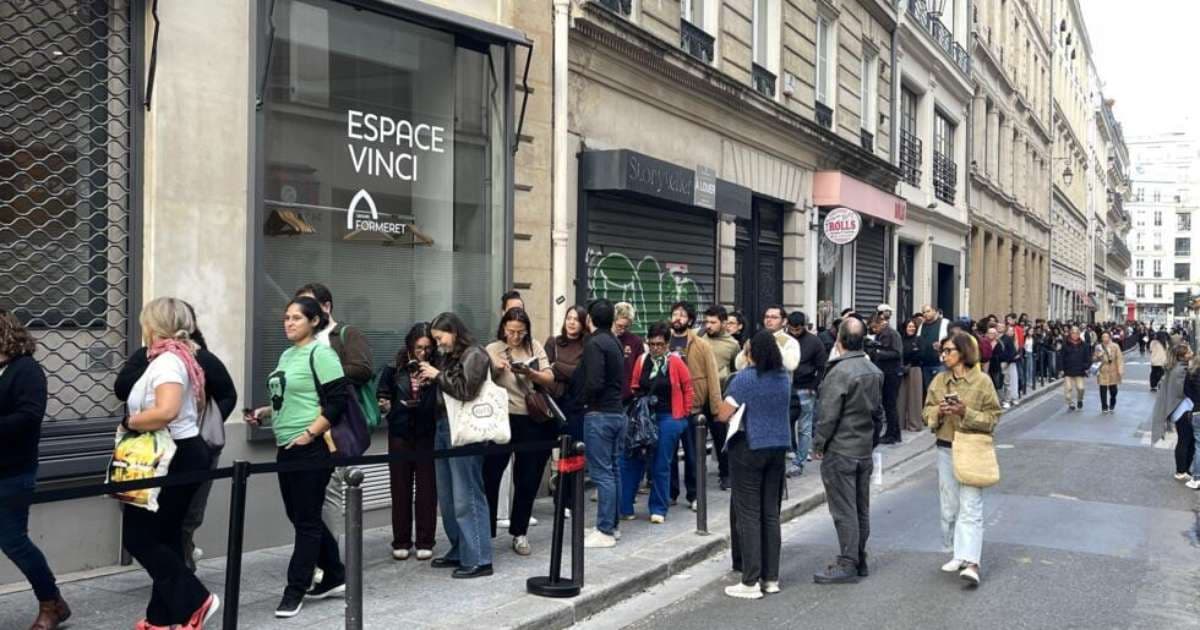
Brazilians living in Paris faced long queues on Sunday morning (4 October 2026) to vote in the first round of the presidential elections. The queues began to form even before 8 a.m. local time (3 a.m. in Brasilia), when the ballot boxes opened, and already extended for about six blocks. The intense movement marked the start of voting in the French capital, where thousands of voters are registered.
Among those waiting in line, the nanny Luiza Angélica Portella summarized the sentiment of some of the voters. "I don't want to vote, but as we are obliged, I am here," he said. The declaration reflects the mandatory voting for Brazilians abroad, even for those who are far from the country.
Democracy on the streets of Paris
The Consul General of Brazil in Paris, Fábio Mendes Marzano, closely followed the movement and praised the process. “It’s been, so far, a fantastic spectacle of democracy, as everyone expected,” he told RFI. The expectation, based on the attendance registered in previous elections, is that about half of the registered voters will attend the polls.
The vote in Paris went smoothly, despite the great flow. Two electronic urns that presented problems were replaced, since the TSE sent to Paris a greater number of machines for this purpose. “The sections are open until five in the afternoon, but if you need to, we’ll wait until the last person in line,” Marzano said.
Political positioning and hope for change
For many voters, voting is a way of positioning themselves in front of the Brazilian political scenario. "Surely you have to position yourself, we are against a potential dictatorship in Brazil," said Mariana Lourenço. The speech highlights the concern of the community with the direction of the country.
Another voter, contractor Karlysson Ataíde Cerqueira, expressed hope for transformation. "I'm here with the hope that Brazil is a prosperous country and that we can change that country, which needs to be changed. Enough, I can't stand it anymore," he said. The opinions reflect the diversity of expectations among Brazilians abroad.
Marseille debuts as a new electoral zone
For the first time, in 2026, there is also a vote at the Consulate General of Brazil in Marseille, which prevented many voters in the region from having to travel to Paris. The novelty meets an old demand of the Brazilian community in the south of France.
According to the Consul General of Brazil in Marseille, Vera Cíntia Alvarez, 2,669 voters are registered to vote in the new electoral zone. The expectation is to receive between 1,300 and 1,500 voters. The decentralization of the process facilitates access to vote and reduces travel costs for voters.
Structure and logistics for the litigation
The consulate in Paris organized the vote with sections distributed to meet the demand. The replacement of the defective ballot boxes was quick, thanks to the sending of extra machines by the Superior Electoral Court. The measure ensured that the flow of voters was not interrupted.
In Marseille, the structure set up in the consulate served the new electoral zone. The consul Vera Cíntia Alvarez highlighted the importance of the novelty for the local community. The expectation of attendance in Marseille follows the pattern of other cities, with about half of the enrolled.
Context of elections abroad
Voting abroad is compulsory for Brazilians over 18 who are registered in electoral zones outside the country. The presidential elections mobilize the Brazilian diaspora around the world. In Paris, the community is one of the largest in Europe, which explains the long lines.
Voting abroad follows the same calendar as in Brazil, with the first round on October 4, 2026. Voters who do not attend must justify their absence, under penalty of fine. Participation abroad is seen as a thermometer of community political engagement.
Next steps and counting
After the closure of the sections, the electronic ballot boxes transmit the votes to the TSE system. The counting abroad is integrated into the national count. If there is a second round, voters abroad vote again on the scheduled date.
The consulate in Paris said it would wait until the last person in line, if necessary. The measure ensures that all voters present can exercise the right to vote. The expectation is that the process will be completed without major incidents.
For Brazilians abroad, voting is a way to maintain a bond with the country and influence the political future. The participation in Paris and Marseille demonstrates the interest of the community in the presidential elections. The result of the elections will define the direction of Brazil for the next four years.
Read Also
2026 elections abroad begin in New Zealand
Argentina leads Brazilian voters in Latin America
Voting overseas ends in New Zealand; counting leaves after 17h
Font
www.terra.com.br