Crioulas Seed Fair in Palmeira strengthens family farming in the Campos Gerais
Crioulas Seed Fair in Palmeira brings together farmers and cooperatives and strengthens family farming and agrobiodiversity.

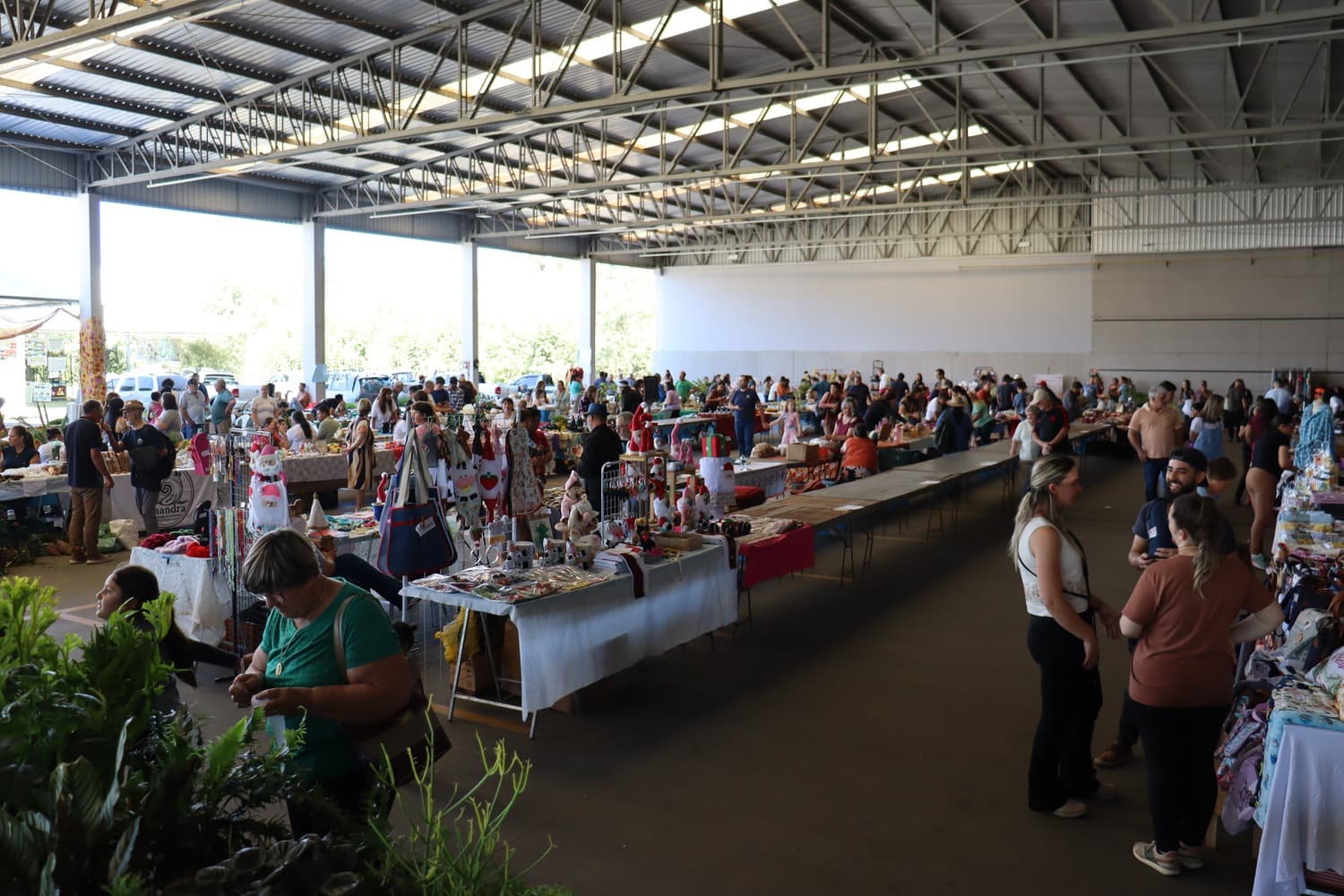
The Creole Seed Fair in Palmeira brought together family farmers, cooperatives, organizations and representatives of different municipalities of the Campos Gerais last Saturday (26). The program valued productive diversity, the preservation of Creole seeds and the strengthening of family agriculture in the region.
Conducted by the Campos Gerais Center for Socio-Environmental Cooperation, with support from Itaipu Binacional and the Federal Government, the activity also brought rural producers, entities and the community closer together.
Diversity Strengthens Families in the Field
Among the participants was Ismael Lourenço Albino, member of the Campos Gerais Center for Socio-Environmental Cooperation and president of the Family Farming Cooperative of Palmeira.
According to him, the diversity found during the fair helps to enhance the production and encourages the stay of families in rural properties.
“For us, it is a great incentive to keep families in the field,” he said.
The participation of organizations from other municipalities also broadened the exchange of experiences. Silvia Mara Wojciechowski, member of the Core and representative of COAFTRIL, of São João do Triunfo, drew attention to the importance of institutional food procurement programs.
“Our main market today is the institutional market, the PAA and the PNAE, destined for the municipal and state education network,” he explained.
Agroecological production gains space
The fair also opened space for those who work daily in rural production.
The family farmer Roberto Gurski, from Palmeira, produces vegetables, beans, corn and derivatives with the family. The property has organic certification and works with agroecological techniques.
“Our agriculture is all agroecological, certified by the Ecovida Network,” he said.
In addition to commercialization, events such as the Creole Seed Fair in Palmeira contribute to the exchange of knowledge between farmers and to the preservation of traditional varieties cultivated by families over generations.
Itaipu highlights sustainable development
Representing Itaipu Binacional, Natalino Bastos dos Santos, special advisor to the Coordination Board, highlighted the link between family farming, food production and sustainable development.
“Itaipu has invested heavily in family farming because it understands that sustainable development is necessary,” he said.
According to him, supporting the sector also contributes to environmental protection and to expand food production within the territories themselves.
Cooperation on Campos Gerais
The Socio-Environmental Cooperation Cores are part of a participatory governance strategy focused on sustainability, with Itaipu Binacional as one of the anchor institutions.
In Campos Gerais, the group brings together representatives of organizations and municipalities with the aim of developing collective actions and strengthening existing projects in the region.
One of these initiatives is the Economics of Cooperation and Environmental Education Agreement, carried out by the Socio-Environmental Cooperation Center Campos Gerais and executed by the Cidade Viva Institute, in partnership with Itaipu Binacional.
For the coordinator of the Center, Gerveson Tramontin, the realization of the fair shows the importance of this regional articulation.
“The Core plays an extremely important role in strengthening organizations and their activities, as is the case of this fair,” he said.
Mariane Monteiro, general coordinator of the Economics of Cooperation and Environmental Education Agreement, also positively evaluated the realization of the activity and anticipated new actions in the municipalities of Campos Gerais.
“It was the first fair, the first action of the covenant. We have many and many other events ahead of us,” he said.