Do Woodstock ao Rock in Rio: rock crosses generations, By John Elvis
Woodstock and Rock in Rio marked the history of world rock. See how festivals, bands and major moments keep the genre alive until today. 🎸

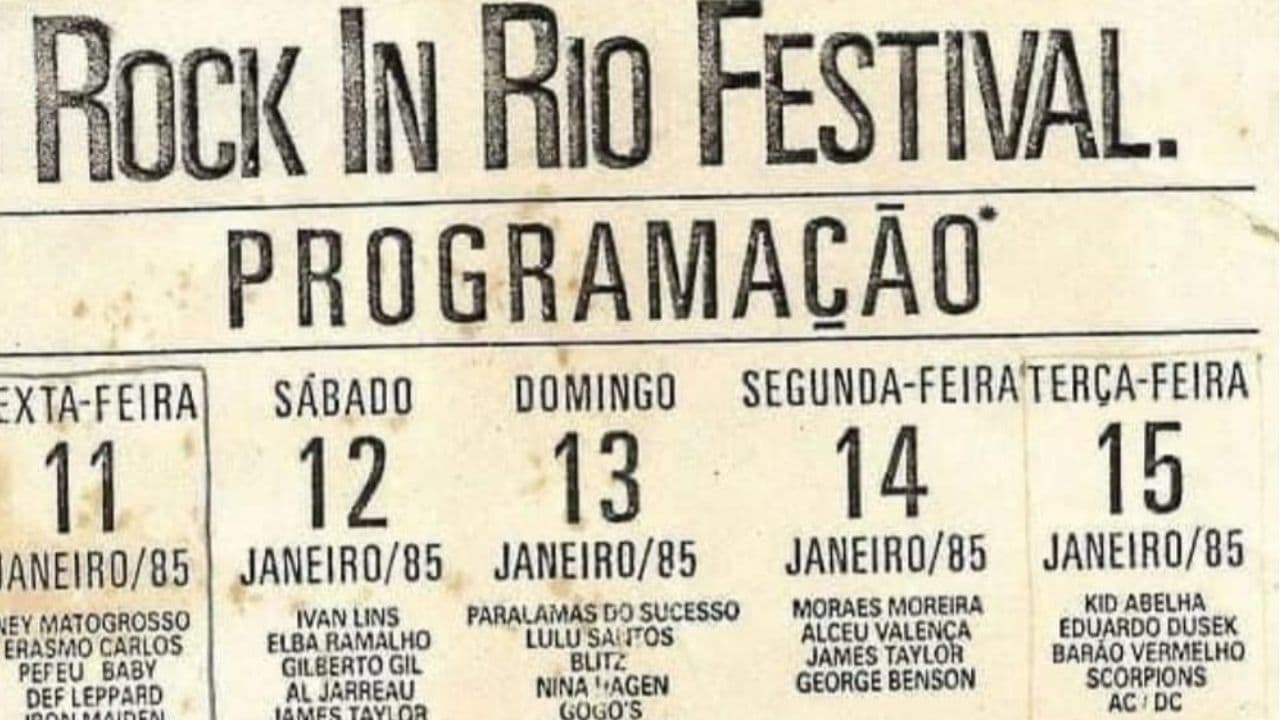
There are festivals that are just great musical events. And there are those who go into history. Woodstock and Rock in Rio belong to this second category.
Let's go back to 1969. At legendary Woodstock, the Creedence Clearwater Revival took to the stage in the early hours of August 17. It was about 3 in the morning. The band was at its peak and John Fogerty, with his unmistakable voice, commanded a powerful performance, going through classics such as Born on the Bayou, Green River, Bad Moon Rising and Keep on Chooglin’.
Interestingly, the show ended up being little known for many years. The late schedule caused a large part of the audience to be exhausted or asleep, and Fogerty was also not satisfied with the recording, which ended up not entering the original Woodstock film.
It’s one of those ironies of rock history: while Woodstock was asleep, Creedence was awake making history.
Sixteen years later, Brazil would live an equally historic moment.
In January 1985, Rio de Janeiro received the first edition of Rock in Rio. And among the climbing giants was the Queen.
Freddie Mercury didn’t need big effects to dominate a crowd. All it took was his voice, his charisma and that absolutely unique stage presence.
When Queen played Love of My Life, thousands of Brazilians sang together, turning the music into one of the most exciting moments in the history of the festival.
And then came Radio Ga Ga. The hands of the audience following the rhythm of the music created an image that became one of the trademarks of the first Rock in Rio.
Queen performed two shows on January 11 and 18. And Freddie Mercury discovered on that stage something that great artists always look for: an audience capable of returning the energy it receives.
But time has passed.
Rock in Rio grew, modernized and turned into a gigantic international festival. Today, in addition to rock, it brings together pop, rap, funk, electronic music, sertanejo and many other styles.
It is a great event, technological and democratic, capable of bringing together different generations and publics.
But there is a difference that many old-school rockers can’t ignore.
Those who lived or accompanied Rock in Rio in 1985 remember a time when rock was the main protagonist. Queen, AC/DC, Iron Maiden, Ozzy Osbourne, Whitesnake, Scorpions and so many other names made this festival a true temple of rock.
Today, a lot has changed...
But that first edition had something impossible to repeat: the feeling that Brazil was discovering that it could also be the stage for the greatest names in the history of music.
Technology has changed. The public has changed. The styles have multiplied.
Because rock can change clothes, cross generations and even share space with other styles.
But as long as there's someone putting a record on to play, increasing the volume of the radio and singing along... rock will still be alive.
I still have a rock club 🎸 LIGHT
Don't get me started 🤘
LIVE THE ALTERNATIVE SOCIETY
John Elvis Ribas Ramalho
Radio broadcaster, communicator, presenter and rocker
Portal columnist Boca no Trombone
Presenter of CLUBE ROCK 🎸 LIGHT — Rádio Clube FM 94.1
Also read: Is there real rock on the radio? by John Elvis