Dog Recognizes Owner Before Seeing Him; Understand
The dog recognizes the owner before seeing him through sensory clues such as smell, sound and movement. Science indicates that smell, hearing and vision combine in this process. Understand how each sense participates and why the dog anticipates the arrival of the owner.

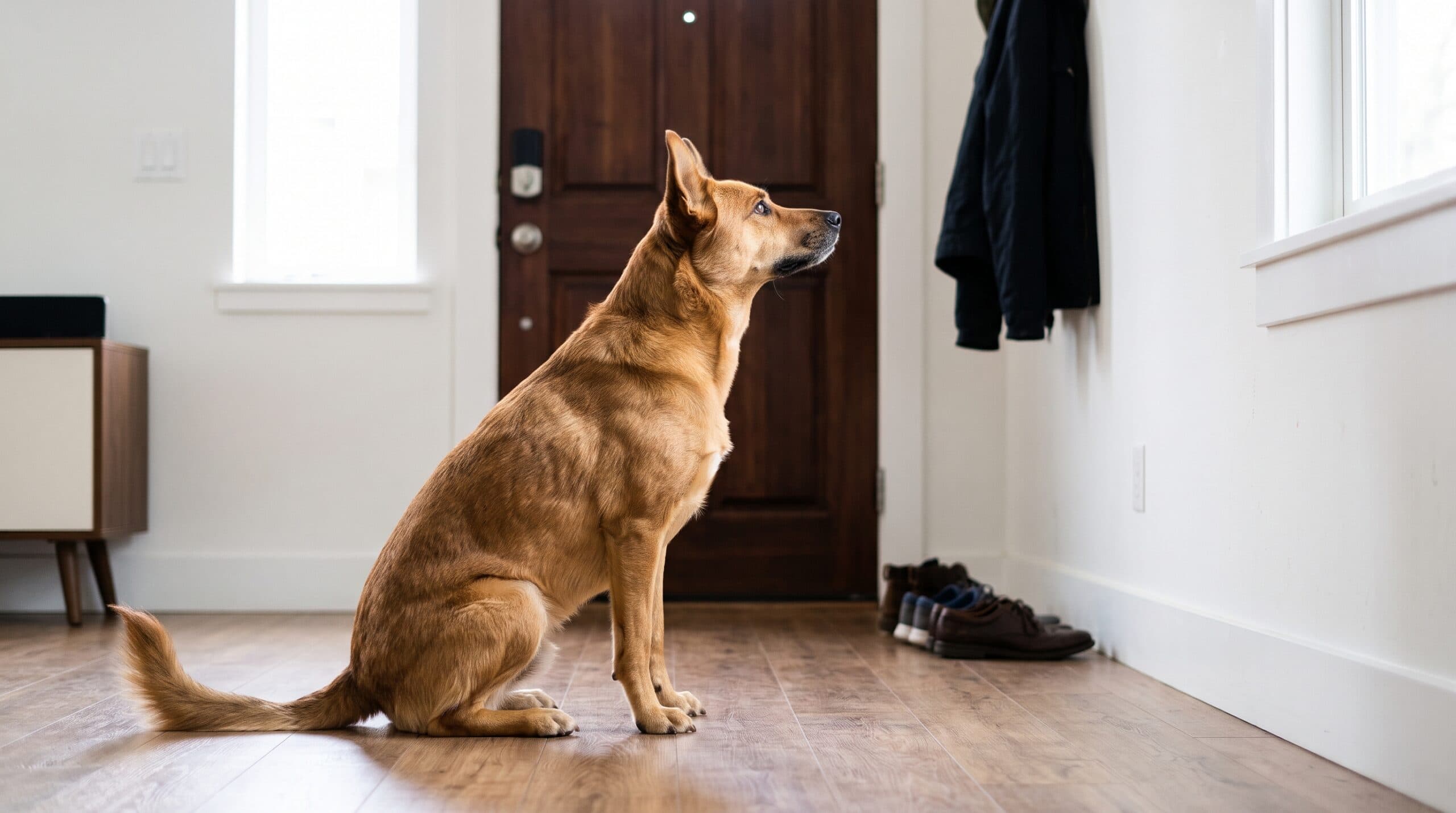
You're still on the street, the key hasn't even touched the lock, and the dog is already planted in the door, waving his tail. It sounds like a guess, but the dog recognizes the owner through clues that you don’t even realize you’re giving. Smell, sound and movement combine in this process. Understanding how each sense participates helps to interpret your dog’s excitement at the time of arrival.
Smell is the main tool in recognition
Science has already shown that dogs have a sophisticated ability to recognize family people. Smell is one of the main tools, but hearing and vision also play an important role. No sense works alone. The dog gathers information from various sources, and it is this sum that makes recognition quick, sometimes before the face appears.
The canine smell is extremely sensitive and allows to detect odor molecules that disperse in the air. When the tutor approaches, his characteristic smell comes before him. This olfactory clue may be enough for the dog to position itself at the door, even without seeing or hearing anything. The source did not detail the exact extent of this detection, but the behavior is widely observed by tutors.
Steps and sounds saw learned clues
Each person has their own way of walking: rhythm, intensity, way of supporting their feet on the ground. With coexistence, the dog can learn to associate a certain sound pattern with the arrival of the tutor. It's a repetition learning. If the same noise outside is usually followed by his entrance through the door, he goes on to anticipate what comes next.
In practice, the noise of the gate, his voice and the rhythm of his steps form a set that he knows well. There is still limited scientific evidence that dogs identify the guardian only by the way they walk. The steps come in as a possible clue, not as a proven signature. Most likely, recognition results from the combination of sensory information and previous experiences.
Known voice triggers reaction in dog
Studies on canine cognition indicate that dogs can distinguish familiar voices and recognize guardians by visual information. A known voice outside the gate, therefore, can already trigger the reaction. This ability to integrate different stimuli helps explain why some animals seem to predict the arrival of a loved one.
Voice recognition does not depend solely on volume or tone. Dogs are able to identify specific patterns of human speech, such as intonation and rhythm. When the tutor talks at the gate or calls the animal, the sound works as an immediate trigger. Even if the dog does not see the face, the voice already signals the presence of a familiar person.
Learning built on daily living
This behavior can be the result of a learning built along the coexistence. More than recognizing an isolated sound, the dog has learned to interpret the signals that herald the arrival of someone important in his routine. The daily repetition of schedules, paths and sounds creates a repertoire of clues that the animal associates with the tutor.
For example, if the guardian usually arrives home at the same time, the dog may begin to position himself near the door minutes earlier. This does not mean that he has a sense of time like humans, but rather that he has learned to anticipate events based on environmental clues. The source did not detail specific studies on this temporal anticipation, but the behavior is consistent with associative learning.
Why it matters to tutors
Understanding how the dog recognizes the owner before seeing him helps to strengthen the bond between human and animal. Knowing that the dog is attentive to smells, sounds and movements can guide the way the guardian approaches home. Avoiding sudden noises or sudden changes in routine can reduce the animal’s anxiety in waiting.
In addition, this knowledge can be useful in training situations or adaptation to new environments. If the dog overreacts to the arrival of the tutor, understanding the sensory triggers allows the gradual desensitization to work. The source did not provide specific training guidelines, but the recognition of stimuli is the first step to any intervention.
Differences and limits of current knowledge
There is a divergence in claims about identification by the way of walking. One states that the dog can learn to associate the sound pattern of the steps with the arrival of the tutor. Another points out that the scientific evidence is limited to claim that dogs identify the guardian only by this criterion. We report this difference without taking sides.
The consensus, however, is that recognition does not depend on a single sense. The integration of olfactory, auditory and visual stimuli is what makes the process efficient. The source did not detail specific studies on each sensory modality, but the literature on canine cognition supports this integrated view.
What to observe in your dog’s behavior
Tutors may notice signs that the dog has already noticed the approach before the key turns. Ears standing, snout facing the door, waving of tail and barking contained are common indications. Some dogs also sniff intensely near the entrance or scratch the door. These behaviors reflect the activation of the senses together.
Observing these signs can help to understand the emotional state of the animal. If the dog gets very agitated, it may be helpful to create a calmer arrival routine. The source has not provided specific protocols, but careful observation is always recommended by animal behavior experts.
The early recognition of the owner is an example of the sensory intelligence of dogs. Understanding this process brings guardians closer to their animals and improves coexistence. For more content on canine behavior, continue browsing the Boca no Trombone portal.
Read Also
Dog dreams? See what science says
Font
www.portaldodog.com
Portal Pet On (portalpeton.com.br)