German Chancellor Shocked by AfD's Victory in Saxony-Anhalt
German Chancellor Friedrich Merz said he is 'deeply shocked' by the AfD's victory in the state election of Saxony-Anhalt. The far-right party received 43.8% of the votes, while the CDU got 17.2%. Merz ruled out any cooperation with the party.

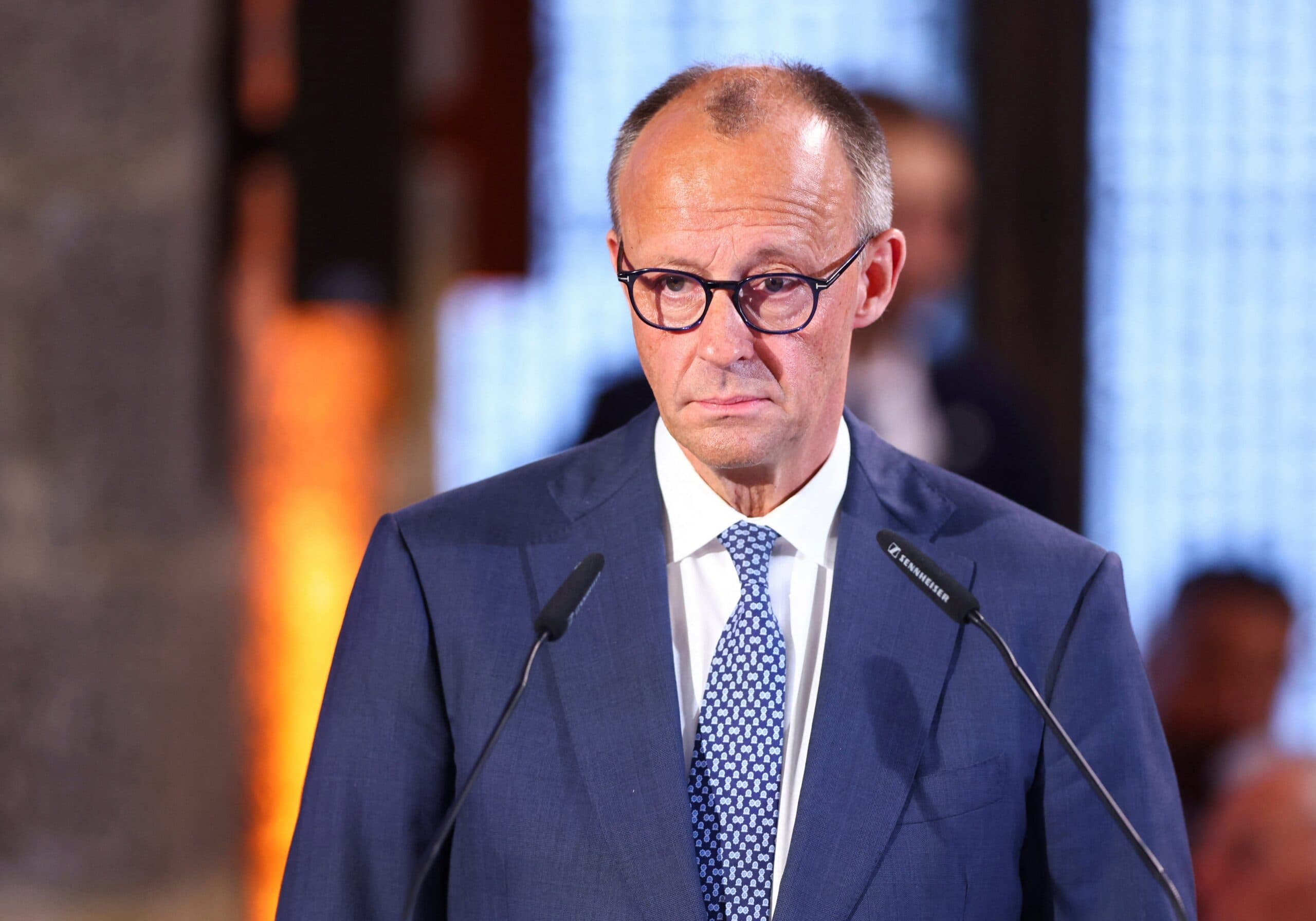
German Chancellor Friedrich Merz said on Monday he was "deeply shocked" by the victory of the Alternative for Germany (AfD) in the Saxony-Anhalt state election on Sunday. He classified the result as "seismic". The far right received 43.8% of the vote, more than doubling its previous result in the state.
Merz has ruled out any joint work with the AfD, according to Reuters. He acknowledged that the result shook his party, the Christian Democratic Union (CDU), in its foundations, according to a statement to the Bild newspaper quoted by the agency. The CDU won 17.2% of the vote, 20 points less than in the last election.
A historic defeat for the CDU
Merz called the result the party’s toughest electoral defeat in decades. The AfD did not achieve an absolute majority in the state parliament: it won 39 of the 83 seats. The party now calls on CDU lawmakers to make their project of governing the state feasible, which would be the first time a far-right legend has taken power at the state level in post-war Germany.
The result testifies to the historical refusal of traditional German parties to work with the AfD, a policy known as the “containment wall”. The AfD says the practice is undemocratic. Tino Chrupalla, the party’s national co-chair, called for CDU deputies to enable a “conservative centre-right majority” in Saxony-Anhalt. "Party games really should be a thing of the past," he told German radio, referring to the containment wall.
Political Isolation in Sheikh
The only German legend that signaled willingness to work with the AfD is the left populist party BSW. The two acronyms share hostility to mass immigration and advocate an end to German support for Ukraine and the resumption of ties with Moscow. Merz dismissed the possibility of resigning and said he would broadly maintain the government’s reform agenda. “Give up is not an option for me,” he said.
The chancellor admitted that his popularity ratings, at the lowest levels ever recorded, contributed to the defeat. The result will have consequences, he said, and the CDU and coalition will make an analysis of what can be done differently after the regional elections in Berlin and Mecklenburg-West Pomerania in two weeks.
Firm position on Russia
Merz also said he will not change his stance on Russia. “I will not deviate a millimeter from my fundamental conviction that we need to defend our freedom, especially now, against Russia,” he said. He also said that stopping support for Ukraine would worsen the situation and that the Russian leadership wants to destabilize the Western value system.
The result provoked reactions in France and Poland. French Finance Minister Roland Lescure told RTL radio that the vote sends a "very, very worrying" signal. "This shows that we face a great challenge in the face of a populist wave that is spreading around the world today and that we need to resist," he said. France has national elections next year.
AfD Electoral Profile
According to a survey cited by Reuters, the AfD was the most voted by men: 50% of them supported the party, compared to 39% of women. Voters in the legend also tend to have less economic stability and less schooling. Saxony-Anhalt has just over 2 million inhabitants, was part of East Germany and is one of the poorest states in the east of the country.
Alice Weidel, the other national co-chair of the AfD, called the result a milestone and said the party wants to reach at least 40 percent in the next national election, scheduled for 2029. The AfD was classified as a right-wing extremist by the local office of Germany’s domestic intelligence service. The party rejects accusations of extremism.
Controversial Proposals of Legend
In education, the AfD advocates changes in school attendance rules and the possibility of homeschooling. The party also proposes separating refugee children into specific classes and changing the content of schools, with greater emphasis on German identity and culture. In the area of energy, the legend wants to reverse part of the climate policy adopted by the country, expanding the use of fossil fuels and advocating the resumption of nuclear energy.
The party also proposes to reduce the role of public broadcasters and restrict their performance to a service considered basic. In foreign policy, the AfD advocates a rapprochement with Russia, an end to sanctions against Moscow and a reduction in German support for Ukraine. The party is also critical of the European Union and wants to return to the member countries some of the competences currently concentrated in the bloc.
Sunday’s vote was statewide and does not change the composition of the German federal government. However, the advance of the far right is a wake-up call for upcoming electoral disputes in the country and for political stability in Europe.
Read Also
Merz says shocked after AfD victory in Germany
Extreme right wins regional election in Germany
Rescue seeks 900 hydropower workers in Nepal after disaster
Font
g1.globo.com