Germany seeks permanent storage for nuclear waste
Germany continues its search for a permanent storage site for its nuclear waste, a process that could last until 2050. Only 5% of the territory is considered potentially suitable, and annual costs reach 1.4 billion euros.

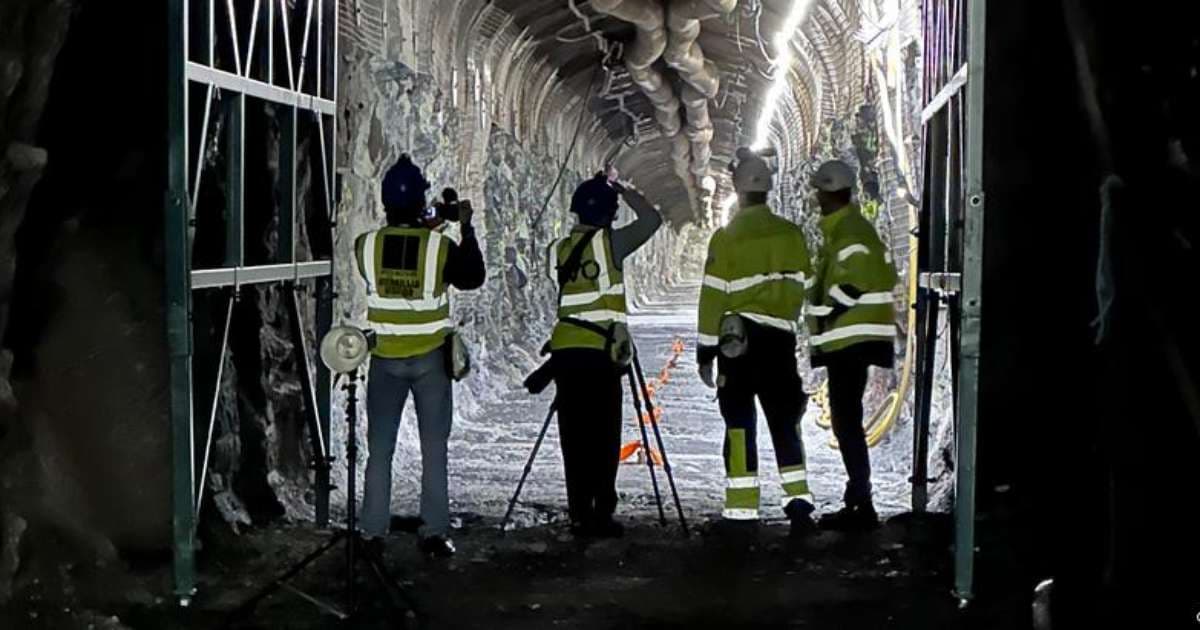
Germany remains committed to finding a definitive repository for its nuclear waste, a challenge that has been dragging on for decades. The Federal Society for Final Deposits (BGE), created exclusively for this purpose, has already dedicated ten years to the search for a suitable underground site, similar to the Finnish project of Olkiluoto, which is 400 meters below the earth. The goal is to safely store used fuel elements that will remain radioactive for thousands of years.
The German process is expected to last until 2050, but Meio Ambiente minister Carsten Schneider wants to check whether that deadline can be shortened. A spokesman for the ministry stressed that Germany is part of the group of pioneers in this area, alongside Finland, while Russia, Estados Unidos, the United Kingdom and Japan do not have such advanced processes.
Search restricted to 5% of the territory
The BGE announced that only 5% of the territorial area of Germany are still considered potential locations for a definitive deposit, distributed over 11 of the 16 federated states. The body dialogues with geologists, nuclear energy experts, physicists, citizens and politicians to evaluate the options. In addition, there is a clear decision: nuclear waste produced over decades of operation of German power plants will remain in the country and will not be sent abroad.
Currently, the waste is stored in the area of the 19 former usinas nucleares, in the process of disassembly, and in some research facilities. Germany decided to gradually abandon the commercial use of nuclear energy in 2011, after the Fukushima disaster in Japan, and the last plant was shut down in 2023. The radioactive waste, however, remained where it was.
Security for 1 million years
One of the reasons for the delay in finding a definitive deposit is the need to prove that the place is safe for an extremely long period: in Finland it is 100,000 years; in Germany, Switzerland and France, 1 million years. “Regardless of the time horizon considered, the effort is always enormous,” notes BGE spokeswoman Dagmar Dehmer.
The potential sites are evaluated according to strict geological criteria: is the rock formation at 400 meters depth stable? Is there a risk of groundwater contamination? The goal is to find a place where the deposit is surrounded by a rocky layer approximately 100 meters thick, functioning as a natural barrier. Among the formations considered suitable are layers of clay, granite or gem salt.
Refined criteria and local resistance
The criteria are progressively expanded and refined, reducing the number of possible locations. Other factors, such as the proximity of large cities, only come to be considered in later stages. One thing is clear from the start: the prospect of harboring a radioactive waste deposit does not generate enthusiasm among residents nowhere in Germany.
Part of Dehmer’s job is to build trust. It needs to repeatedly explain why it is necessary to deal with the legacy left by the nuclear energy era, regardless of everyone’s opinion of this technology. Transparent communication is essential to overcome the resistance of potentially affected communities.
Billionaire Costs and Final Expectation
In addition to unwanted, the final destination of nuclear waste is expensive. The search for a definitive deposit and the provisional storage of the waste at the former sites of the power plants cost Germany about 1.4 billion euros per year. Experts estimate that the construction and operation of the final deposit will cost around 14 billion euros.
The expectation is that, when the project is completed, 28,000 cubic meters of radioactive waste will finally have found a permanent and safe deposit underground. In the meantime, Germany continues to improve its criteria and dialogue with society to find a solution that protects future generations.
Read Also
Deaths from cervical cancer can rise 39.3%
Awesome video shows plane crashing and exploding in the U.S.; 9 died
U.S. renews House and a third of Senate on Tuesday
Font
www.terra.com.br