Ibovespa plummets over 16% and dollar surges after Lula's re-election
Stock market had trading suspended for 30 minutes on Monday (26); market also recorded strong rise in futures rates

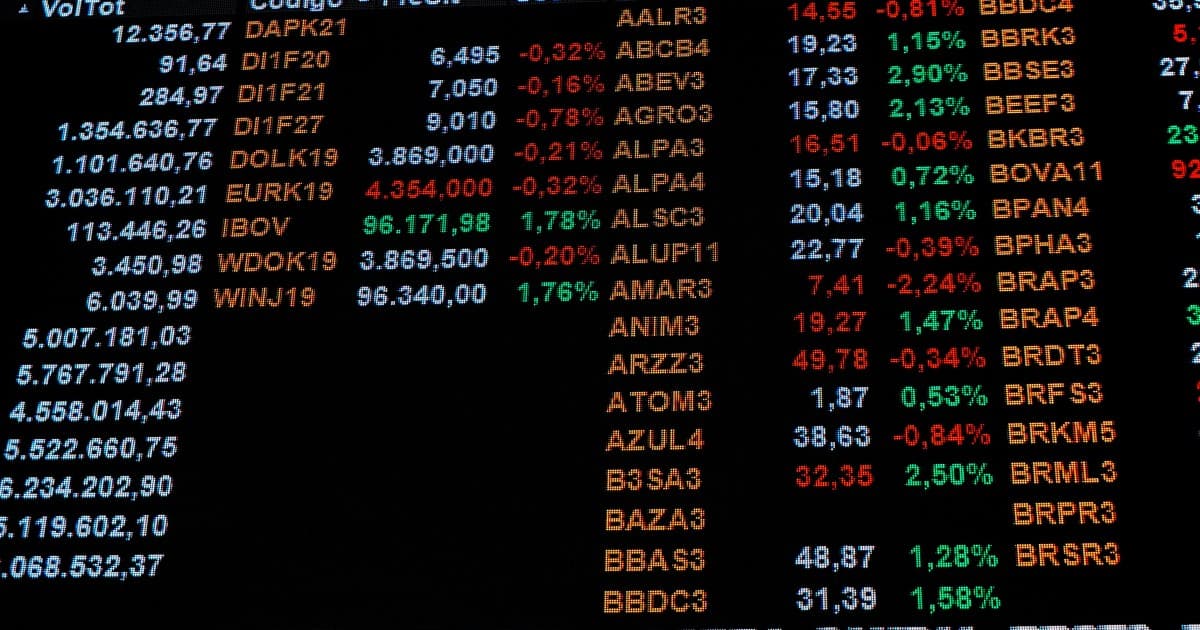
Ibovespa recorded a fall of more than 16% on Monday morning (26), in the first session after the re-election of President Luiz Inácio Lula da Silva (PT). The strong sales pressure triggered the circuit breaker, a mechanism that temporarily interrupts trades on the Brazilian stock market.
According to data released by CNN Brazil, at around 10:40 am, the main B3 index fell to the 171,000-point range. The move occurred on a morning of intense volatility, with several papers going through trading auctions.
The dollar has also advanced strongly. At the opening, the U.S. currency rose 12.52%, trading at R$ 5.60. Around 11 a.m., it still showed an appreciation of more than 10%, negotiated at approximately R$ 5.51, according to the report.
Stock Exchange interrupts trading
B3 suspended operations for 30 minutes after Ibovespa reached a 10% drop from the previous close. It was the first circuit breaker drive since March 2020, during the financial crisis caused by the Covid-19 pandemic.
Read also: Family Fellowship Focuses on Final Election Straight
Interruption acts as a pause in trades at times of extreme oscillation. After the recovery, the selling pressure continued, and the index widened losses during the morning.
Election results cause revision of expectations
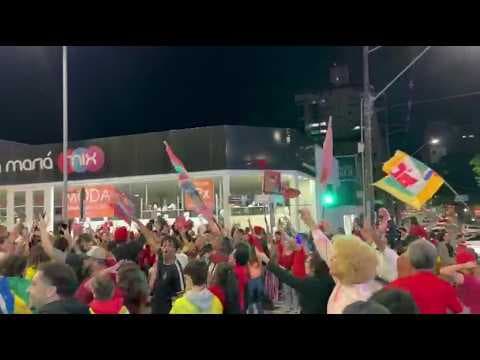
The reaction came after the confirmation of Lula’s victory over Senator Flávio Bolsonaro (PL). According to Reuters, the result contradicted market expectations and broadened investor concerns with the Brazilian fiscal scenario.
In the assessment of analysts heard by CNN Brazil, part of the investors had adjusted their positions expecting a change of government. With the re-election, there was a review of these bets, especially in relation to the conduct of public spending and the trajectory of debt.
Future interest is also rising
In addition to the fall in shares and the valuation of the dollar, futures interest contracts registered a strong rise. These indicators reflect expectations on interest rates in the coming years and are monitored by the market to assess the financing conditions of the economy.
The figures presented represent specific moments of the morning trading and do not correspond to the closing of the market.