Seven cooperatives unite in massive soybean crushing in Ponta Grossa
Seven Paraná cooperatives unite at Campos Gerais Crushing Plant in Ponta Grossa, with an annual revenue forecast of R$3 billion.

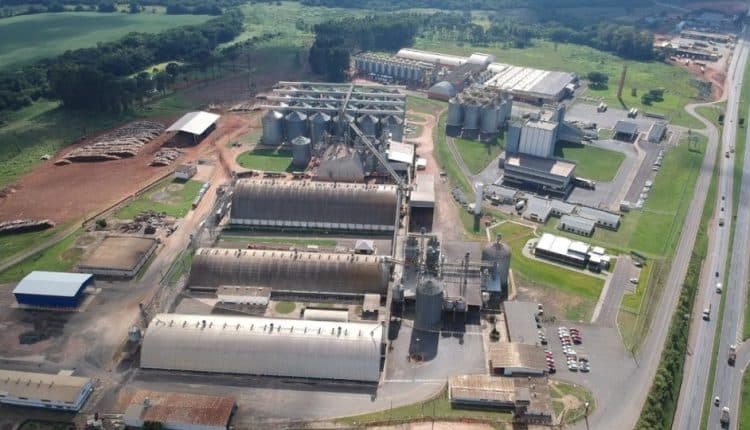
The union of seven Paraná cooperatives is transforming soybean industrialization into Ponta Grossa, the Campos Gerais. Frisia, Agraria, Capal, Coasul, Integrada, Castrolanda and Bom Jesus decided to invest together in the Campos Gerais Crusher, an industrial complex with the capacity to process 3,400 tons of soybeans per day and an annual turnover forecast of R$ 3 billion.
More than an industrial operation, the enterprise represents a change in the economic strategy of the cooperatives, which begin to participate directly in new stages of the soybean production chain. With this, the proposal is to add value to the farmers’ production, increase competitiveness and maintain a greater share of the economic results in the Paraná.
The unit previously belonged to the multinational Louis Dreyfus Company (LDC) and was officially taken over by the seven cooperatives on August 1, 2026. Two days later, on 3 August, production began under the new administration, led by Friesland.
Union strengthens the economy of Paraná
For industrial manager Márcio Massao Ota Júnior, the joint acquisition demonstrates the organizational capacity and the maturity of cooperativism in the state.
“This intercooperation comes to further demonstrate the maturity and growth of cooperativism in Paraná. We are talking about an intercooperation where seven cooperatives joined forces to manage and make the acquisition of this enterprise,” he explains.
According to him, one of the main benefits is the possibility of incorporating into the cooperative system the gains generated by the industrialization of soybeans, which was previously carried out by a multinational company.
“Since cooperatives are in Paraná, everything we promote here, all the added value here returns to cooperatives, to their cooperatives, and in this way the economy rotates within our state”, highlights Márcio.
The manager also points out that the operation could pave the way for new investments and opportunities for economic development.
“Some values that before could go outside, now we recover and stay inside the state, even with the possibility of future investments,” he says.
Together, the seven cooperatives represent approximately 57,000 cooperatives, 16,000 collaborators and 2.1 million hectares cultivated, in addition to moving more than R$ 47 billion in annual turnover.
Industry processes more than 1 million tons per year
Installed in an area of 58 hectares, the Campos Gerais Crusher has a static storage capacity of 300,000 tons of grain and has approximately 200 employees.
Industrial manager Diego Vinícius Fausto explains that the operation involves several stages, from the receipt of soybeans to the production of derivatives intended for the food industry, animal nutrition and the biofuels sector.
“Today we receive here, in the year, more than a million tons of soybeans. This is also our processing commitment. Then we will receive this soybean, either from the field, from the cooperated, be standardized or out of standard,” he explains.
Upon receipt, the grains go through sorting, standardization and storage procedures. The soybean is then prepared for oil extraction, going through processes such as breaking, peeling, cooking, rolling, expanding and cooling.
The processing results mainly in the production of bran and soybean oil, in addition to lecithin and other derivatives.
According to Diego, approximately 70% of processed soybeans are processed into bran, 20% into oil and 1% into lecithin. The remainder corresponds to other components, derivatives and losses of processing.
Production serves national and international markets
The operation of the crusher also strengthens the presence of Paraná cooperatives in international trade.
According to Diego Vinícius Fausto, between 85% and 90% of the bran volume produced by the unit is destined for export, while soybean oil serves mainly large buyers of the Brazilian market, especially biodiesel manufacturers, as well as international customers.
“In lecithin, we also work with both export and domestic market,” he adds.
The industrial structure also allows the transformation of degummed oil into refined oil, used for domestic consumption and marketed in supermarkets.
The diversification of the products expands the possibilities of commercialization and allows the cooperatives to participate in markets that go beyond the sale of soybeans in grain.
Cooperativeism opens up new opportunities
For Márcio Massao Ota Júnior, the Campos Gerais Crusher represents a practical demonstration of how the union between different organizations can generate results that would be more difficult to achieve individually.
He stresses that the venture benefits the producers who already integrate the cooperatives and also reinforces the importance of the cooperative model for regional development.
“Cooperativeism has a strong philosophy, which is: none of us are as good as all of us together. So this investment is exactly that, it is the union of forces,” he says.
The manager adds that the industrialization of soybeans represents another possibility of valuing the production of associates.
“For the cooperatives of all cooperatives, this is another way, another possibility to add value to everything that the seven cooperatives have been fostering over the years,” he emphasizes.
The initiative also follows a trend of verticalization of agricultural production, in which organizations stop acting only in the marketing of raw materials and start investing in industrial stages.
With the union of the seven cooperatives, Ponta Grossa broadens its participation in the soybean processing chain, consolidating the Campos Gerais as a strategic region for the agribusiness and the industry of Paraná.
Read also: https://bntonline.com.br/obra-de-r-115-millions-transform-access-to-the-high-of-amparo-in-tibagi/