Israel Destroys Hezbollah Tunnels in Southern Lebanon
The Israeli Defense Forces destroyed Hezbollah's underground infrastructure in the Ali al-Taher mountain range in southern Lebanon, reported the prime minister's office on Thursday. The operation completed the establishment of a security zone in the area. Israel stated its forces will remain in the zone to prevent Hezbollah from re-establishing its presence.

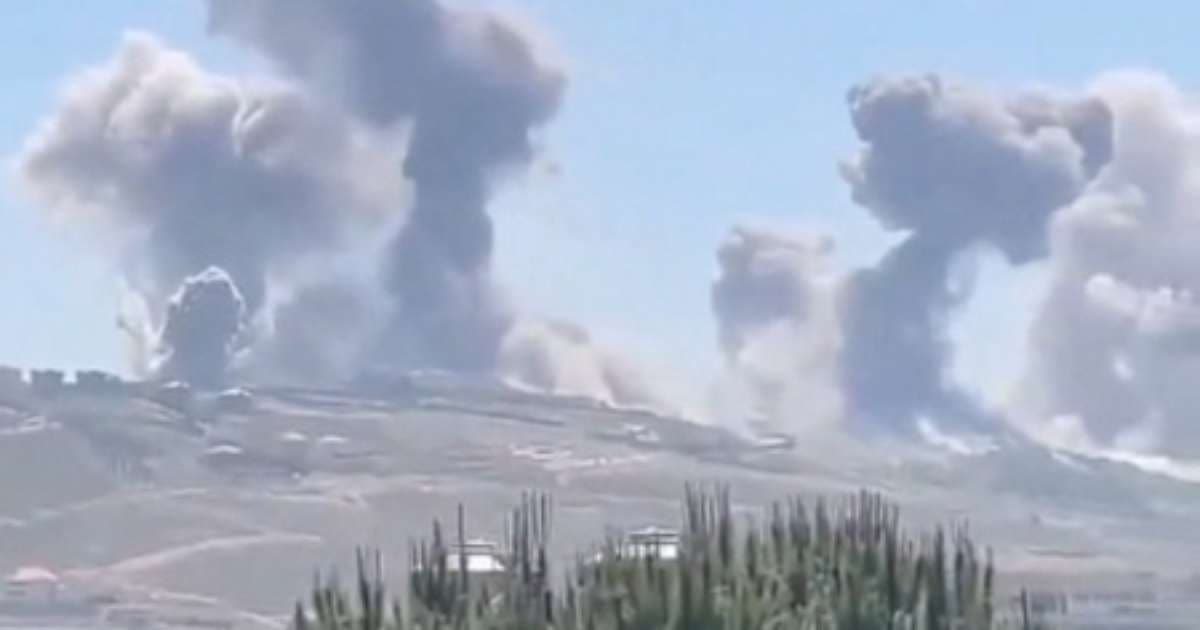
Israel's Forças Armadas destroyed Hezbollah's underground infrastructure in the southern Lebanon's Ali al-Taher mountain range, the prime minister's office said on Thursday. The operation concluded the establishment of a security zone in the region, according to the same source. The announcement marks a new chapter in the tension between Israel and Iran’s ally group.
Operation in the mountain range of Ali al-Taher
The Israeli military action targeted tunnels and underground facilities used by Hezbollah in the Ali al-Taher mountain range. The region, located in southern Lebanon, is pointed out by Israel as a strategic point for the armed group. The Prime Minister’s office did not detail the extent of the destroyed infrastructure or the exact period of the operation.
According to the statement, the destruction of the underground infrastructure was successfully completed. The source did not say if there were direct confrontations during the action. The operation was reportedly planned to eliminate Hizbullah’s hidden capabilities, which historically uses tunnels to move fighters and weapons.
The announcement comes amid constant surveillance on the Israel-Lebanon border. The Ali al-Taher mountain range is a mountainous area that offers natural cover for underground activities. Israel considers these structures a direct threat to the security of its communities in the north of the country.
Established security zone
With the completion of the operation, Israel declared the establishment of a security zone in the region. The goal, according to the cabinet, is to prevent Hezbollah from rebuilding its capabilities in the area. The move reflects Israel’s strategy to maintain an active military presence at critical points.
Israeli forces will remain in the area indefinitely, the government said. The decision aims to create a physical barrier against the return of the armed group. The source did not specify the size of the security zone or the number of troops involved in maintaining the area.
The Israeli military stay in southern Lebanon is not unprecedented, but the formal announcement of a safe zone after the destruction of tunnels is significant. Israel justifies the measure as necessary to protect its population from cross-border attacks. Hezbollah, for its part, has not yet officially pronounced itself on the operation.
Context of the underground threat
Hezbollah is known for building an extensive network of tunnels in Lebanon, many of which approach the border with Israel. These structures allow the group to move fighters and equipment without being detected by aerial surveillance. Israel has already carried out previous operations to neutralize tunnels, but the action on Ali al-Taher seems to have been more comprehensive.
Hezbollah’s underground infrastructure is financed and supported by Iran, the group’s main ally. Israel sees this network as part of a broader siege strategy. The destruction of tunnels is a priority for Israeli Forças Armadas, which invests in detection and demolition technology.
Security experts point out that the elimination of tunnels reduces Hezbollah’s offensive capacity in the event of conflict. However, the group has a history of rapid reconstruction of its facilities. The security zone announced by Israel seeks precisely to prevent this reconstruction.
Regional reactions and implications
The Israeli announcement comes at a time of diplomatic sensitivity on the Oriente Médio. The prolonged military presence in southern Lebanon can generate friction with the Lebanese government and the international community. The source did not detail whether there was coordination with other nations or multilateral bodies.
Hezbollah, Iran’s ally, has significant influence on Lebanese politics. A response from the group to the Israeli operation could escalate tensions at the border. So far, there are no reports of incidents following the announcement of the destruction of the tunnels.
For Israel, the operation reinforces its position of not tolerating underground threats. The establishment of the security zone signals that the country is willing to maintain a military presence to secure its objectives. The international community is cautiously watching developments in the region.
Next steps and monitoring
Israel said its forces would remain in the area to prevent Hezbollah from reestablishing its presence and rebuilding its capabilities. Continuous monitoring will be essential to verify the effectiveness of the safety zone. The source did not detail the surveillance mechanisms that will be employed.
The destruction of the underground infrastructure in Ali al-Taher may be followed by further operations in other areas of southern Lebanon. Israel has not ruled out further action if it identifies new threats. Hezbollah, in turn, may try to circumvent the security zone with alternative routes.
The outcome of this operation will have a direct impact on the stability of the border between Israel and Lebanon. The Israeli military presence in the region is a risk factor for incidents. The international community is following events in search of a solution that avoids further escalation.
The Boca no Trombone Portal will continue to monitor the unfolding of this operation and its effects on regional security. For more news about the Oriente Médio and other international affairs, continue browsing our website.
Read Also
Iran suspends freight charges for foreign vessels
A ferry fire leaves 5 dead and 87 missing in the Philippines
See the predictions for your sign this Thursday (10)
Font
www.terra.com.br