Sebrae, AMCG and Fiep discuss strengthening industry in the Campos Gerais
Sebrae, AMCG and Fiep meet managers from eight municipalities to discuss actions that strengthen industry in the Campos Gerais. Check the next steps.

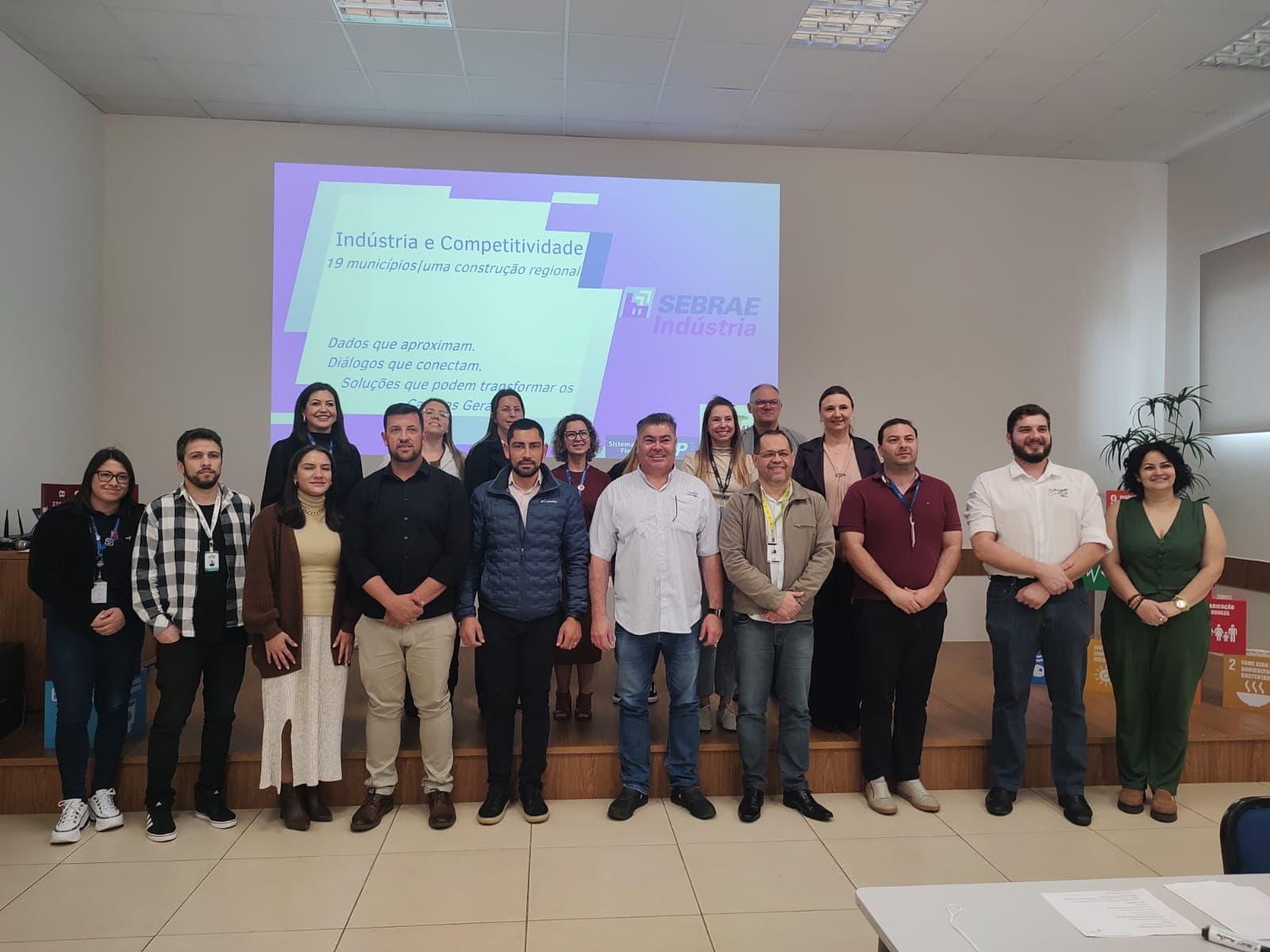
Representatives from eight municipalities of the Campos Gerais met on Tuesday (22), in Ponta Grossa, to discuss strategies aimed at strengthening the regional industry. The meeting, called "Coffee with Secretaries – Dialogues for Regional Industrial Development", was promoted by Sebrae/PR, in partnership with the Association of Municipalities of Campos Gerais (AMCG) and the Fiep System.
The initiative brought together public managers of Arapoti, Carambeí, Castro, Jaguariaíva, Palmeira, Ponta Grossa, Porto Amazonas and Sengés. The objective was to identify common challenges, analyze economic indicators and discuss joint actions to stimulate the growth of industries, respecting the characteristics and vocations of each municipality.
During the programming, data from the Federation of State Industries of Paraná (Fiep) and the Municipality in Numbers tool, developed by Sebrae, were presented. The information served as the basis for a discussion on the main difficulties faced by companies and the obstacles to the attraction, permanence and expansion of industries in the Campos Gerais.
Industry accounts for 36% of the regional economy
The data presented by Fiep show that the industry has a significant share in the economy of Campos Gerais, higher than the state average.
In the region, the industrial sector represents 36% of the Gross Value Added (GVA), while the average of Paraná is 28%.
Despite its economic importance, industrial activity is concentrated in certain municipalities. Ponta Grossa, Telêmaco Borba, Castro, Carambeí and Jaguariaíva concentrate 79% of the employment links of the industry and construction sectors in the Campos Gerais.
The survey also revealed significant differences between the economic profiles of cities. In São João do Triunfo, the industry represents 3.7% of the municipal GVA, while in Ortigueira this share reaches 63.3%.
Other municipalities also have significant industrial participation, such as Telêmaco Borba, with 59%, Jaguariaíva, with 43.4%, and Ponta Grossa, with 40.2%.
The indicators reinforce the need to consider the economic characteristics of each municipality in the elaboration of strategies for industrial development.
Small industries are also a priority
During the meeting, participants discussed challenges related to the business environment, professional qualifications, infrastructure, market access and productive diversification.
Among the problems identified are the difficulty of retaining qualified professionals, the economic dependence of certain sectors or large companies and the need to expand opportunities for small industries.
For the consultant of Sebrae/PR, Joslaine Schimidt, the strengthening of industrial activity should also consider the municipalities that have the lowest concentration of companies in the sector.
“We want to identify existing opportunities and bottlenecks that are common and, from that, prioritize some actions, with this bias of increasing the competitiveness of small industries and the sector in the municipality,” he explained.
According to the consultant, industrial development does not depend exclusively on the attraction of large companies. The strengthening of small businesses already installed in the municipalities is also essential to expand the generation of jobs and stimulate the regional economy.
In this context, the integration between small and large industries, the strengthening of production chains and the incentive to local purchases were pointed out as opportunities for the growth of the sector.
Integration between municipalities can expand opportunities
The Secretary of Industry, Trade and Professional Qualification of Ponta Grossa, Tônia Mansani, highlighted the importance of developing strategies that consider the Campos Gerais as an integrated territory.
“We cannot think only of the development of each municipality in isolation. We need to think of the Campos Gerais as a territory of opportunities,” he said.
The secretary of Meio Ambiente de Porto Amazonas, Mireylla Bassani Lima, also stressed the importance of the exchange of experiences between municipal managers.
“We were able to identify that the same problems and the same difficulties that we face, the neighboring municipalities end up facing as well,” he reported.
For the coordinator of the Fiep Regional Council, Rafael Rickli, the data presented reinforce the importance of expanding industrial opportunities for municipalities that still have less participation in the sector.
The proposal is to stimulate regional integration, allowing different cities to participate in the production chains and take advantage of their economic characteristics to attract investment and strengthen local companies.
The president of AMCG and mayor of Sengés, Gerson Nunes, also highlighted the importance of articulation between municipalities to face similar challenges.
"This exchange of information between municipalities is fundamental to meet joint demands, bring technology and opportunities to the region," he said.
Next meeting will be held in Castro
The discussions will continue on October 7, when the municipal secretaries will meet again, this time in Castro.
The next meeting will aim to deepen the diagnosis of each municipality and advance in the definition of priorities and joint actions for the strengthening of the industry in Campos Gerais.
Among the topics that should be addressed are the improvement of the business environment, the qualification of the workforce, the productive diversification, the access to new markets and the investments in infrastructure.
The elaboration of a map of industrial opportunities of the region, with the participation of the municipalities, is also under discussion.
The initiative is part of Sebrae/PR’s actions aimed at territorial development and seeks to bring together public managers and institutions to transform economic data and local demands into growth strategies for Campos Gerais.