Tarcísio and Haddad speak after Globo debate in SP
After the Globo debate on Tuesday (29), Tarcísio de Freitas (Republicanos) and Fernando Haddad (PT) held press conferences. They addressed organized crime, metropolitan single ticket, electricity and the influence of the presidential election on the state race.

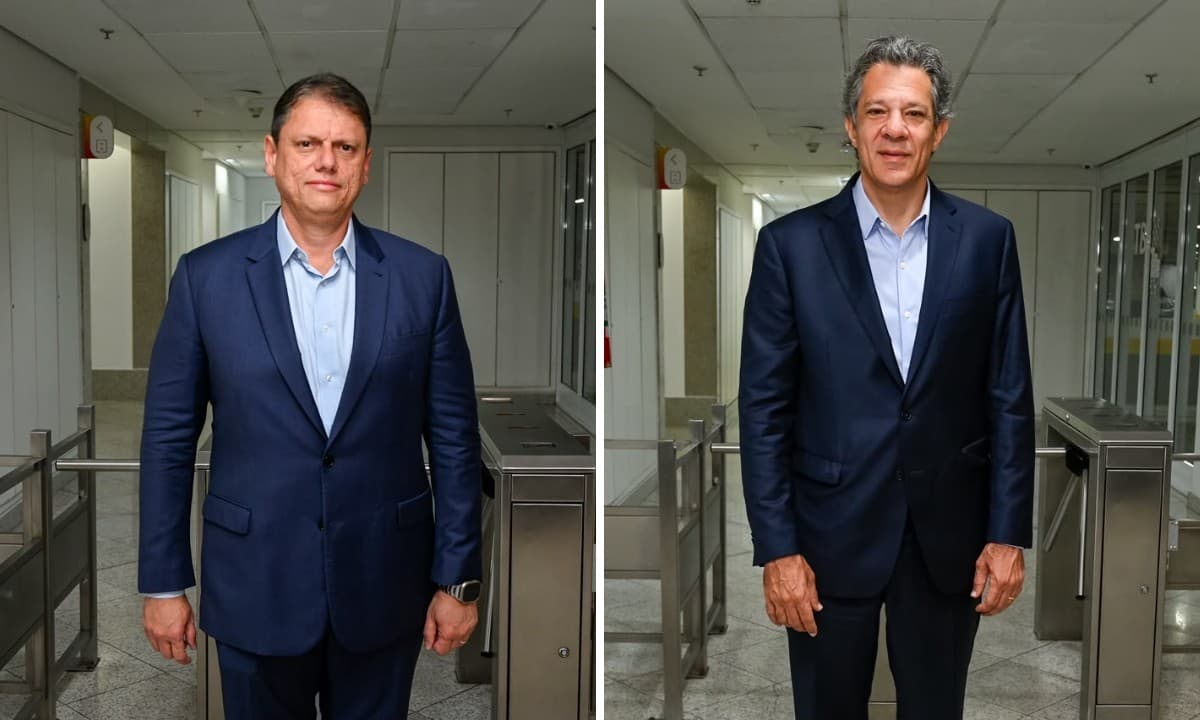
After the debate of the Globo on Tuesday (29), the candidates for the government of São Paulo Tarcísio de Freitas (Republicans) and Fernando Haddad (PT) granted press conferences to journalists. They took stock of the meeting and answered questions on topics discussed overnight and proposals for a possible next term.
The statements occurred shortly after the closure of the show, in the station's studio, on São Paulo. The two applicants to the Bandeirantes Palace detailed positions on public safety, transport, energy and the relationship with the national dispute.
Fighting organized crime
Asked how to deal with the infiltration of organized crime into state structures, Tarcisio said he intends to expand investments in intelligence and technology. According to him, the government should use investigation, control mechanisms and co-ordination to identify and remove servers involved with organizações criminosas.
"Using intelligence, using research, we are greatly improving the issue of intelligence, bringing in more and more technology. The heavy investment that we will make is precisely in intelligence, so that we can find out more and more, check the way of money, check those atypical transactions," he said.
The candidate for re-election did not detail values or deadlines for the measures, but reinforced the focus on financial monitoring tools and internal control.
Single Metro Ticket
Tarcísio was also asked about the proposal mentioned during the debate on the creation of a single metropolitan ticket. The governor said the measure will still be studied and said there are technical and financial challenges to implementing it.
According to him, it would be necessary to initially define a metropolitan governance and, later, establish a system capable of integrating the different means of payment and rules currently used by the municipalities.
The candidate also said that integration can benefit workers who use public transport daily, but stressed that it is necessary to calculate the cost of the measure. "It obviously helps the worker a lot, it helps those who need transportation every day. But it is the objective to be pursued and we have to analyze it from the point of view of possibility, financial feasibility and technical feasibility."
National polarization in the debate
Asked about the presence of national issues in the debate, Tarcísio said he considers it natural that the dispute for the São Paulo government reflects the polarization of the presidential election. According to him, however, the format adopted by Globo also led candidates to discuss specific state issues.
The candidate did not cite examples, but assessed that the balance between local and national guidelines was adequate throughout the program.
Electricity in Grande SP
On the supply of electricity in the Metropolitan Region of São Paulo, Tarcísio stated that the concession is the responsibility of the federal government and defended the need for a company that expands investments and modernizes the network.
He cited as possibilities the exchange of the controller accompanied by a possible extension of the contract or the realization of a new tender. "The fact is that we need a company committed to these municipalities of the Metropolitan Region of São Paulo, which can make investments, which can modernize and automate the network," he said.
Automation is important to speed up the restoration of supply in the event of a failure. “The more automation, the faster and faster you can reconnect. So we suffer a lot from obsolescence. In fact, we need a new dealership.”
The balance sheet of the last debate
In taking stock of the last debate before the vote, Tarcísio said he sought to present achievements of his government and plans for a possible new term. "We try to show here what we have done over these four years and we always try to project the future, what we can do. We have projects, we have proposals and we seek to present these proposals at all times."
The candidate did not anticipate new measures, but signaled continuity of current policies if re-elected.
Haddad and the presidential election
Fernando Haddad was initially questioned about having used part of his final considerations to talk about the presidential election and make criticisms of Flávio Bolsonaro, the PL's candidate for the Presidency of the Republic.
The candidate stated that he considers the national dispute important also for his plans for São Paulo and defended the re-election of President Lula (PT). “Brazil is very important to me. "What I intend to do at São Paulo depends very much on an experienced president, a president committed to the public cause, transparent, who gives autonomy for institutions to function," he said.
Haddad did not detail which projects would depend on the federal government, but he reinforced the alignment with the petista management in Brasilia.
The press conferences closed the agenda of the candidates after the debate. The vote for the São Paulo government takes place next Sunday, along with the second round of the presidential election.
Read Also
The Government extends the period of accession to the Simple National 2027
Big Data predicts second round in the PR government dispute
Quaest: 51% approve government of Celina Leão in DF
Font
g1.globo.com