U.S. attack three Iranian oil tankers after ships are targeted
The United States claims to have attacked three Iranian-linked oil tankers in retaliation for the launch of ballistic missiles against two U.S. warships. The U.S. Central Command released images and details of the operation, while state media in Iran confirmed the attacks but denied casualties in one of the incidents.

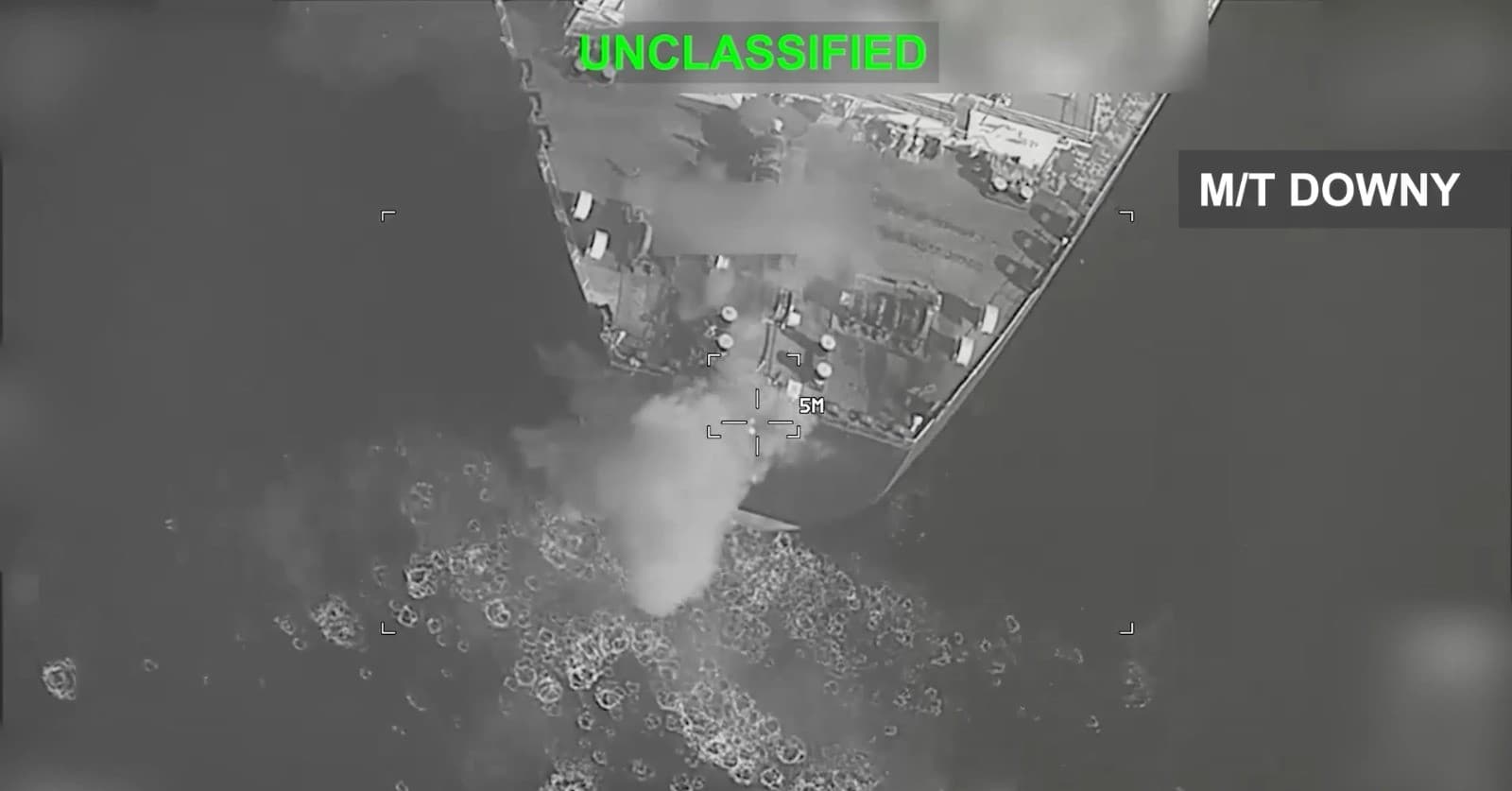
The Forças Armadas dos Estados Unidos claim to have hit three tankers linked to Iran after launching ballistic missiles against two of its warships in the region. The information was released by U.S. Central Command (Centcom) on Saturday, amid escalating tensions between the two countries.
According to the statement, Centcom "permanently decommissioned" one tanker near the island of Kharg and another near Jask in the Gulf of Oman, and "completely destroyed" a third also in the Gulf of Oman. The command claimed to have "successfully prevented" multiple attacks by the Islamic Revolutionary Guards Corps (IRGC) on a U.S. aircraft carrier and a guided missile destroyer, with no injuries among U.S. soldiers.
Iranian state media confirmed that US forces attacked three Iranian tankers in the waters of the region. The IRIB broadcaster said there were no casualties in the attack on the tanker near the island of Kharg and the images indicate that the vessel's cooling system extinguished the fire in an hour. The crews of the two tankers attacked in the Gulf of Oman were taken to shore in lifeboats, according to IRIB; one of the tankers was empty and the other was carrying oil.
American retaliation after attacks on ships
Admiral Brad Cooper, commander of Centcom, said in a statement: “Let the message to the Islamic Revolutionary Guards be clear: if you shoot at two of our ships, we will impose an even greater economic cost by destroying three of yours.” The three Iranian tankers were part of a multimillion-dollar parallel network that funds the Islamic Revolutionary Guards (IRGC) and its regional allies.
Tehran did not immediately recognize the Iranian attacks against American ships. The attacks come almost a week after renewed clashes between the United States and Iran, which followed a period of relative calm between the conflicting sides.
Recent escalation and end of ceasefire
The United States resumed attacks on Sunday when it said it had hit two rocket launchers to prevent them from being used to lay naval mines in the Strait of Hormuz. On Tuesday, President Donald Trump said the U.S. had launched a new "very heavy strike" but said the fighting would not last "long".
The attacks have prompted Iran to retaliate against US targets in the region, including in the United Arab Emirates, Bahrain, Kuwait and Jordan. The 60-day ceasefire between the U.S. and Iran formally expired last month, with no signs of a new diplomatic deal on the horizon. Days after the ceasefire ended, Trump said the United States would launch tougher economic measures against Iran, as well as any country that helped or did business with it.
Allegations of civilian victims and investigation
On Thursday, U.S. Vice President JD Vance also addressed Iran’s allegations that U.S. strikes killed at least four people, including two children, at a wedding in southern Iran. He said he was "extremely skeptical" of reports of the alleged attack, but confirmed the US would investigate the case.
The Iranian Red Crescent Society said shrapnel from a missile hit a ceremony held at a residence in Sirik on Tuesday, prompting Tehran to declare the incident a “war crime.” The US Central Command has released images of the attacks on tankers linked to Iran.
The instability scenario in the Oriente Médio continues to generate international concern, with potential reflections on the oil market and navigation security. The Boca no Trombone portal will continue to monitor the developments and will bring new information as it becomes available.
Read Also
US apply polygraph test on Forças Armadas after leaks
War in Sudan is sustained by allies, UN says
Explosion at Bolivian barracks leaves 2 dead and 81 injured
Font
g1.globo.com
Strait of Hormuz (www.bbc.com)