Chamber approves regulatory framework for full-time education
Chamber approves regulatory framework for full-time education, with a minimum daily schedule of seven hours and new rules for public schools

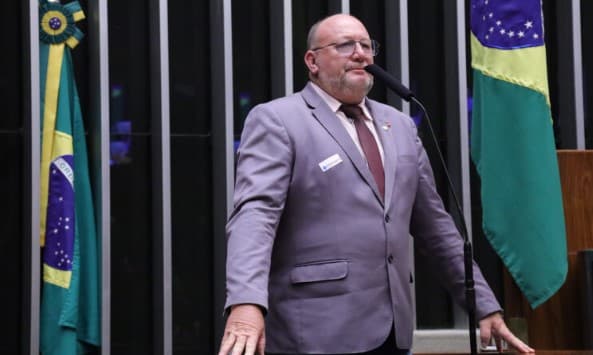
The Chamber of Deputies approved the bill that establishes the regulatory framework for full-time education in Brazil. The proposal defines minimum parameters for the mode of education, determines the responsibilities of the federative entities and establishes criteria for the expansion of the offer in the public networks. The text is for analysis by the Federal Senate.
Authored by the deputy João Daniel (PT-SE), the Bill 479/2015 was approved in the form of the substitute presented by the rapporteur, deputy Thiago de Joaldo (Republicans-SE).
The proposal differentiates integral education, aimed at the full training of students, from full-time education, characterized by the expansion of the school day.
School day of at least seven hours
According to the project, students must remain in the school or participate in pedagogical activities for at least seven hours a day or 35 hours a week, during the entire school period.
Institutions should have a political and pedagogical project that integrates curricular contents with educational experiences. The simple extension of the shifts or the performance of activities in the counter-turn will not be enough to characterize the modality.
Among the requirements are:
adequate infrastructure, with security and accessibility;
Spaces intended for sports, cultural and scientific activities;
School food and transport, when necessary;
Availability of professionals, equipment and technological resources;
Participation of the school community in decisions.
Activities carried out in museums and other educational spaces can also integrate the journey, as well as periods of food, hygiene, rest and coexistence, provided they have pedagogical objectives.
Expansion should reduce inequality
The expansion of full-time education should prioritize the reduction of educational inequalities, also contemplating schools located in regions of greater social vulnerability.
The project determines that the expansion will not affect the offer of ensino médio night, Youth and Adult Education (EJA), special education and care for indigenous, quilombola and rural communities.
The implementation of the modality should be accompanied by planning, with forecast of investments, structural adaptations and mechanisms for evaluating the attendance, learning and development of students.
This plan should be reviewed at least every two years.
Teachers’ Day will be preserved
The approved text establishes that the extension of the period of stay of students in schools will not automatically imply the increase of the workload of education professionals.
Career plans, the legal limits of the working day and the periods destined for pedagogical planning should be respected.
The project also prevents private institutions from assuming the pedagogical direction, curricular definition or democratic management of public schools through partnerships.
Financing of full-time education
The resources destined for the modality may originate from the Fundeb, the federal Full-time School program, the budgets of the Union, states and municipalities, in addition to funds from oil and natural gas royalties and the Social Fund.
The financing should take into account the additional costs related to food, transport, infrastructure, hiring professionals and acquiring educational materials.
The Union should give priority to education networks with less financial capacity and schools located in more vulnerable territories.
Timeline for adequacy
If the proposal is approved by the Senate and transformed into a law, the education systems will have a period of one year to adapt their standards and planning instruments.
For municipalities with less than 50,000 inhabitants, the period will be two years, counted from the actual provision of technical assistance by the Union or by the respective state.
The proposal also provides for the dissemination of implementation indicators every two years and a comprehensive evaluation of the education policy every four years.
The Senate approves the end of bail for death in traffic due to drunkenness