Chamber debates mixed district system to elect deputies
Leaders of the Chamber and party presidents revive proposal to establish the mixed district system to elect deputies. The goal is to curb the advance of PL and strengthen center parties. Changes may take effect from 2034.

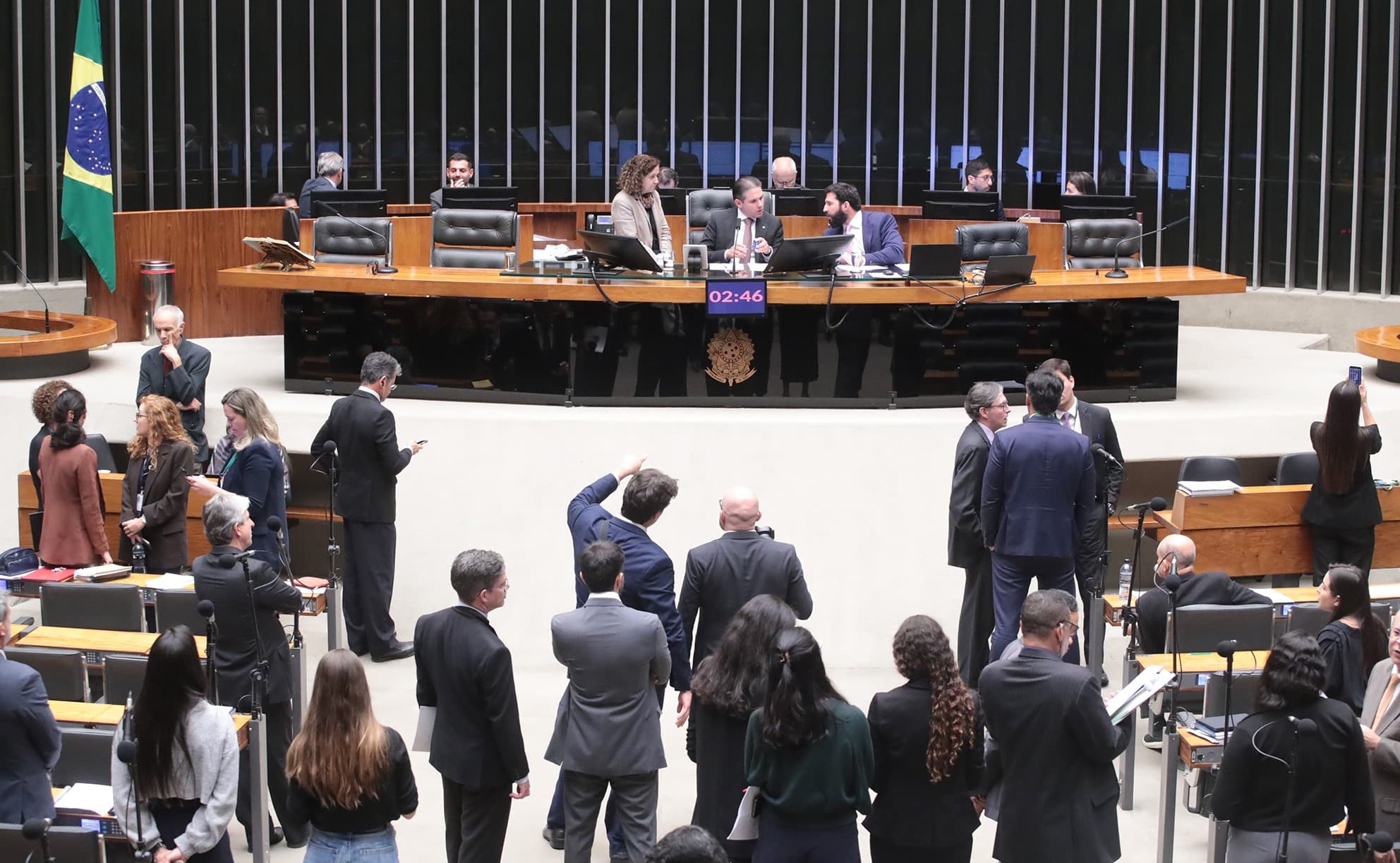
Leaders of the Chamber of Deputies and party presidents articulate to resume the processing of a proposal that changes the way of choosing deputies and institutes the so-called mixed district system. The initiative began to be discussed after the first round of the dispute, still in early October, in a statement by the mayor, Hugo Motta (Republicans-PB), a representative of the Center.
The main objective is to curb the loss of center-party space in parliament, after the growth of the Partido Liberal (PL) in the 2026 elections, which diminished the space of center-party in the House and growth of the bolsonarist wing. The vote on the proposal is still under negotiation, but the idea is that the changes in electoral rules begin to apply in full in the 2034 elections, with a transition in the next national elections.
Center loses space for the PL
The PL ended the elections with 121 deputies, the largest seat since the Constituent Assembly. Four years ago, the party had won 99 seats. With this year’s result, the acronym will have 23.6% of the 513 seats in the Chamber of Deputies.
In contrast, the Center decreased its presence. It lost 22 seats compared to the 2022 elections. There is a reading among the center parties that changes need to be made to maintain the power of the center parties.
PEC could be approved by 2026
Hugo Motta has stated that it intends to pass a Proposal of Amendment to the Constitution (PEC) instituting the mixed district system. The expectation of the leaders of the center is to approve the changes still in 2026, although they admit that the joints are only at the beginning.
Motta also talks with the president of the Federal Senate, Davi Alcolumbre (União-AP), to speed up the vote. Leaders expect the support of senators because the changes do not affect elections for them. But the text also needs to be agreed in the House itself. Motta still tries to get support from the PT and from the PL itself.
Resistances between PL and PT
The PL has no interest in changing the system. Among the petistas, there is resistance to change electoral rules soon after a hard election. The fear is to provide one to the supporters of Flávio Bolsonaro (PL) a speech that there is encirclement to the bolsonarist party.
Other lawmakers also say the change is late, that the profile of Congress has already been changed. The rapporteur of the PEC that will still be presented should be the deputy Domingos Neto (PSD-CE), who is already the rapporteur of a bill on the district system in the House.
How the current system works
Members are elected according to the votes they and their parties receive. The Superior Electoral Court (TSE) holds an account, called an electoral quotient, to define how many votes each party needs to have a seat in the Chamber of Deputies. This model is called a proportional system.
This formula ends up creating the so-called “vote drawers” — a candidate who receives many votes and indirectly contributes to the election of candidates who have not obtained enough votes. This year, expressive votes on MPs such as Nikolas Ferreira (PL-MG) and Erika Hilton (PSOL-SP) drew other candidates from their parties.
What changes with the mixed district
In the district system, each Brazilian state is divided into districts. Each district elects a specific number of deputies. Residents of that particular region may vote only for the candidates from the district in which they live. The most voted candidates in the district are elected.
But in order to maintain a part of the power of the parties in the electoral process, the deputies are studying to create a mixed model. One of the points that are still being negotiated among the party leaders is which model will be adopted.
Advocates and concerns
The mixed district has as defenders presidents of parties such as Gilberto Kassab, of the PSD, and Ciro Nogueira, of the Progressives. But there is no consensus on the Congresso Nacional. The most voted MP in Rio de Janeiro, the leader of the PP, deputy Luizinho, is in favor of the model and says that, in order not to weaken the parties, the proposal could provide that the mandate belongs to the subtitles, unlike other majority elections, and the deputy could not change membership.
Despite defending the model, the deputy Adriana Ventura (Novo-SP), points to some concerns, such as the system leaving the dispute more vulnerable to organized crime, with candidates from factions or militias controlling some districts.
Negotiations are ongoing, and the outcome may redefine the balance of forces in Congresso Nacional. Follow the updates on the Boca no Trombone.
Read Also
Right without Bolsonaro is opportunism, says Gilson Machado
Kassab charges economic measures for PSD to support Lula
Flavio predicts Lula’s downfall and admits to dispute before 2030
Font
g1.globo.com