El Niño triggers alert and could be one of the strongest since 1950
El Niño 2026-2027 may reach historic intensity, with rainfall above average and risk of flooding in southern Brazil

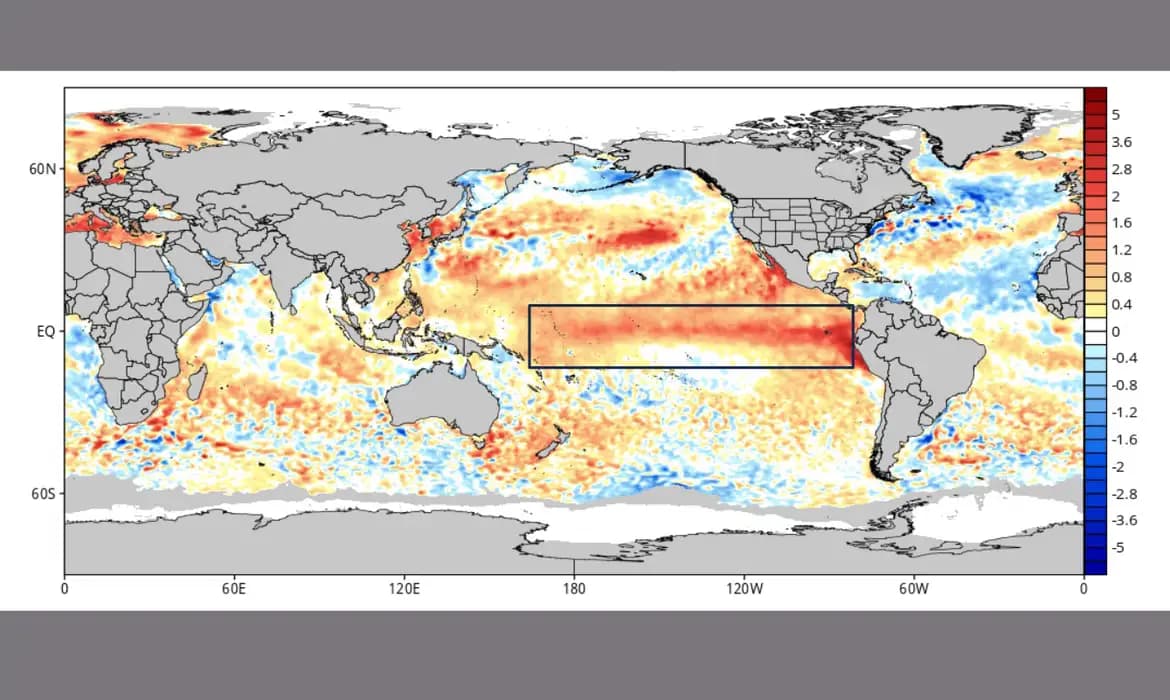
The El Niño 2026-2027 may become one of the most intense episodes recorded since 1950. The projection is in the El Niño 2026-2027 Panel, prepared by the National Institute of Space Research (INPE), which points to a 95% probability of the phenomenon reaching an intensity considered “very strong” between October and December of this year.
The forecast draws attention mainly to the South of Brazil. With the strengthening of the phenomenon, the region may record above-average rainfall volumes in the coming months, also increasing the possibility of flooding episodes.
Rainfall may be above average in the South
The scenario presented by the climate monitoring bodies indicates that the effects of El Niño should vary according to each Brazilian region.
While the South tends to face more rainfall, areas in the north-central part of the country may experience drier conditions. The combination of low rainfall and high temperatures can also increase the risk of fires mainly in the North and Northeast regions.
Part of the Southeast and East of the Northeast, on the other hand, may also have above average rainfall volumes during the period.
In addition to changes in the precipitation regime, temperatures are expected to remain above historical standards in much of the national territory.
Pacific warms up to 2°C
The El Niño occurs when there is an abnormal warming of the surface waters of the Equatorial Pacific Ocean. Changes in ocean temperature interfere with atmospheric circulation and cause changes in the behavior of rainfall and temperatures in different parts of the planet.
In late September, anomalies in sea surface temperature exceeded 2°C in the central and eastern Equatorial Pacific areas, according to data from the Estados Unidos National Oceanic and Atmospheric Administration Climate Prediction Center (CPC/NOAA).
This level of warming reinforces the scenario of intensification of the phenomenon in the coming months.
Phenomenon is accompanied by national bodies
The monitoring of the El Niño is carried out by different Brazilian institutions. The panel gathers information from INPE in partnership with agencies such as Instituto Nacional de Meteorologia (Inmet), Agência Nacional de Aguas e Saneamento Básico (ANA), Cemaden, Serviço Geológico do Brasil, Defesa Civil Nacional and Censipam.
The next bulletins will be important to check the evolution of Pacific warming and the possible reflections on rainfall and temperatures during the spring and early summer.