Electoral reform may change voting in Brazil starting in 2032
Electoral reform proposes mixed district voting in Brazil starting in 2032. Understand what changes in the selection of deputies and councilors

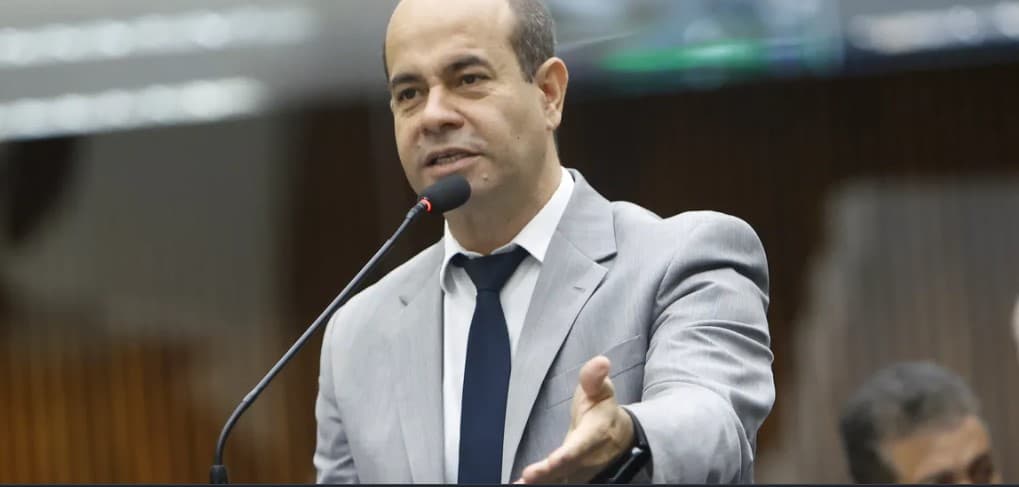
The Brazilian electoral system may undergo significant changes in the coming years. Federal deputy Domingos Neto (PSD-CE), rapporteur of the electoral reform proposal, presented on Monday (9) the main guidelines of a project that aims to replace the current proportional system by the mixed district voting model.
The presentation took place at the São Paulo Trade Association. The intention of the parliament is to get the approval of the proposal in 2026, allowing the new rules to be applied in the municipal elections of 2032 and in the general elections of 2034. A possible transition rule for the 2030 elections is still being discussed.
The change would affect the form of election of federal deputies, state deputies, district deputies and councilors. The Federal Senate would continue to use the majority system, in which the most voted candidates are elected.
How would mixed district voting work?
According to the model presented, the seats in the legislatures would be distributed between two systems: half of the parliamentarians would be elected directly by the electoral districts and the other half by closed party lists.
The main difference with respect to the Bill No. 86/2017, presented by the then Senator José Serra (PSDB-SP), is in the number of votes of each voter.
In the original proposal, the citizen would be entitled to two votes: one to choose the representative of his district and another to select a political party or federation.
In the model defended by Domingos Neto, each voter would vote only once, choosing a candidate from his district. The votes received by the parties in all the districts would be added to determine the proportional distribution of the seats.
In this way, part of the parliamentarians would be chosen directly by the population, while the other vacancies would be filled according to the total vote of the subtitles and the order of the candidates in the party lists.
Understand the distribution of vacancies
To explain the operation of the system, Domingos Neto used as an example the state of São Paulo.
According to the parliamentary, the state could be divided into 35 electoral districts. If a certain party won 10% of the valid votes in the entire state, it would be entitled to approximately 10% of the seats of the São Paulo bench in the Federal Chamber.
If the legend won seven seats and had won in three districts, the remaining four seats would be filled by candidates from the party list.
On the other hand, if the party could directly elect seven representatives in the districts, there would be no need to summon candidates from the list.
In states with an odd number of seats, the proposal provides that the surplus vacancy will remain with the district system. Thus, in a hypothetical 51-member bench, 26 would be elected by the districts and 25 by the party lists.
Change would affect municipalities with more than 200,000 voters
In municipal elections, mixed district voting would be applied only in cities with more than 200,000 voters, which have the possibility of holding a second round.
According to the data presented by the rapporteur, currently 103 Brazilian municipalities fall under this condition.
In smaller cities, including those that do not reach this number of voters, the current proportional system for the election of councillors would remain.
For legislative assemblies, the report also sets out specific criteria. In states with more than 12 federal deputies, two state deputies per district would be expected. In the units of the Federation with smaller federal benches, the number would be three state deputies per district.
Reform requires amendment to the Constitution
To enter into force, the change will need a Proposal for an Amendment to the Constitution (PEC), since the Brazilian electoral system has constitutionally established rules.
The text should also define criteria for the creation and delimitation of electoral districts, seeking to prevent the manipulation of their limits to favor certain political parties or groups.
Another point envisaged is the inclusion of mechanisms to encourage the participation and election of women in parliaments.
The proposal gained space in the political debate after the second round of the 2026 elections, with the articulation of parties linked to the so-called Center of the Chamber of Deputies.
Domingos Neto argues that the current system needs to be reformulated to improve political representation.
“The current model, it has collapsed. We have arrived at a time when change becomes very necessary,” said the deputy.
The MP also highlighted that the issue has been discussed for decades in the Congresso Nacional, recalling that proposals related to the district vote were already debated during the government of former President José Sarney.
Despite the intention to vote on the reform later this year, the proposal depends on political articulation and approval in the Congresso Nacional before any change is implemented. (Information is from Agência Brasil)
Read also City Hall notifies Munichfest organizers of postponement