Gaeco targets bribery scheme in highways; operation targets PG and removes 15 police officers
Operation by Gaeco in Ponta Grossa investigates bribery in highways, removes 15 police officers and executes 19 warrants in eight cities in Paraná

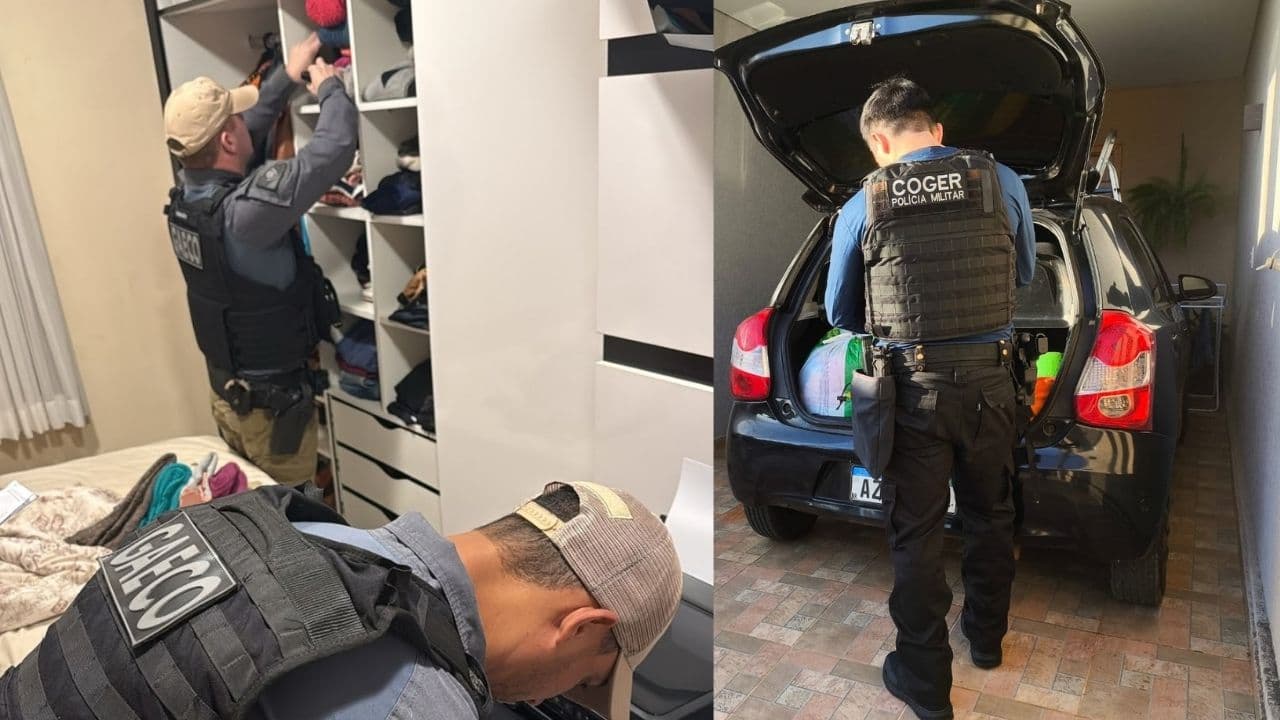
An operation by Gaeco in Ponta Grossa and seven other municipalities of Paraná resulted in the fulfillment of 19 search and seizure warrants and the precautionary removal of 15 military police officers on Thursday (8). The action is part of the third phase of Operation Route 466, which investigates suspected criminal organization, passive corruption, concussion, ideological falsehood and asset laundering.
The operation was launched by the Regional Center of Guarapuava of the Special Action Group for Combating Organized Crime (Gaeco), of the Public Prosecutor's Office of Paraná, with the support of the Military Police Department.
The details of the new phase were presented during a press conference held at 10:30 this Thursday, at the headquarters of the Public Prosecutor's Office of Paraná in Ponta Grossa.
The warrants were fulfilled in Guarapuava, Ponta Grossa, Telêmaco Borba, Pitanga, Bituruna, Castro, Palmeira and Wenceslau Braz. The court orders were issued by the State Military Justice Audit Court.
In all, the target addresses of the operation are related to 15 military police officers and four civilians investigated.
15 police officers are taken off the streets.
In addition to the search and apprehension warrants, the Justice ordered the precautionary removal of the 15 military police investigators in this phase of the operational and ostensible activities.
With the decision, agents will only be able to act in administrative functions as long as the investigations continue.
The collection of functional and private weapons of the police investigators was also determined.
During the execution of the warrants, one person was arrested for irregular possession of a firearm, and the weaponry was seized.
The teams also collected cell phones that will be submitted to analysis, documents and electronic devices with signs of misconduct.
Investigation points to corruption scheme at road stations
According to the Public Prosecutor’s Office, the third phase of Operation Route 466 was triggered by the analysis of electronic materials and documents seized in the previous stages of the investigation.
The content analyzed would have allowed to identify indications of continuity of the conducts investigated and also new possible involved.
The investigations point to the existence of a possible corruption scheme at State Road Police stations, including the Telêmaco Borba station.
The suspicion is that the traffic control activity has been used to obtain undue advantages.
Companies would have paid to avoid oversight
Among the irregularities investigated are alleged financial agreements signed between public officials and transport companies.
According to Gaeco, companies made fixed payments and supplied fuel continuously in exchange for the alleged exemption from supervision of their trucks.
In other words, the investigation determines whether carriers would have received differential treatment on the highways by paying advantages to public agents.
The suspicions are part of the set of conducts analyzed by the Public Prosecutor’s Office and will still be subject to the progress of the investigations and the judicial analysis.
Frauds in accident records are also investigated
Another point that has been determined involves possible frauds in Unified Electronic Transit Accident Bulletins, the so-called Bateu.
According to the investigation, there may have been irregular alterations or classifications of damages in vehicles registered in these documents.
Gaeco also investigates a possible targeting of winch services for payment.
The results seek to clarify whether certain providers would have been favored in the indication or hiring of services in exchange for financial advantages.
Money would have gone through family accounts.
The investigation also achieves the movement of the values allegedly obtained irregularly.
According to the Public Prosecutor’s Office, possible mechanisms for concealment and laundering of resources were identified.
The amounts allegedly collected on the highways were moved through electronic transfers made to third-party bank accounts.
Among these accounts would be those of relatives of public officials investigated.
Companies in the transport and winch sectors were also used as intermediaries in part of the financial movements.
The suspicion is that this mechanism has been used to make it difficult to identify the origin and destination of resources.
Operation Route 466 has already reached 30 police officers
Considering the three phases of Operation Route 466, the investigations have already reached 30 military policemen, the majority linked to the State Road Police.
The case also has points of connection with another investigation conducted by the Public Prosecutor’s Office.
Three investigated in Operation Route 466 are also counted in Operation Via Pix, conducted by the Gaeco of Ponta Grossa.
Despite the coincidence between some of the investigators, the Public Prosecutor’s Office points out that the two operations are conducted independently.
Added to the two investigations, 50 military police officers have already been investigated, of which 42 have been removed from operational functions.
Operation Route 466 remains in progress, and those investigated have the right to broad defense and contradiction during the process.